What Weight Dumbbells Should Beginners Buy?
If you’re just getting started with strength training, one of the first questions you’ll run into is simple but surprisingly tricky: what weight dumbbells should I buy?
It sounds like something that should have a clear, universal answer. But the truth is, there isn’t a one-size-fits-all number. Choose weights that are too heavy, and you risk injury or frustration. Go too light, and you might not see much progress.
The good news is that there are practical guidelines you can follow to make a smart decision. Once you understand how weight selection works, you’ll be able to choose dumbbells that match your current ability while leaving room to grow.
Why Choosing the Right Weight Matters
The weight you start with plays a bigger role than most beginners realize.
First, it directly affects your safety. If you pick weights that are too heavy, your form will likely break down. That’s when injuries happen, especially with exercises like presses, rows, or lunges. Starting with a manageable weight allows you to learn proper technique, which is the foundation of all strength training.
Second, it determines how effective your workouts are. If the weight is too light, your muscles won’t be challenged enough to adapt. On the other hand, if it’s too heavy, you won’t be able to complete your sets properly. The goal is to find a balance where the weight is challenging but still controllable.
There’s also a psychological side to it. Starting with the right weight builds confidence. When your workouts feel doable, you’re more likely to stick with them. And consistency is what actually drives results.
Finally, choosing the right starting weight makes it easier to apply progressive overload. This simply means gradually increasing the challenge over time, which is how you build strength and muscle.
General Beginner Weight Guidelines
While everyone is different, there are some general ranges that can help you get started.
For complete beginners, light dumbbells in the range of about 2 to 5 kilograms (roughly 5 to 10 pounds) are a safe starting point for many upper-body exercises. If you have some basic fitness experience, you might feel comfortable starting slightly higher, around 5 to 10 kilograms (10 to 20 pounds), depending on the movement.
Lower-body exercises typically require more strength, so you’ll often be able to handle heavier weights for movements like squats or lunges.
You might also see general recommendations that differ slightly for men and women. For example, beginner men might start with moderately heavier weights, while beginner women might start lighter. But these are just broad guidelines. Your actual starting point depends much more on your individual strength, fitness background, and comfort level.
Think of these numbers as a starting reference, not a rule you have to follow.
How Exercise Type Affects Your Choice
One of the biggest mistakes beginners make is assuming they need just one weight for everything. In reality, different exercises require different levels of strength.
Upper-body exercises like bicep curls, shoulder presses, and lateral raises typically use lighter weights. These muscles are smaller and fatigue more quickly, so it’s normal to use less resistance.
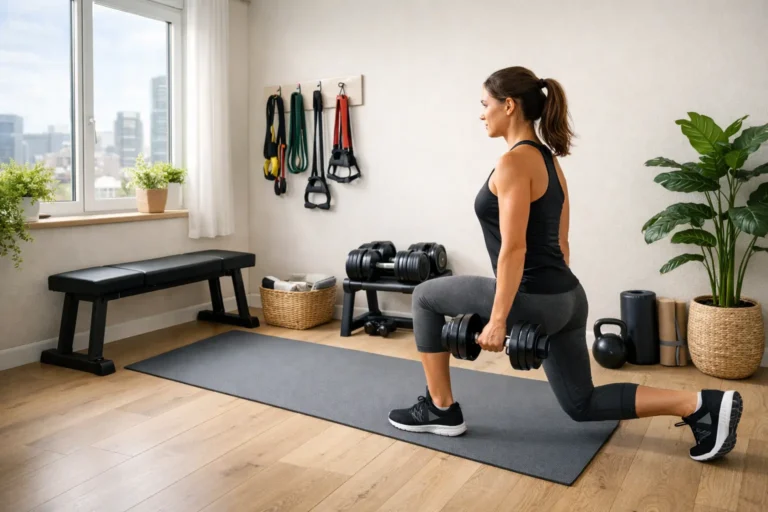
Lower-body exercises such as squats, lunges, and deadlifts involve larger muscle groups. Because of this, you can usually handle significantly more weight.
Shoulder isolation exercises, like lateral raises, are a special case. These movements often require very light weights, even for experienced lifters. Control and form matter much more than lifting heavy.
For full-body or compound movements, your weight choice will depend on the complexity of the exercise and your overall strength. These exercises often allow for moderate weights, but form should always come first.
How to Know If a Weight Is Right for You
Instead of relying only on general guidelines, it’s important to learn how to assess weight for yourself.
A simple way to do this is the “last rep challenge” rule. When you perform a set—usually around 8 to 12 repetitions—the last two or three reps should feel challenging but still doable with good form. If they feel effortless, the weight is probably too light. If you can’t complete the set, it’s likely too heavy.
Form is your best indicator. If you find yourself swinging the weights, using momentum, or losing control, that’s a sign the weight is too heavy.
Another useful approach is to start lighter than you think you need. This gives you space to focus on technique and build confidence. You can always increase the weight once you feel comfortable.
Fixed vs Adjustable Dumbbells
As a beginner, you’ll also need to decide between fixed dumbbells and adjustable ones.
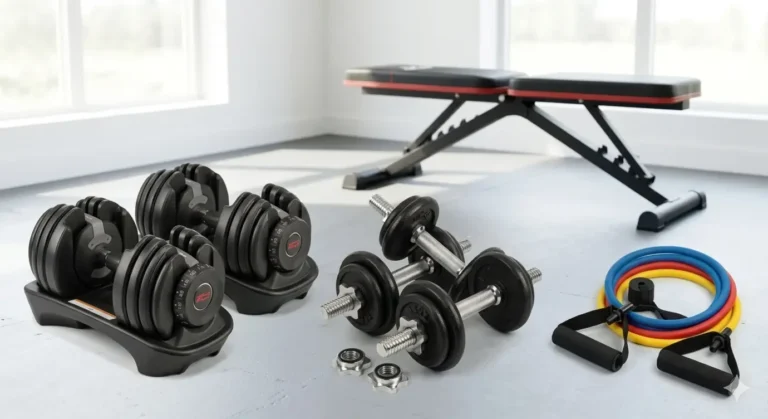
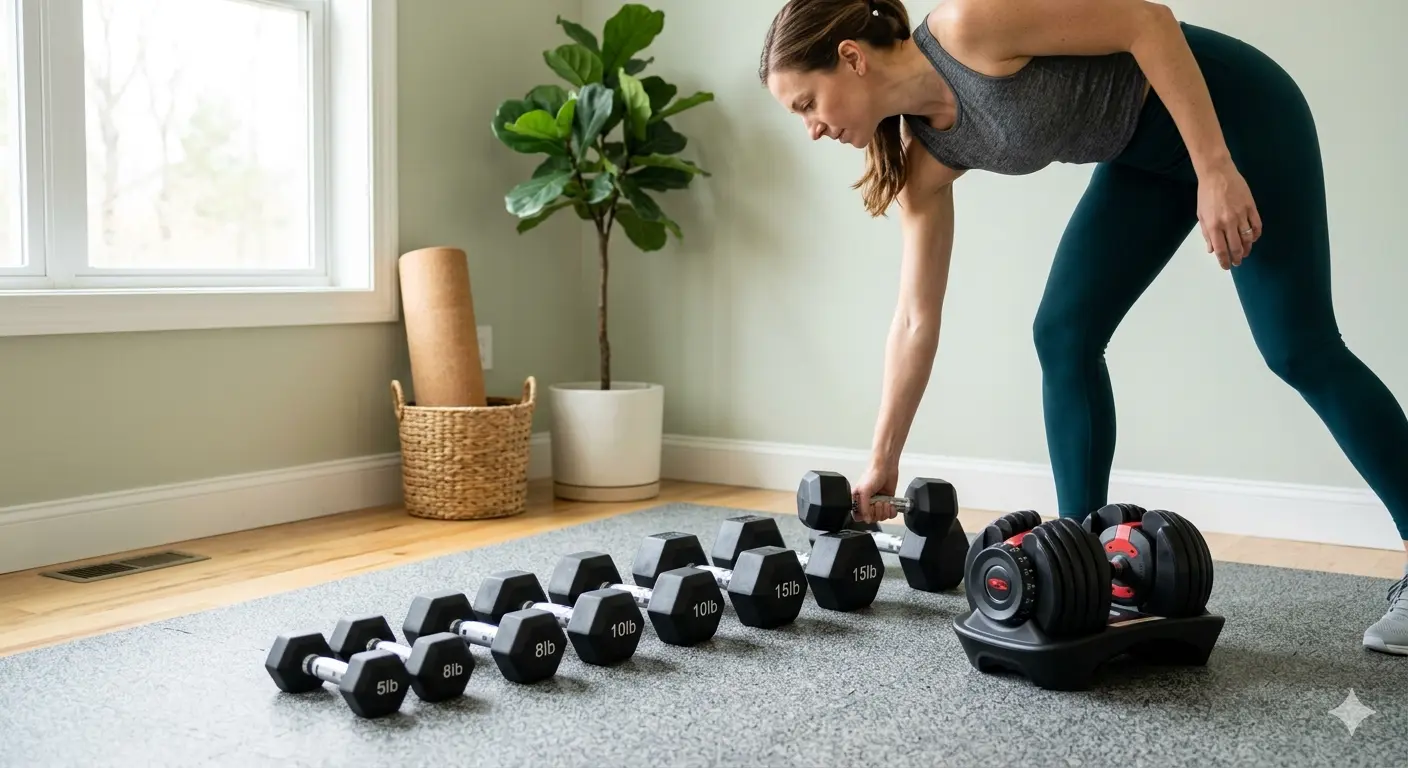
Fixed dumbbells are simple and easy to use. You pick them up and start your workout. They’re great if you want something straightforward and don’t mind owning multiple pairs.
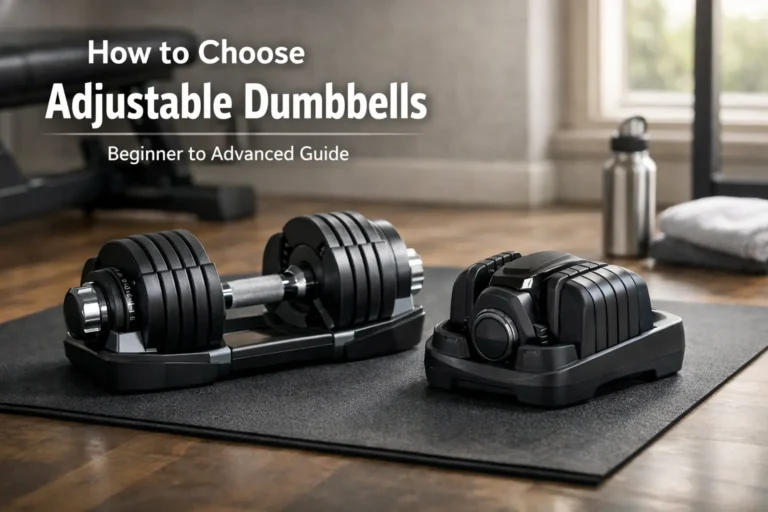
Adjustable dumbbells, on the other hand, allow you to change the weight using a single set. This makes them more space-efficient and cost-effective in the long run. They’re especially useful if you plan to progress and increase weight over time.
For most beginners, adjustable dumbbells are the more practical choice. They give you flexibility without requiring a large upfront investment in multiple weights.
How Many Dumbbells Do You Actually Need?
This is another area where beginners often overthink things.
Technically, you can start with just one pair of dumbbells. However, that pair might not be ideal for every exercise. A weight that feels right for squats might be too heavy for shoulder exercises.
A simple and effective setup is to have two options: a lighter pair for upper-body movements and a slightly heavier pair for lower-body exercises. If you’re using adjustable dumbbells, this becomes much easier since you can change the weight as needed.
If you’re on a tight budget, start with one manageable pair and build from there.
Common Mistakes Beginners Make
One of the most common mistakes is starting too heavy. It might feel motivating at first, but it often leads to poor form and frustration.
On the flip side, some people go too light and stay there. While it’s fine to start light, you need to gradually increase the challenge if you want to see progress.
Another mistake is using the same weight for every exercise. As mentioned earlier, different movements require different levels of resistance.
Comparing yourself to others is also a trap. What works for someone else might not be appropriate for you. Focus on your own progress instead.
When to Increase Your Weights
At some point, the weights you start with will become easier. That’s a good sign—it means you’re getting stronger.
If you can complete your sets without much effort and don’t feel challenged, it’s time to increase the weight. This doesn’t have to be a big jump. Even a small increase of 1 to 2 kilograms can make a noticeable difference.
For most beginners, increasing weight every few weeks is a reasonable pace, but this will vary depending on your consistency and training intensity.
The key is gradual progression. You don’t need to rush it.
A Simple Beginner Setup
If you’re not sure where to start, here’s a practical example.
A light pair of dumbbells in the 2 to 5 kilogram range can cover most upper-body exercises. A slightly heavier pair, around 5 to 10 kilograms, can be used for lower-body movements.
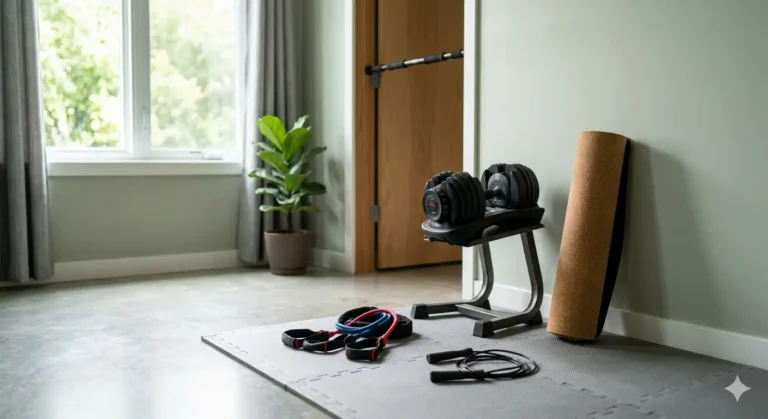
If you prefer a more flexible option, an adjustable dumbbell set that ranges from light to moderate weights can cover almost everything you need as a beginner.
Keep your setup simple. You can always expand later as your strength improves.
Getting Started the Right Way
Once you have your dumbbells, focus on using them effectively.
Prioritize proper form over lifting heavier weights. This will help you build a strong foundation and reduce the risk of injury.
Follow a structured workout routine, even if it’s a simple one. This ensures you’re training consistently and targeting all major muscle groups.
Be patient with your progress. Strength doesn’t build overnight, but with consistent effort, you’ll start to see and feel the results.
Most importantly, stay consistent. The best equipment in the world won’t make a difference if it’s not being used regularly.
Final Thoughts
Choosing the right dumbbell weight as a beginner doesn’t have to be complicated. While there’s no perfect number that works for everyone, there are clear principles you can follow.
Start with a weight that feels manageable, focus on proper form, and gradually increase the challenge over time. Pay attention to how your body responds, and adjust as needed.
What matters most isn’t the exact weight you choose on day one. It’s the habit you build and the consistency you maintain.
Pick a starting point, begin your workouts, and let your strength grow from there.