10 Beginner Cycling Mistakes (And How to Fix Them)
Everyone who’s been riding for a while has a story about something they did wrong early on, whether it was showing up in jeans for a twenty mile ride or bonking halfway through because they forgot to eat. These mistakes are almost universal, and the good news is that every single one of them is easy to fix once you know it’s happening. You don’t need years of experience to avoid them, just a bit of awareness before you head out.
Here are the beginner cycling mistakes that show up again and again, along with what to do instead.
Riding a Bike That Doesn’t Fit
This is the mistake that undermines everything else on this list, because no amount of good gear or technique makes up for a bike that’s the wrong size. A frame that’s too big or too small, a saddle at the wrong height, or handlebars that are too far away all create discomfort and inefficiency that compounds over every mile you ride.
If your knees ache after rides, if you’re constantly shifting around on the saddle trying to get comfortable, or if reaching the handlebars feels like a stretch, it’s worth getting a proper fit check. Many bike shops offer this as a quick service, and it often solves problems people assume are just part of cycling.
Skipping a Helmet or Wearing One Wrong
Some beginners skip a helmet entirely for short rides, figuring the risk is low enough not to bother. Others wear one that doesn’t actually fit, sitting too far back on the head or with a loose strap that wouldn’t do much in an actual fall.
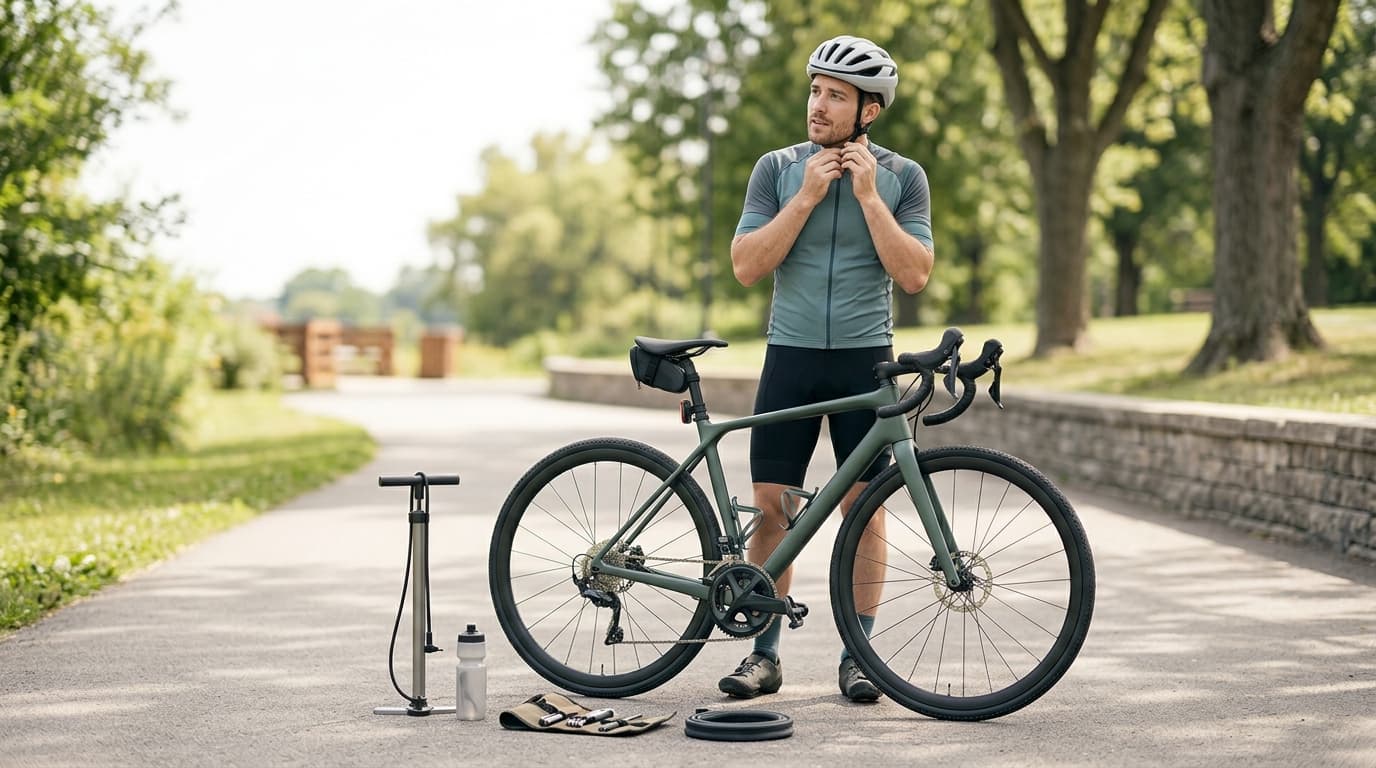
A helmet only works if it’s worn correctly every time, not just on rides that feel risky. It should sit level, covering your forehead, with the strap snug enough that it doesn’t shift when you move your head. Get sized properly at a shop if you’re unsure, and don’t assume a short neighborhood ride is safe enough to skip it.
Starting Too Fast
This one catches almost everyone at some point. The first stretch of a ride feels easy, energy is high, and it’s tempting to ride harder than the rest of the distance can actually support. By the halfway point, that early burst of effort has been spent, and the remaining miles feel far harder than they should.
The fix is simple, even if it feels counterintuitive: hold back at the start, more than feels necessary. A pace where you can comfortably talk is a good early benchmark. Riders who pace themselves well tend to finish stronger than they started, rather than fading the whole way home.
Wearing the Wrong Clothes
New riders often show up in whatever they’d wear to the gym or for a walk, which usually means cotton shirts, regular underwear, and sometimes even jeans. Cotton holds sweat and takes forever to dry, regular underwear seams create friction that gets uncomfortable fast, and jeans restrict movement and chafe on longer rides.
Padded cycling shorts make a bigger difference than people expect, even on moderate rides, and moisture-wicking tops are far more comfortable than cotton once you’ve been riding for more than twenty or thirty minutes. This is one of the cheapest fixes on this list relative to how much it improves the actual experience of riding.
Ignoring Tire Pressure
Underinflated tires are an easy thing to overlook, especially for beginners who don’t yet have a feel for what proper pressure should look or feel like. Soft tires increase rolling resistance, meaning you’re working harder for the same speed, and they also raise the risk of pinch flats, where the tube gets squeezed between the tire and rim over a bump or pothole.
Check your tire pressure regularly, ideally before every ride, and look for the recommended range printed on the sidewall of the tire itself. A floor pump with a built-in gauge at home makes this quick and painless.
Not Carrying Repair Basics
Plenty of new riders head out without a spare tube, tire levers, or a pump, figuring a flat tire is unlikely enough not to worry about. Then it happens, usually further from home than feels convenient, and there’s no way to fix it on the spot.
A basic repair kit doesn’t take up much space or cost much money. A spare tube matched to your tire size, a set of tire levers, and a mini pump or CO2 inflator cover the most common issue you’re likely to run into. It’s worth learning how to actually use them before you need them for the first time on the side of a road.
Grinding in the Wrong Gear
New riders often stay in the same gear regardless of terrain, which means grinding through hills in a gear that’s far too hard, or spinning uselessly fast on flats in a gear that’s too easy. Both waste energy, and the hill-grinding habit in particular tends to wear out legs fast.
Shifting down before a climb, rather than waiting until you’re already struggling partway up it, keeps your cadence steady and your effort more sustainable. It takes a bit of practice to get a feel for when to shift, but it becomes second nature fairly quickly once you start paying attention to it.
Not Fueling or Hydrating Properly
Beginners often wait until they feel hungry or thirsty to actually eat or drink, not realizing that by that point, they’re already behind. Bonking, that sudden and dramatic drop in energy, is a common experience for new riders who didn’t fuel proactively on a longer ride.
Eating and drinking on a schedule, rather than waiting for a signal from your body, prevents this. Small amounts consistently, roughly every twenty to thirty minutes on longer rides, work better than a single large snack partway through. For rides under an hour, this matters less, but anything beyond that benefits from proactive fueling.
Neglecting Basic Bike Maintenance
A dry, squeaky chain, brakes that need adjusting, or tires that haven’t been checked in weeks are all common on beginner bikes, mostly because new riders don’t yet know what maintenance actually looks like or how often it’s needed. Beyond being annoying, a poorly maintained bike works against you, adding resistance and wearing down components faster than necessary.
A little goes a long way here. Wiping down and lubricating your chain every few hundred miles, checking tire pressure regularly, and getting brakes adjusted if they start squeaking or feel weak keeps your bike running the way it’s supposed to, and extends the life of the components you’ve already paid for.
Comparing Yourself to Other Riders
This one isn’t about gear or technique, but it affects a lot of beginners anyway. It’s easy to see someone else’s pace, distance, or bike setup and feel like you’re behind or doing something wrong, especially with ride-tracking apps making comparison so easy.
Every rider started somewhere, and pace or distance early on says very little about where you’ll be after a few months of consistent riding. Comparing your current ride to your own ride from a month ago is a far more useful measure of progress than comparing yourself to someone else entirely.
Final Thoughts
Almost every beginner mistake on this list comes down to not yet knowing what to look out for, not a lack of ability. Fix the fit of your bike, wear the right clothing, pace yourself properly, carry basic repair tools, and pay attention to fueling and maintenance, and you’ll avoid the vast majority of frustrations that trip up new riders. The rest comes with time in the saddle.
If you’re still building out your setup, check out our full cycling gear checklist covering everything from safety essentials to clothing and maintenance tools.