Beginner Home Gym Setup Guide
Starting a home gym can feel overwhelming, especially for beginners. The sheer number of equipment options, conflicting advice online, and space limitations can make the process intimidating. Many people assume they need a full room or a big budget to get started, but the reality is quite different. A simple, well-planned setup is far more effective than a cluttered or expensive one.
This guide will walk you through how to build a practical, affordable, and effective home gym as a beginner, step by step.
Why Build a Home Gym as a Beginner
One of the main benefits of building a home gym is convenience. You don’t have to travel to a gym or work around its hours. With a home gym, your workouts are just a few steps away, making it easier to stay consistent.
It’s also cost-efficient over the long term. While there is an upfront investment in equipment, it usually pays for itself compared to monthly gym memberships.
Home gyms provide comfort and privacy. You can train without feeling self-conscious and go at your own pace, which is especially important for beginners. Lastly, a home gym offers flexibility. You can work out at any time, even with a busy schedule.
Step 1: Define Your Fitness Goals
Before buying any equipment, you need to know what you want to achieve. Your goals will determine the type of setup that makes sense for you.
If your goal is strength training, your focus will be on resistance equipment like dumbbells, bands, or kettlebells. For weight loss or fat loss, you’ll want a combination of cardio and resistance training. General fitness and health goals call for a balanced approach, combining cardio, strength, and mobility work. If mobility and flexibility are your priorities, you’ll need space for stretching, foam rolling, and floor-based exercises. Defining your goals helps prevent overspending on unnecessary equipment.
Step 2: Assess Your Available Space
The next step is figuring out where your home gym will live.
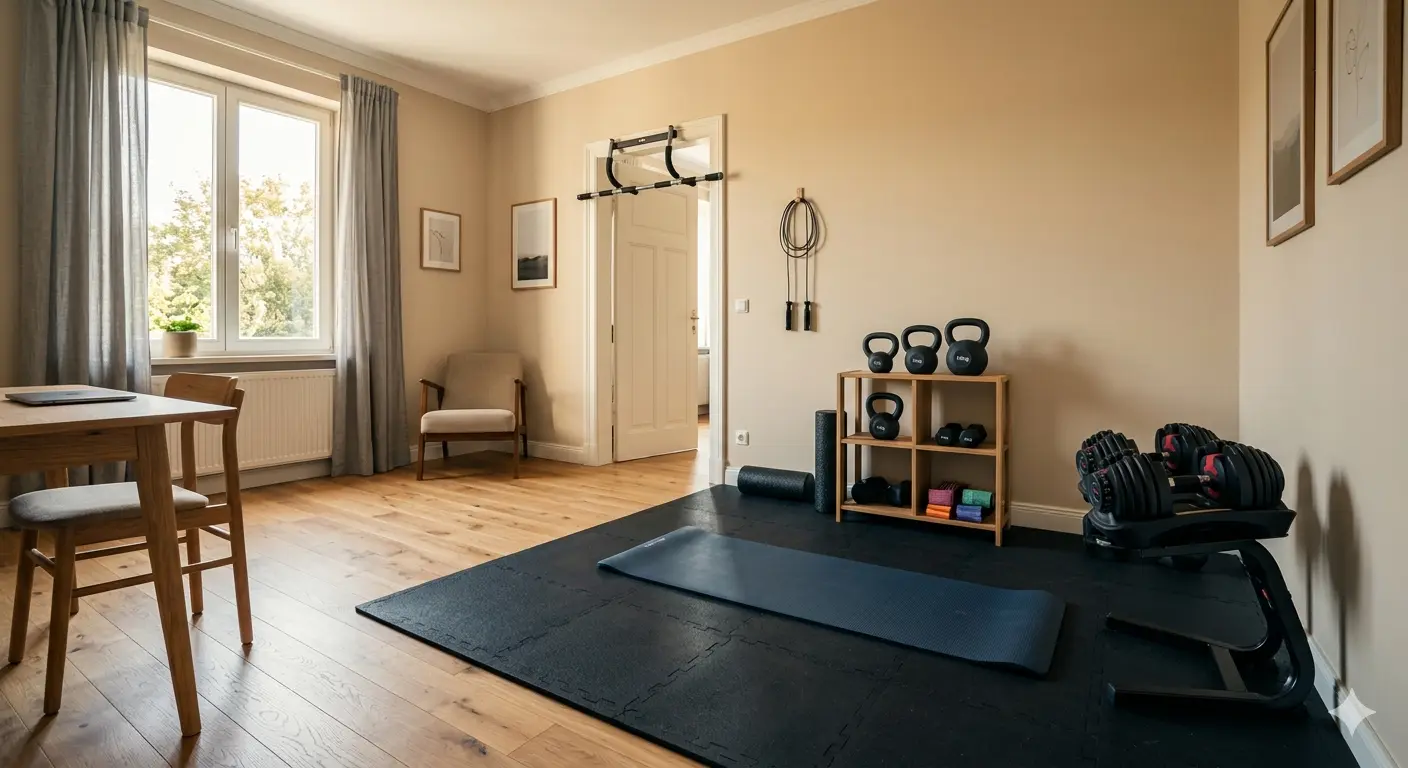
If you have a small apartment or limited space, consider a corner of your living room or bedroom. Even a small cleared area can work if you plan efficiently. For those with a garage or spare room, you’ll have more flexibility for equipment like benches or cardio machines. Outdoor options like a balcony or patio can work for cardio-friendly workouts, but be mindful of weather and neighbors. Make sure to measure your available space to ensure there’s enough room for safe movement.
Step 3: Start With Essential Equipment Only
Beginners often make the mistake of buying too much equipment at once. Starting with the basics is more effective.
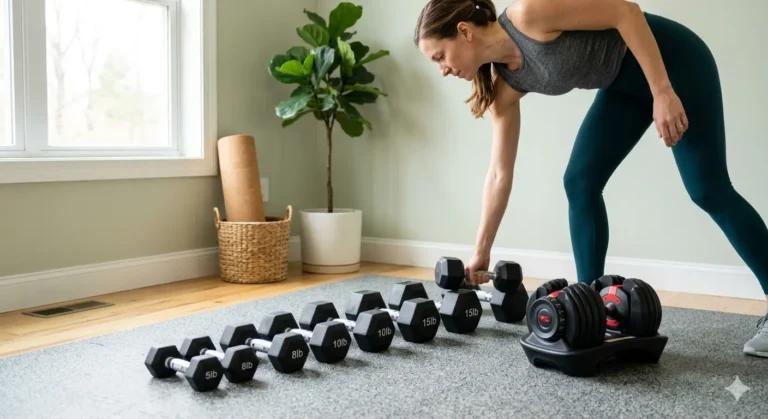
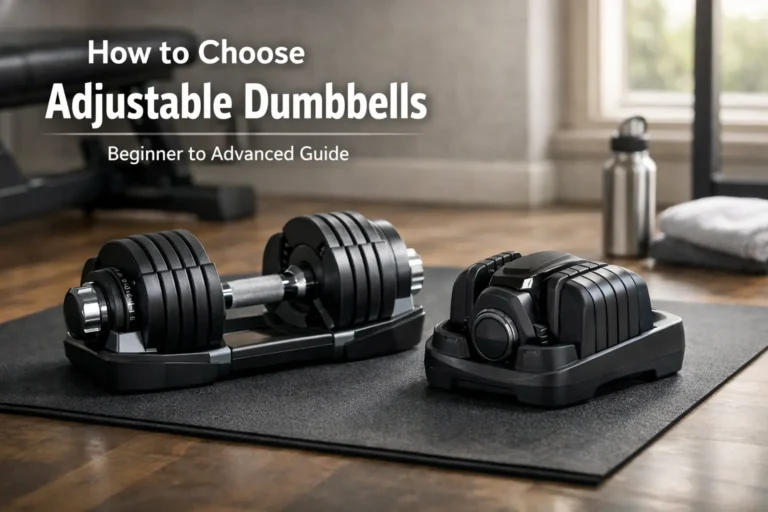
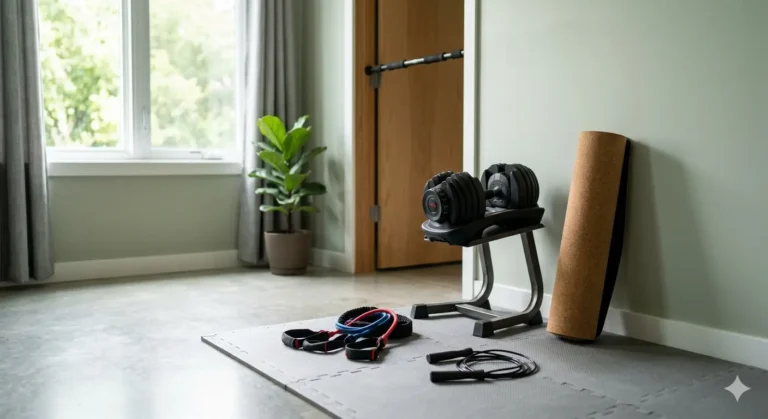
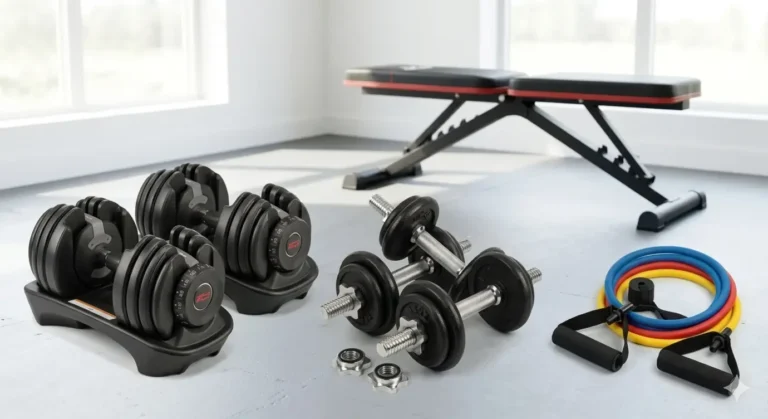
Must-have items include an exercise mat for floor exercises, resistance bands for versatile strength training, and a pair of dumbbells or adjustable dumbbells for basic lifting. Optional starter equipment can include a jump rope for cardio, a kettlebell for functional strength, and a stability ball for core exercises. Starting minimal helps you avoid overwhelm, reduces clutter, and keeps costs manageable.
Step 4: Strength Training Essentials
Strength training is the foundation of most fitness goals. Dumbbells are incredibly versatile and allow you to perform exercises for your arms, chest, back, legs, and core. Resistance bands are beginner-friendly and joint-friendly, making them ideal for controlled movement. Bodyweight exercises like push-ups, squats, lunges, and planks require no equipment and are effective for building strength. Over time, gradually increase the weight or resistance to continue challenging your muscles.
Step 5: Cardio Options for Beginners
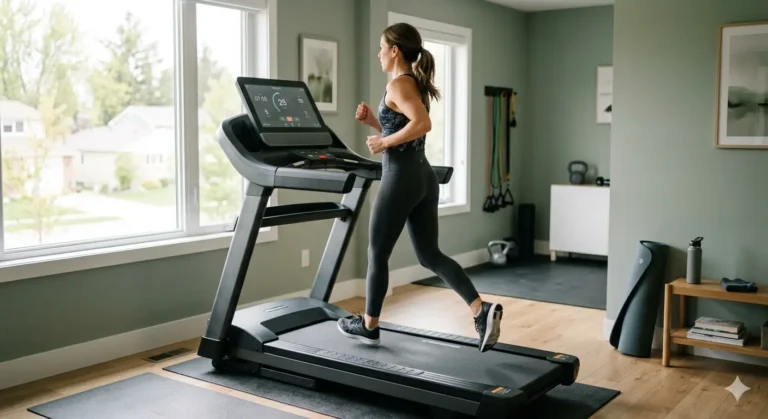
Cardio doesn’t have to involve a loud treadmill or high-impact jumping. Walking is one of the simplest low-noise options, whether outside or on a treadmill. Cycling, either on a stationary bike or outdoors, is gentle on the joints and easy to incorporate. Jump ropes are inexpensive and effective, though they can create noise in apartments. Bodyweight cardio circuits, including step-ups, marching in place, and low-impact HIIT exercises, provide excellent cardiovascular benefits without requiring machines.
Step 6: Recovery and Mobility Tools
Recovery is just as important as the workout itself. A foam roller helps relieve muscle soreness and improves flexibility. A yoga mat provides a comfortable surface for stretching and floor exercises. Massage balls or a massage gun can provide targeted relief for tight muscles, though they are optional. Prioritizing recovery prevents injuries and ensures you can continue training consistently.
Step 7: Flooring and Safety Setup
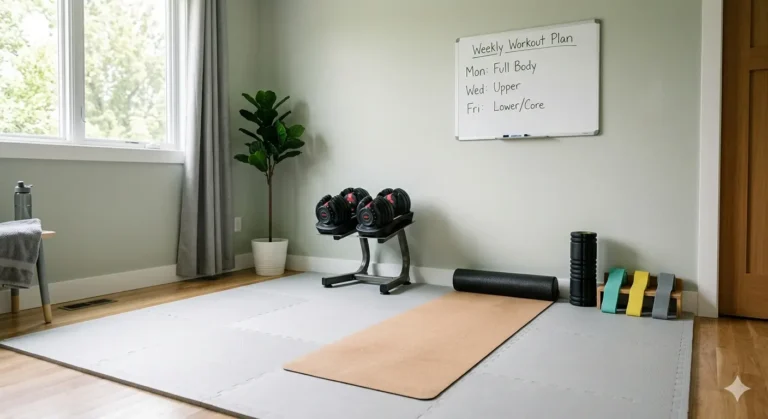
Protecting your floors is essential, especially if you live in an apartment. Rubber mats or foam tiles can absorb impact from weights and reduce noise. Creating a clear workout area prevents accidental collisions and allows you to perform exercises safely. Proper flooring also contributes to long-term equipment durability.
Step 8: Organizing Your Home Gym
Organization is key to a beginner-friendly home gym. Storage solutions like baskets, shelves, or under-bed storage help keep equipment accessible without creating clutter. Keeping your space tidy makes workouts more inviting and reduces the chances of tripping over weights or bands. Minimalism is especially important for beginners, as it encourages consistency and prevents the feeling of being overwhelmed.
Sample Beginner Home Gym Setups
For a low-budget setup ($50–$150), resistance bands, a mat, and a jump rope are enough for full-body workouts. A basic strength setup ($150–$400) can include dumbbells, bands, and a mat. A more balanced beginner setup ($400–$800) might add adjustable dumbbells, a small bench, and a compact cardio tool. The key is choosing equipment that aligns with your goals rather than buying everything at once.
Common Beginner Mistakes
Many beginners make similar mistakes. Buying too much equipment too soon can be overwhelming and expensive. Choosing bulky machines first may limit your space unnecessarily. Ignoring space limitations can make workouts uncomfortable or unsafe. Skipping warm-up and recovery routines increases the risk of injury. Finally, inconsistency is one of the biggest barriers to progress. A smaller, manageable setup encourages consistent training.
How to Build a Beginner Workout Routine
For beginners, full-body workouts are the easiest way to start. Aim for 2–4 sessions per week, focusing on all major muscle groups. Incorporate both strength and cardio in each session if possible. Progressive overload—gradually increasing the weight, reps, or resistance over time—is the most effective way to see improvement. Even small increments make a big difference over weeks and months.
Staying Consistent at Home
Make your workouts easy to start. Keep your equipment accessible and organized so there’s minimal setup time. Establish a routine with fixed workout days to develop consistency. Track your progress to stay motivated and adjust your routine as you get stronger. Keeping your space clean and inviting also encourages regular use.
Budget Breakdown for Beginners
Low-budget setups prioritize essentials like bands, a mat, and small dumbbells. Mid-range setups allow for adjustable dumbbells, a bench, and additional bands or kettlebells. Higher-budget setups can include compact cardio machines and additional strength tools, but they are not necessary to get started. The most important thing is investing in versatile equipment that you will actually use.
Final Checklist for Beginners
Before you start training, make sure you have a clear fitness goal, a defined workout space, essential equipment only, a basic storage plan, a safe flooring setup, and a simple workout routine. Keeping things simple ensures that you actually use your home gym and stay consistent.
Conclusion
Beginners don’t need a perfect home gym—they need a functional one. Start small, focus on the essentials, and build gradually. Consistency is far more important than having the latest equipment or a full-room setup. With a thoughtful approach, you can create a beginner-friendly home gym that supports your fitness goals and keeps you motivated. Start today with just a few essential tools and watch your progress grow.