Treadmill vs Exercise Bike for Weight Loss
When you’re trying to lose weight and build a home workout routine, cardio machines usually come up early in the conversation. And for good reason. They’re convenient, effective, and easy to use without needing much skill or setup.
But then comes the big question: should you get a treadmill or an exercise bike?
Both are popular. Both can help you burn calories. And both can absolutely support weight loss goals. But they feel very different to use, and that difference matters more than most people realize.
Choosing the right one isn’t about which machine is “better” in general. It’s about which one fits your body, your space, and your ability to stay consistent over time.
Let’s break it down in a practical way.
How Weight Loss Actually Works
Before comparing machines, it’s important to understand what actually drives weight loss.
At its core, weight loss comes down to a calorie deficit. That means you burn more calories than you consume. Cardio helps by increasing the number of calories you burn each day, but it’s not the only factor.
Exercise is just one part of the equation. Nutrition plays a major role, and consistency matters even more. The best cardio machine is not the one that burns the most calories in theory, but the one you can actually stick with in real life.
That’s why this comparison isn’t just about intensity. It’s about sustainability.
The Treadmill: What It Is and How It Works
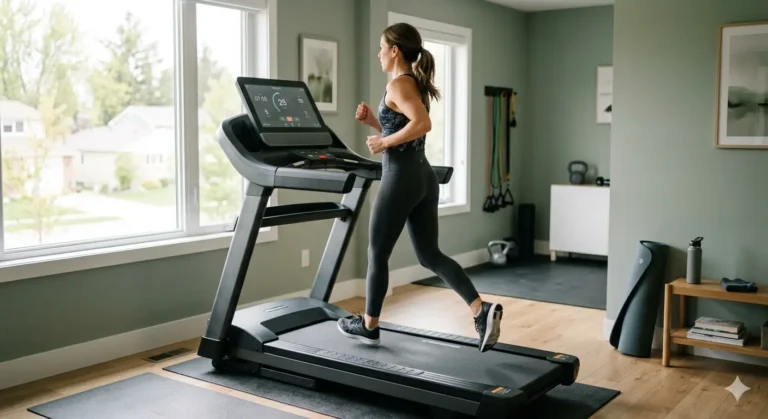
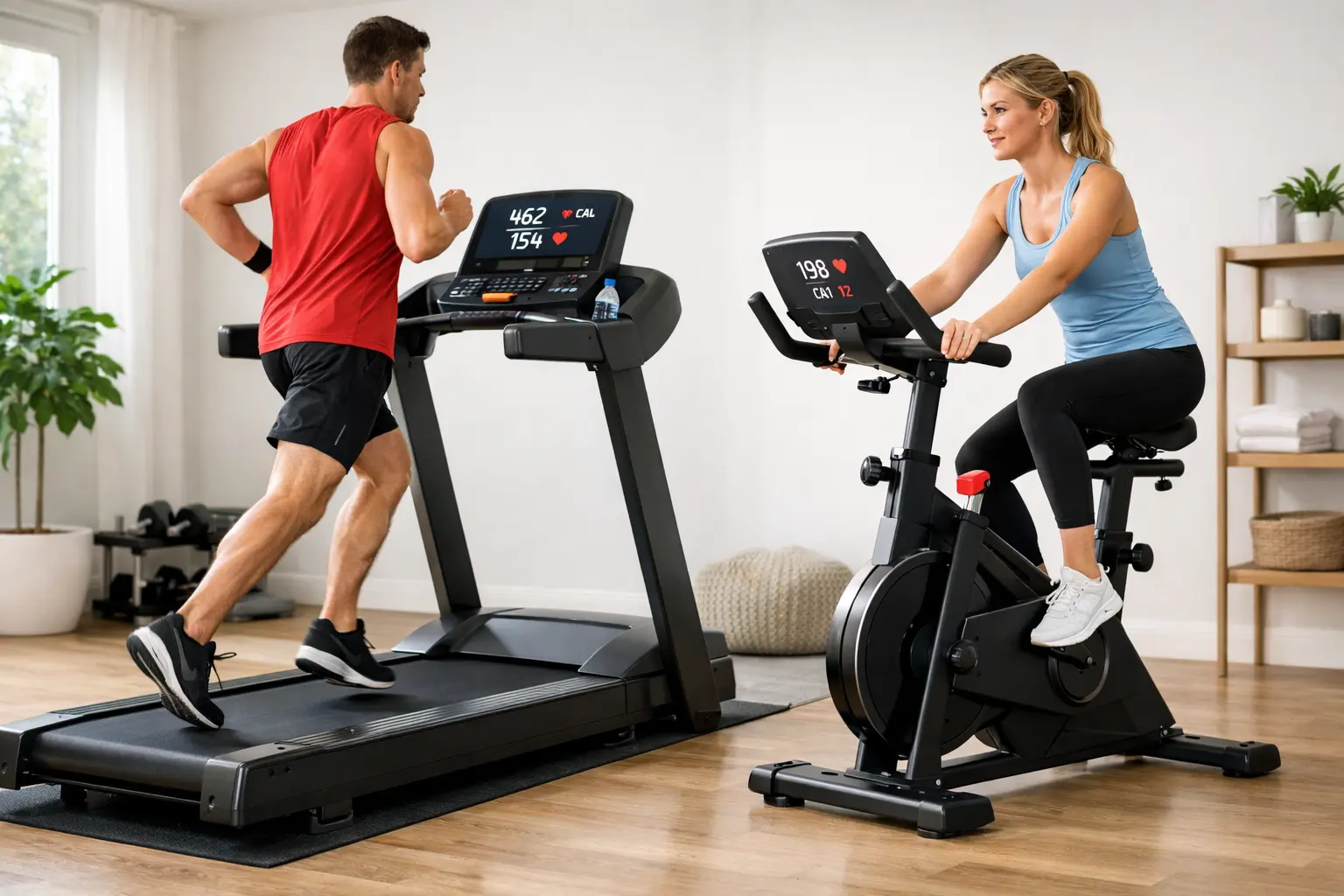
A treadmill is a walking and running machine that lets you control speed and incline indoors. It can be used for light walking, brisk incline walking, jogging, or full running workouts.
Most modern treadmills include features like preset programs, heart rate tracking, and adjustable incline settings, which can significantly change workout intensity.
Benefits of a Treadmill for Weight Loss
One of the biggest advantages of a treadmill is its calorie-burning potential. Running, in particular, is one of the most effective forms of steady-state cardio for burning calories in a short amount of time.
Incline walking is another powerful feature. By increasing the incline, you can make walking much more intense without needing to run, which helps reduce impact while still increasing calorie burn.
Treadmills also mimic natural movement. Walking and running are familiar patterns, which makes them easy to adopt without much learning curve. This is especially helpful for people transitioning from sedentary lifestyles.
Another benefit is versatility. A treadmill can support beginners who just want to walk and advanced users training for endurance or fat loss through running intervals.
Downsides of a Treadmill
Despite its benefits, a treadmill is not perfect for everyone.
The biggest issue is impact. Running places stress on the knees, ankles, and hips. Over time, this can become uncomfortable or lead to overuse injuries if recovery is not managed properly.
Noise is another factor. Treadmills can be loud, especially when running, which makes them less ideal for apartments or shared living spaces.
They also take up more space compared to other cardio equipment. Even folding models still require a dedicated area.
Finally, quality matters. Cheaper treadmills can struggle with durability, especially under frequent use or running.
The Exercise Bike: What It Is and How It Works
An exercise bike is a stationary cycling machine that allows you to pedal against adjustable resistance. There are different types, including upright bikes, recumbent bikes, and spin bikes, but they all follow the same basic principle.
You adjust resistance and pedal to control workout intensity.
Benefits of an Exercise Bike for Weight Loss
The biggest advantage of an exercise bike is low impact. Cycling is gentle on the joints, making it suitable for almost anyone, including beginners, older adults, or people recovering from injuries.
This low-impact nature also means you can recover faster between workouts. That often leads to more frequent training sessions, which is important for weight loss consistency.
Exercise bikes are also quiet. Compared to treadmills, they produce very little noise, making them ideal for apartments or early morning workouts.
They are also easy to use. You can sit down, start pedaling, and begin your workout immediately without learning technique or worrying about form.
High-intensity interval training also works very well on bikes. Short bursts of intense cycling followed by recovery periods can be extremely effective for fat loss.
Downsides of an Exercise Bike
The main limitation of exercise bikes is that they typically burn fewer calories per minute compared to running, especially at moderate intensities.
They also focus mostly on the lower body. While your legs get a solid workout, your upper body is not heavily engaged unless you add specific movements or resistance work.
Another downside is boredom. Cycling is repetitive, and some people find it harder to stay engaged during longer sessions.
Finally, cycling is less functional than walking or running. It doesn’t translate as directly into everyday movement patterns.
Calorie Burn Comparison
When comparing treadmill and exercise bike calorie burn, intensity is the key factor.
Running on a treadmill generally burns more calories per minute than cycling at a moderate pace. However, high-intensity cycling can close the gap significantly.
Incline walking also changes the equation. A steep incline walk can burn more calories than a casual run while being easier on the joints.
The most important takeaway is that effort level matters more than the machine itself. A hard cycling workout will always beat a lazy treadmill walk, and vice versa.
What Really Matters for Weight Loss
If there’s one thing to understand, it’s this: consistency beats everything else.
The best machine for weight loss is the one you actually use regularly. A treadmill is only effective if you use it. The same goes for an exercise bike.
Heart rate zones also matter. Whether you’re walking, running, or cycling, staying in an appropriate intensity range helps improve fat loss and cardiovascular fitness over time.
Workout duration and frequency are equally important. Short, consistent sessions often work better than occasional long workouts.
Strength training also plays a major role in long-term fat loss, even though it’s not the focus of this comparison.
Who Should Choose a Treadmill?
A treadmill is a great choice if you enjoy walking or running. If those movements feel natural and enjoyable, you’re more likely to stick with them long term.
It’s also better for people who want higher calorie burn potential, especially through running or incline walking.
If you have enough space and a slightly higher budget, a treadmill can be a strong addition to your home gym.
It’s also a good option for people training for outdoor running events or looking to replicate outdoor movement indoors.
Who Should Choose an Exercise Bike?
An exercise bike is ideal for beginners who want something simple and easy to start.
It’s also better for people with joint issues or anyone who wants low-impact cardio.
If you live in an apartment or need a quiet machine, a bike is usually the safer choice.
It’s especially good for people who value consistency over intensity and prefer shorter, more frequent workouts.
Treadmill vs Exercise Bike: Head-to-Head
When it comes to calorie burn potential, treadmills generally have the edge at higher intensities.
For joint impact, exercise bikes win easily because they are low-impact.
In terms of space, bikes are more compact and easier to fit into small homes.
Noise levels also favor exercise bikes, which are much quieter.
Ease of use is fairly balanced, but bikes are slightly simpler for complete beginners.
Workout variety is stronger on treadmills because of walking, jogging, running, and incline options.
For long-term sustainability, both can work, but it depends heavily on personal preference.
Can You Use Both?
Yes, and in many cases, combining both is the best option.
You can use a treadmill for steady-state cardio like walking or incline sessions and use an exercise bike for interval training or recovery days.
This combination helps prevent boredom and allows you to switch intensity levels based on how you feel.
Of course, budget and space will determine whether this is realistic for you.
Common Mistakes When Choosing
One of the biggest mistakes people make is choosing based on trends instead of lifestyle. Just because running burns more calories doesn’t mean a treadmill is right for you.
Another mistake is ignoring space limitations. A machine that doesn’t fit comfortably in your home will eventually be used less.
Some people also overestimate how motivated they’ll be for high-impact workouts. If it feels like a chore, consistency usually drops.
On the other hand, buying the cheapest machine without considering durability often leads to frustration and early replacement.
Budget Considerations
Entry-level treadmills and bikes can both be affordable, but they often come with limitations in durability and features.
Mid-range machines usually offer the best balance of quality and price for home use.
Premium models provide better stability, smoother performance, and longer lifespan, but they are not necessary for everyone.
Over time, the value of a machine depends less on price and more on how often you use it.
Final Decision Guide
Choose a treadmill if you want higher calorie burn potential, enjoy walking or running, and have enough space.
Choose an exercise bike if you want a low-impact, quiet, and beginner-friendly option that is easy to stick with.
Choose both if you want maximum variety and have the space and budget to support it.
Conclusion
Treadmill and exercise bikes are both effective tools for weight loss, but they serve different types of users.
The best choice is not about which machine burns more calories in theory. It’s about which one fits your lifestyle and keeps you consistent.
If you enjoy the workout, you’ll keep doing it. And if you keep doing it, you’ll get results.
Start with the machine that feels most natural for you, build a simple routine around it, and focus on consistency. That’s what drives real weight loss over time.