Home Gym Mistakes Beginners Make (and How to Avoid Them)
Building a home gym sounds simple at first. You pick a few pieces of equipment, clear some space, and start working out. But in reality, a lot of beginners end up wasting money, creating cluttered spaces, or losing motivation within a few weeks.
The problem usually isn’t lack of effort. It’s poor planning and a few avoidable mistakes that almost everyone makes when they’re just getting started.
If you’re thinking about building a home gym, or you already have one that isn’t working as well as you hoped, this guide will help you fix the most common mistakes and set things up the right way from the beginning.
Mistake #1: Buying Too Much Equipment Too Soon
One of the most common beginner mistakes is overbuying equipment. It usually starts with excitement. You imagine your perfect home gym, watch a few setup videos, and start ordering everything at once.
The problem is that most of that equipment ends up unused.
A cluttered space makes it harder to train. It becomes overwhelming, and instead of feeling motivated, you start feeling like your home gym is messy or complicated.
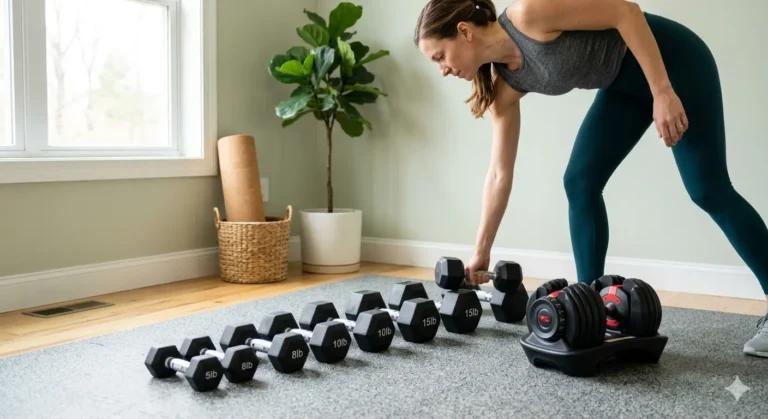
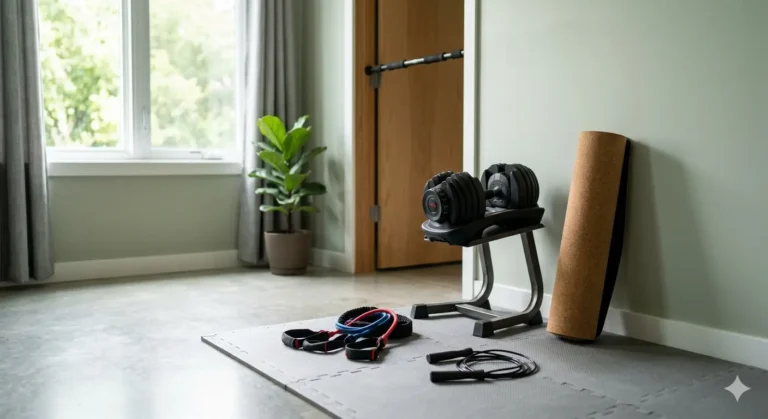
A better approach is to start small. Focus on essentials first, such as a mat, a pair of dumbbells or resistance bands, and maybe one simple cardio tool. Once you actually start training consistently, you can add more equipment based on real need, not assumptions.
Mistake #2: Ignoring Space Limitations
Another major issue is underestimating how much space equipment actually needs.
Many beginners buy machines or benches without properly measuring their space. What looked fine online suddenly feels cramped in real life.
This leads to frustration, limited movement, and sometimes even safety risks if you don’t have enough room to train properly.
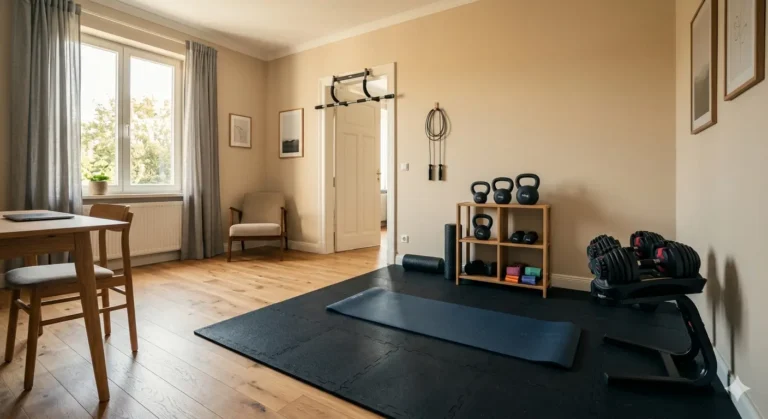
Before buying anything, measure your space carefully. Think about not just where the equipment will sit, but how you will move around it. A good home gym doesn’t just fit in a room; it allows you to train comfortably.
Mistake #3: Choosing Equipment Based on Trends
Social media has made home gyms look more like aesthetic projects than practical workout spaces. It’s easy to get influenced by what others are using, especially when their setups look impressive.
But what works for someone else might not work for you.
The problem with trend-based buying is that it ignores your actual goals. A fancy machine might look great, but if it doesn’t fit your training style, it will eventually go unused.
Instead of copying setups, focus on what supports your fitness goals. If you want general fitness, you don’t need advanced machines. If you want strength, prioritize free weights. Always choose based on function, not appearance.
Mistake #4: Overlooking Basic Strength Training
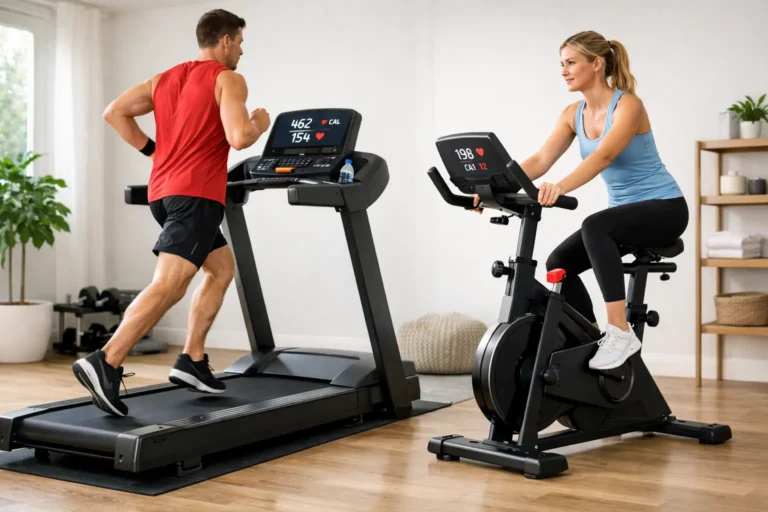
Many beginners focus heavily on cardio equipment like treadmills or bikes and ignore strength training altogether.
While cardio is useful, strength training plays a major role in building muscle, improving metabolism, and shaping your body.
Without it, progress can be limited.
You don’t need complicated machines to fix this. Simple tools like dumbbells, resistance bands, or even bodyweight exercises can be extremely effective. A balanced home gym always includes some form of resistance training.
Mistake #5: Buying Cheap, Low-Quality Equipment
It’s understandable to want to save money when starting out. But going for the cheapest option often creates problems later.
Low-quality equipment may break easily, feel unstable, or even become unsafe over time.
This doesn’t mean you need the most expensive gear. It just means you should aim for decent quality, especially for essential items like dumbbells, mats, or benches.
A good rule is to invest in fewer, better pieces instead of many low-quality ones.
Mistake #6: Not Having a Clear Training Plan
A home gym is only useful if you actually know what you’re doing in it.
Many beginners start working out without any structure. They randomly pick exercises each day, which leads to slow progress and inconsistent results.
Without a plan, motivation drops quickly.
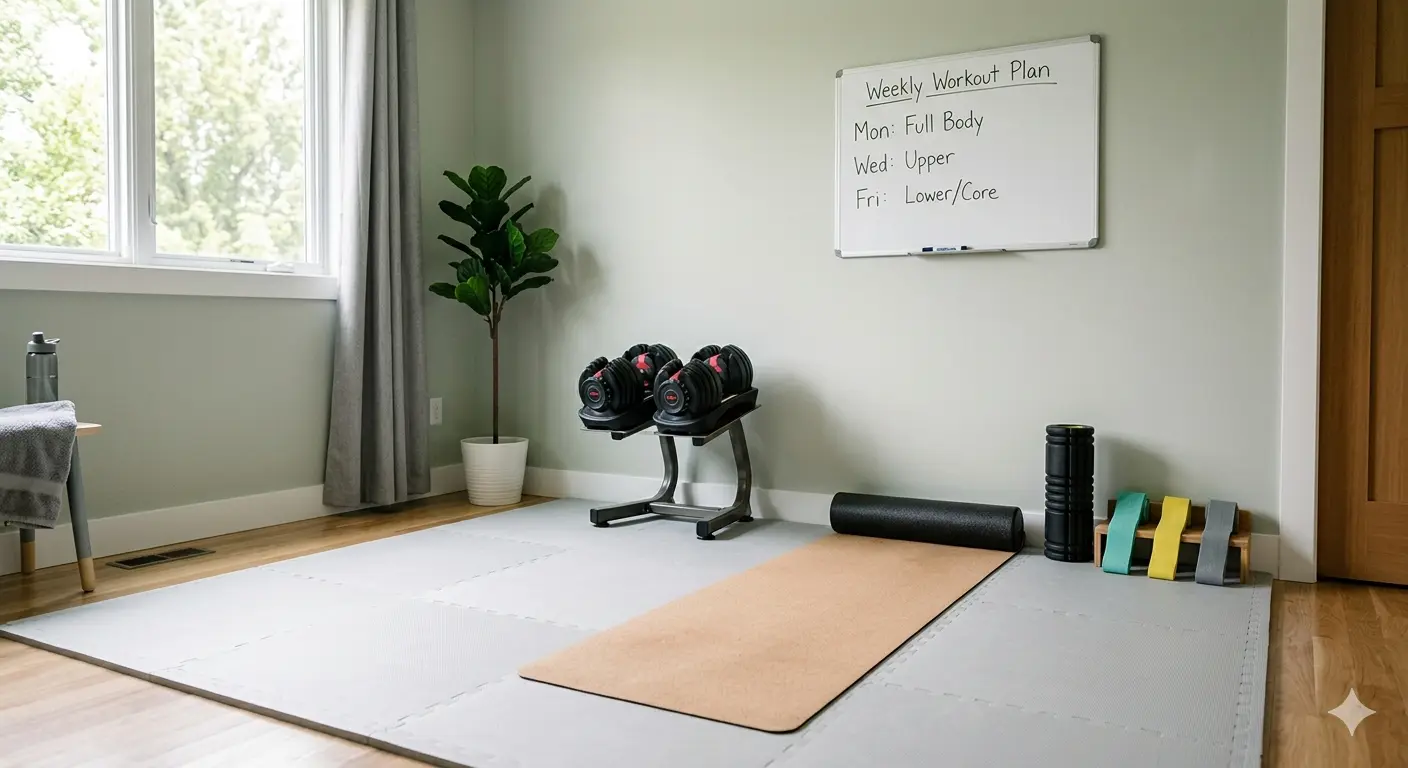
A simple weekly routine is enough to fix this. You don’t need anything complicated. Even a basic plan that targets full-body workouts a few times per week can make a big difference.
Mistake #7: Neglecting Flooring and Safety
Flooring is often ignored, but it’s one of the most important parts of a home gym setup.
Working out on bare floors can damage your space, increase noise, and create safety risks like slipping or unstable footing.
Rubber mats or foam tiles can solve most of these issues. They protect your floor, reduce noise, and give you a more stable surface to train on.
Safety should always come before aesthetics.
Mistake #8: Prioritizing Machines Over Fundamentals
It’s easy to get attracted to big, complex machines that promise full-body workouts. But in most cases, they are not necessary, especially for beginners.
Many of these machines take up a lot of space and offer limited versatility compared to free weights or bodyweight exercises.
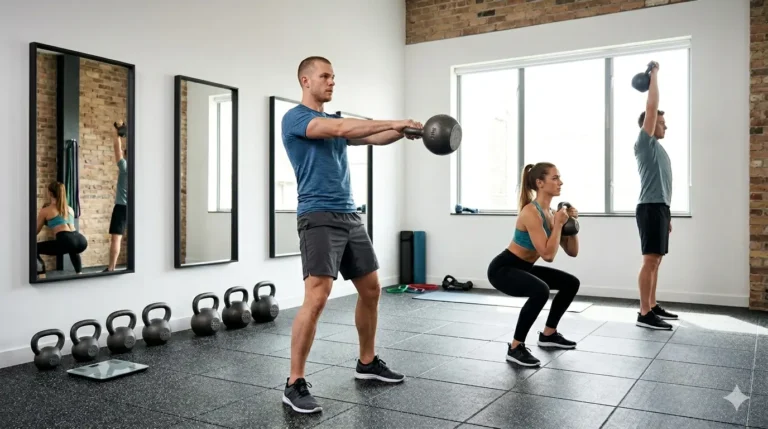
The fundamentals of strength training are simple: push, pull, squat, hinge, and carry. You can train all of these movement patterns with very basic equipment.
Start with fundamentals first, then add machines later if needed.
Mistake #9: Ignoring Consistency and Habit Building
A home gym only works if you use it regularly. Many beginners rely on motivation instead of building habits.
The problem is that motivation is unreliable. It comes and goes.
Consistency comes from routine. If your workouts are scheduled and easy to start, you’re far more likely to stick with them.
Even short workouts are valuable if they happen consistently.
Mistake #10: Poor Equipment Layout and Organization
A messy workout space is one of the fastest ways to lose motivation.
When equipment is scattered or hard to access, training feels like a chore before you even begin.
Good organization makes a big difference. Keep your equipment simple, stored properly, and easy to reach. A clean space encourages more frequent workouts and reduces friction.
Bonus Mistake: Ignoring Noise (Especially in Apartments)
If you live in an apartment or shared space, noise matters more than you might think.
Dropping weights, jumping, or using loud machines can disturb neighbors and create stress around your workouts.
This can lead to inconsistency or even stopping altogether.
The solution is simple: focus on controlled movements and choose quieter equipment when possible. Rubber mats and low-impact exercises also help significantly.
How to Build a Smarter Home Gym
The best home gyms are not the most expensive or the most advanced. They are the simplest and most consistent.
Start small with versatile equipment. Focus on tools that support your goals. Build gradually instead of buying everything at once.
Your home gym should evolve with your fitness journey, not overwhelm it from day one.
Simple Beginner-Friendly Setups
A minimal setup might include a yoga mat, resistance bands, and light dumbbells. This is enough for full-body workouts.
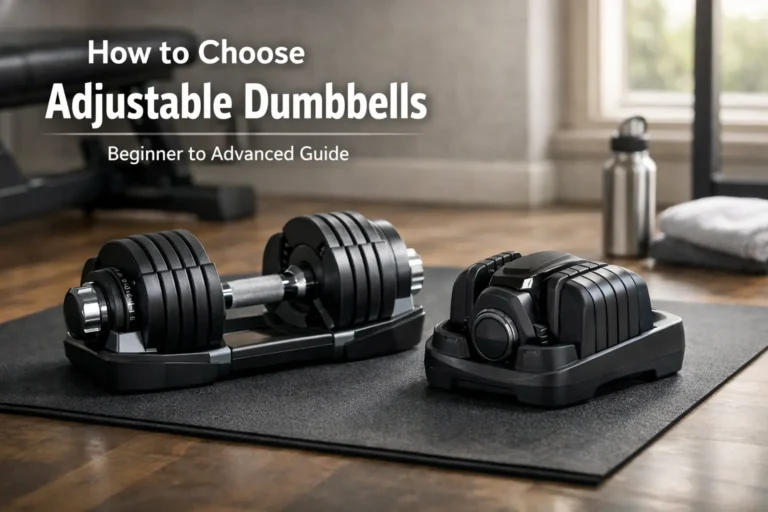
A balanced setup could include adjustable dumbbells, a bench, and bands.
A cardio-plus-strength setup might include a bike or treadmill along with basic weights.
The key is not how much equipment you have, but how effectively you use it.
Budget Planning Tips
When building a home gym, prioritize essentials first. Don’t rush into expensive purchases early on.
Upgrade gradually as your training improves and your needs become clearer.
Think long-term value instead of short-term excitement.
Final Thoughts
Most home gym mistakes come from rushing, overbuying, or copying what others are doing without thinking about personal needs.
A successful home gym is not about having everything. It’s about having the right things.
Keep it simple, stay consistent, and build gradually. If your setup supports your routine instead of complicating it, you’re already ahead of most beginners.
The best home gym is the one you actually use.