How to Build a Home Gym Under $500
If you’ve ever looked into building a home gym, you’ve probably had the same reaction most people do: it seems expensive. Between high-end machines, racks, and endless accessories, the cost can quickly spiral into the thousands.
But here’s the reality most fitness blogs don’t emphasize enough—you don’t need a massive budget to create an effective home gym. In fact, with the right strategy, you can build a setup that supports strength training, cardio, and overall fitness for under $500.
It all comes down to making smart choices, focusing on versatility, and avoiding unnecessary purchases. If you approach it the right way, a $500 home gym isn’t a limitation—it’s more than enough.
Why a Budget Home Gym Makes Sense
Let’s start with the obvious benefit: saving money. Gym memberships may seem affordable month to month, but over time they add up. When you compare a one-time investment of $500 to paying monthly fees for years, the math becomes pretty convincing.
There’s also the convenience factor. Having your workout space at home removes common barriers like commuting, waiting for equipment, or dealing with crowded gyms. When your setup is always available, it becomes much easier to stay consistent.
A budget home gym also forces you to focus on what actually works. Instead of buying trendy or unnecessary equipment, you invest in tools that deliver real results. That kind of simplicity often leads to better workouts.
And finally, it’s yours. You can design it around your goals, your schedule, and your preferences without compromise.
Start with a Plan, Not Purchases
Before you spend a single dollar, take a step back and define your goals. Are you trying to build strength? Lose weight? Improve endurance? Stay generally active?
Your goals will determine how you spend your $500. For example, someone focused on strength training will prioritize weights, while someone who prefers cardio might allocate more toward conditioning tools.
Next, think about how you want to divide your budget. A simple approach is to split it into categories like strength equipment, cardio tools, and essentials such as flooring. You don’t need an exact formula, but having a rough plan helps you avoid overspending in one area.
It’s also important to distinguish between must-haves and nice-to-haves. A jump rope might be essential for one person and irrelevant for another. Stay focused on what you’ll actually use.
Impulse buying is one of the fastest ways to blow your budget. Stick to your plan.
The Essential Equipment You Actually Need
When you’re working with a $500 limit, every piece of equipment needs to earn its place. The good news is that a small number of well-chosen items can go a long way.
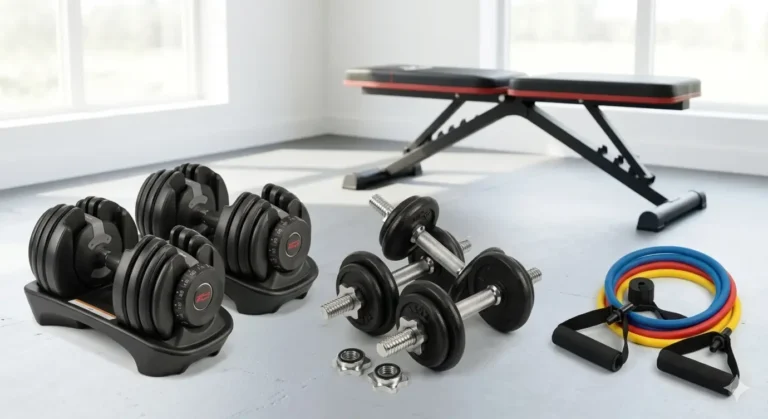
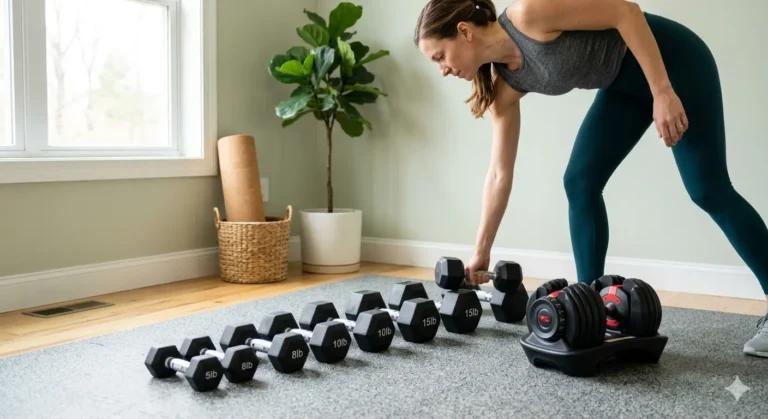
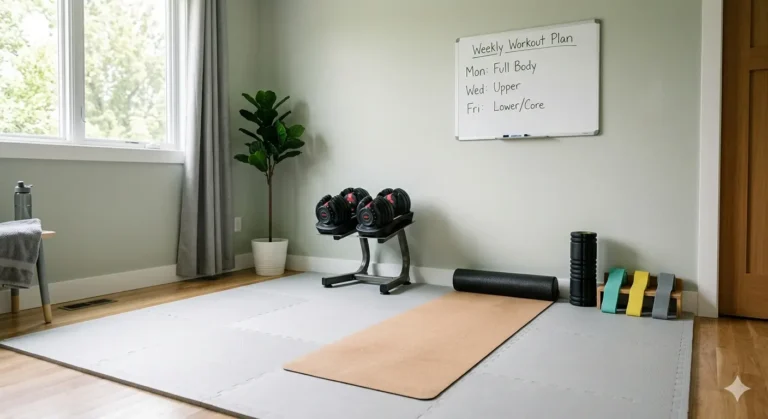
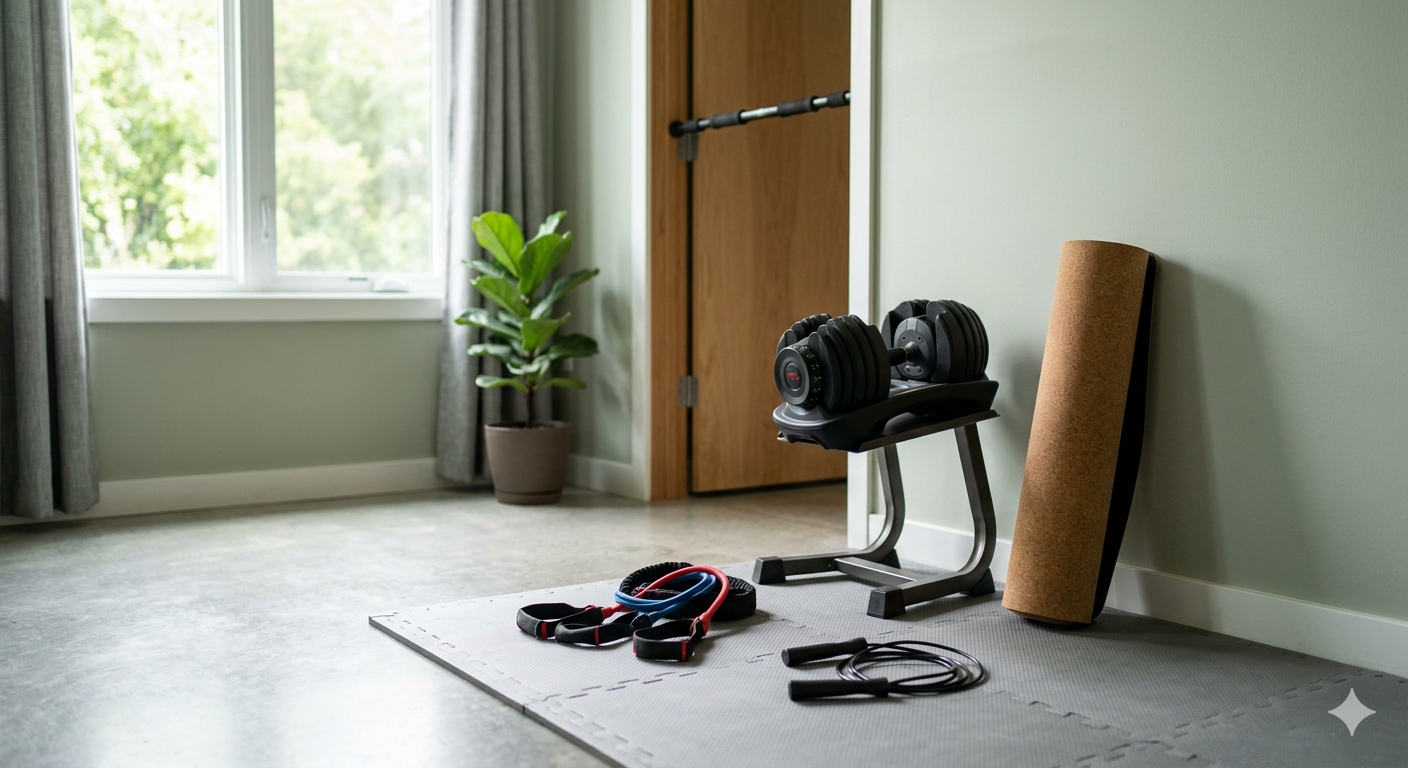
For strength training, adjustable dumbbells are one of the best investments you can make. Instead of buying multiple sets, you get a range of weights in one compact system. This alone can cover a huge portion of your workouts.
Resistance bands are another must-have. They’re affordable, portable, and incredibly versatile. You can use them for strength training, warm-ups, mobility work, and even rehabilitation.
If your budget allows, a kettlebell can add variety to your routine. It’s especially useful for dynamic movements like swings, which combine strength and cardio.
Bodyweight training tools are also worth including. A doorway pull-up bar is relatively inexpensive and opens up a range of upper-body exercises. Push-up handles can improve comfort and range of motion, while everyday furniture can double as equipment for dips and step-ups.
For cardio, you don’t need anything fancy. A jump rope is one of the most effective tools you can buy, and it costs very little. It’s perfect for high-intensity workouts and requires almost no space.
Don’t overlook flooring. A basic workout mat or foam tiles can protect your floors, reduce noise, and make your workouts more comfortable. It’s a small investment that makes a big difference.
Finally, think about storage. Even a simple bin or a few wall hooks can keep your space organized and usable.
A Realistic $500 Home Gym Setup
To make this more concrete, here’s an example of how you might allocate your budget.
Adjustable dumbbells will likely take the largest share, typically somewhere between $150 and $250 depending on the brand and weight range. Resistance bands might cost around $20 to $40 for a good set.
A pull-up bar can fall in the $30 to $60 range, while a jump rope might cost as little as $10 to $20. For flooring, you can expect to spend between $30 and $80 depending on the size and quality.
That still leaves room for small extras like storage solutions or an additional piece of equipment if you find a good deal.
The exact numbers will vary, but the key takeaway is that a balanced, functional setup can comfortably fit within a $500 budget.
How to Stretch Your Budget Even Further
If you want to get the most out of your money, there are a few strategies that can make a big difference.
Buying second-hand equipment is one of the best ways to save. Many people sell barely used fitness gear at a fraction of the original price. Just make sure to check for quality and durability before purchasing.
Keep an eye out for sales and discounts. Seasonal promotions, clearance events, and bundle deals can help you get more for less.
You can also get creative with what you already have. Household items can double as workout tools. A backpack filled with books can act as a weighted vest, water bottles can serve as light weights, and a sturdy chair can be used for a variety of exercises.
Another smart approach is to start small and build over time. You don’t need to spend the full $500 immediately. Begin with the essentials and add more equipment as your needs evolve.
Making the Most of a Budget Setup
Having the right equipment is only part of the equation. How you use it matters just as much.
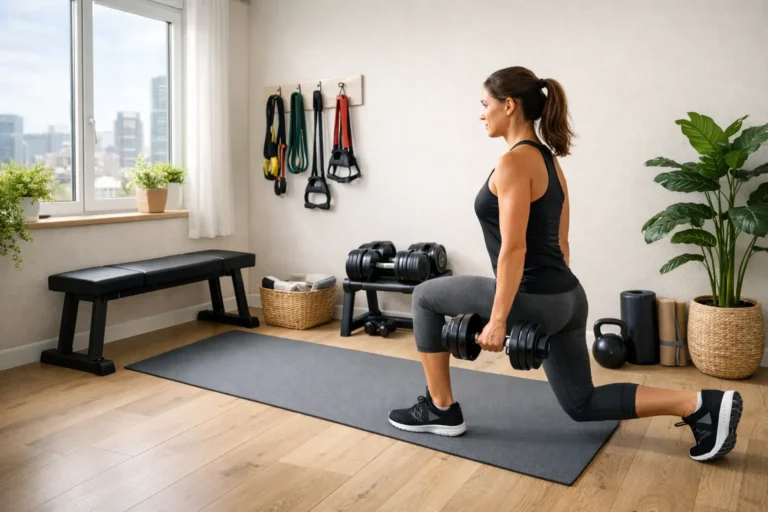
Focus on compound movements—exercises that work multiple muscle groups at once. Squats, push-ups, rows, and lunges give you more value per workout and make the most of limited equipment.
Progressive overload is also key. To keep improving, you need to gradually increase the challenge. This could mean adding weight, increasing repetitions, or slowing down your movements for greater control.
Variety doesn’t require more equipment. By changing your workout structure, intensity, or exercise selection, you can keep things interesting without spending extra money.
There are also countless free resources available online. From workout videos to structured programs, you can access high-quality guidance without paying for it.
Don’t Ignore Your Space
Even on a budget, your workout environment matters.
You don’t need a dedicated room. A small corner of your bedroom, living room, or even a balcony can work. The key is to keep it functional and clutter-free.
Choose equipment that’s easy to store and move. Foldable or compact items are ideal for small or shared spaces.
Organization is critical. When everything has a place, your setup becomes much easier to use. And when it’s easy to use, you’re more likely to stick with it.
Common Mistakes to Avoid
One of the biggest mistakes people make is spending too much on a single item. A large machine might seem appealing, but it can quickly eat up your entire budget while limiting your options.
Another common issue is buying equipment you don’t actually need. It’s easy to get influenced by trends or marketing, but if you won’t use it regularly, it’s not worth the cost.
Ignoring versatility is another pitfall. Single-purpose equipment often doesn’t provide enough value in a budget setup.
And finally, don’t skip the basics. Items like resistance bands or a good mat might not seem exciting, but they play a crucial role in making your workouts effective and comfortable.
Keep It Simple and Stay Consistent
Once your home gym is set up, maintaining it is straightforward.
Keep your equipment clean and store it properly to extend its lifespan. Reassess your setup occasionally to make sure it still aligns with your goals.
Most importantly, use it. The effectiveness of your home gym has very little to do with how much you spent and everything to do with how consistently you show up.
Final Thoughts
Building a home gym under $500 isn’t just possible—it’s practical. With a thoughtful approach, you can create a setup that supports strength, cardio, and overall fitness without stretching your finances.
You don’t need the latest machines or a large space. You just need the right tools, a clear plan, and the discipline to use them.
Start with what you can afford, focus on what works, and build from there.