How to Use a Foam Roller for Lower Back Pain
Lower back pain is something most people deal with at some point in their lives. Whether it comes from long hours of sitting, poor posture, heavy training, or just everyday stress on the body, it can be frustrating and limiting.
Because of this, foam rollers have become a popular tool for relief. They’re simple, inexpensive, and easy to use at home. But there’s also a lot of misunderstanding around how they should be used for lower back pain.
One of the most important things to understand right away is this: you generally should not foam roll your lower back directly. That surprises a lot of people, but it’s a key safety point. When used correctly, foam rolling can absolutely help reduce lower back discomfort—but the focus should be on the muscles around the lower back, not the spine itself.
This guide will walk you through how to use a foam roller safely and effectively to support lower back pain relief.
Understanding Lower Back Pain Before You Start
Lower back pain doesn’t usually come from the lower back alone. In many cases, it’s the result of tight or weak muscles elsewhere in the body.
Some of the most common contributors include tight hip flexors from sitting too much, weak glutes that fail to support the pelvis properly, and poor core stability. Hamstring tightness and general postural issues can also add extra strain to the lower back.
The lumbar spine itself—the lower part of your back—is not designed for heavy direct pressure. Unlike larger muscle groups like the quads or glutes, it doesn’t have a lot of protective tissue. That’s why aggressive foam rolling directly on the spine can actually cause irritation rather than relief.
Foam rolling is most helpful when your pain is related to muscle tightness, stiffness from exercise, or general movement restrictions. If you’re experiencing sharp pain, numbness, or pain that radiates down your legs, foam rolling is not appropriate and you should seek professional guidance.
Can You Foam Roll the Lower Back Directly?
This is where many people get it wrong. It might seem logical to roll directly on the area that hurts, but in the case of the lower back, that’s usually not the safest or most effective approach.
Direct pressure on the lumbar spine can place unnecessary stress on the vertebrae. Instead of relieving tension, it may increase discomfort or cause your muscles to tighten up as a protective response.
A much better approach is to work on the surrounding muscles that influence how your lower back feels. When these areas are tight or weak, your lower back ends up compensating.
The main areas to focus on are your glutes, hip flexors, hamstrings, and upper back. In some cases, you can also gently target the side muscles of the lower back, but this should always be done with caution and light pressure.
The idea is simple: instead of chasing the pain, you address the cause.
Choosing the Right Foam Roller
Not all foam rollers feel the same, and the one you choose can make a big difference in your experience.
If you’re new to foam rolling or dealing with sensitivity, a softer roller is usually the best place to start. It provides gentle pressure and helps you get used to the sensation.
Firmer foam rollers offer deeper pressure and are better suited for people who are more experienced or have very tight muscles. However, they can feel intense at first.
Some rollers have textured surfaces designed to target trigger points more aggressively. These can be helpful, but they’re not necessary for beginners and may feel uncomfortable if you’re already dealing with lower back sensitivity.
Longer rollers provide more stability, which can make exercises easier to control. Shorter rollers are more portable but require more balance.
Proper Foam Rolling Technique
How you use a foam roller matters just as much as where you use it.
Start slowly. There’s no need to rush through movements. Move at a controlled pace and allow your muscles time to respond.
You should also focus on breathing. Many people instinctively hold their breath when they feel pressure, but deep breathing actually helps the muscles relax.
When it comes to pressure, less is often more. You can control how much weight you put into the roller by using your arms and legs to support yourself. Start gently and gradually increase pressure only if it feels comfortable.
Each muscle group only needs about 30 to 90 seconds of attention. Spending too long in one area can lead to irritation rather than relief.
Most importantly, pay attention to your body. If you feel sharp pain, tingling, or anything that feels “wrong,” stop immediately.
A Safe Foam Rolling Routine for Lower Back Relief
To help reduce lower back discomfort, it’s best to focus on the key supporting muscle groups.
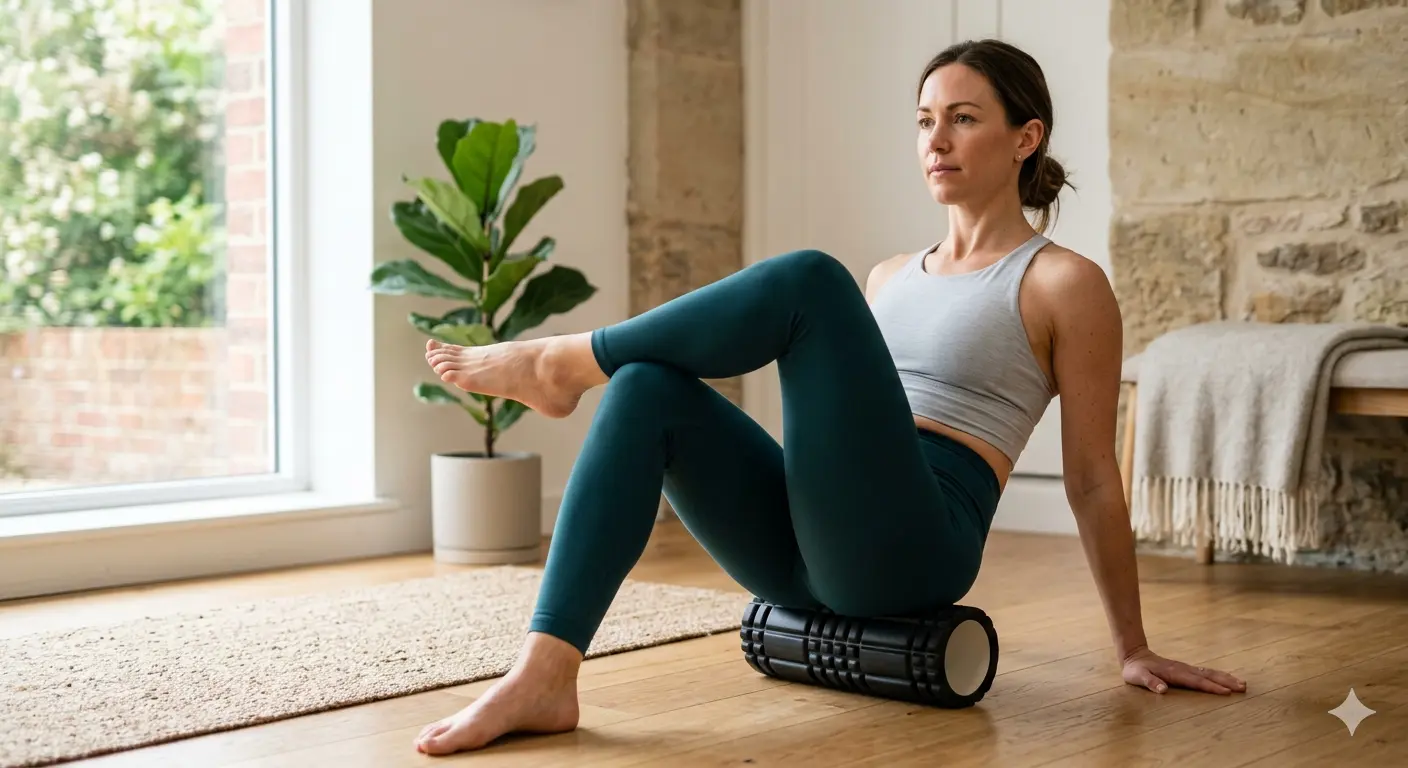
Start with your glutes. These muscles play a major role in stabilizing your pelvis and lower back. Sit on the foam roller and gently roll side to side, pausing on tight areas. You can also cross one leg over the other to increase pressure on one side at a time.
Next, move to your hamstrings. Tight hamstrings can pull on the pelvis and contribute to lower back strain. Roll slowly from just below the glutes to above the back of the knee, avoiding the joint itself.
After that, work on your hip flexors. These are located at the front of your hips and often become tight from sitting. You can target them by lying face down with the foam roller under one side of your hip area, using gentle pressure and controlled movement.
Your upper back is another important area. Improving mobility here helps reduce strain on the lower back. Lie on the roller placed across your upper back and gently extend over it, keeping movements slow and controlled. Avoid rolling into the neck or lower spine.
If you want to target the side muscles near the lower back, you can do so very carefully. This area is sensitive, so use light pressure and avoid rolling directly on the spine. If anything feels uncomfortable, skip it.
Common Mistakes to Avoid
One of the biggest mistakes people make is rolling directly on the spine. This can create more tension instead of relief.
Another common issue is using too much pressure too soon. Your muscles may respond by tightening rather than relaxing if the pressure is too intense.
Moving too quickly is another mistake. Foam rolling is not about speed. Slow, controlled movement is much more effective.
Some people also overdo it, thinking more time equals better results. In reality, overuse can irritate the muscles.
Finally, ignoring pain signals is something you should always avoid. Discomfort is normal, but sharp or radiating pain is not.
Foam Rolling vs Stretching
Foam rolling and stretching often get compared, but they actually serve different purposes.
Foam rolling helps release tension in the muscles and improve blood flow. It works on the muscle tissue itself, helping it relax.
Stretching focuses more on lengthening muscles and improving flexibility. It helps with posture and long-term mobility.
When used together, they can be very effective. Foam rolling prepares the muscles, and stretching helps maintain the improvements.
When to Use a Foam Roller
You can use a foam roller in different ways depending on your routine.
Before a workout, it can help warm up tight muscles and improve movement quality.
After a workout, it’s more focused on recovery and reducing soreness.
On rest days, it can be used lightly to maintain mobility and keep muscles feeling loose.
The key is consistency, not intensity.
Supporting Lower Back Health Beyond Foam Rolling
Foam rolling alone won’t solve lower back pain if the underlying issues aren’t addressed.
Strengthening your core is one of the most important steps. A strong core helps support your spine and reduces strain on your lower back.
Glute training is also essential. Weak glutes often force the lower back to work harder than it should.
Posture plays a major role as well. Long hours of sitting can contribute to tight hip flexors and weak postural muscles.
Mobility work for the hips and upper back can further improve how your body moves and reduce unnecessary stress on your lower back.
Finally, lifestyle factors like sleep, hydration, and stress management all influence how your body recovers and feels day to day.
If you’re just getting started, a short routine is enough.
A Simple Beginner Routine
Spend about two to three minutes on your glutes, two minutes on your hamstrings, and two minutes on your hip flexors. Add another two to three minutes for your upper back.
Finish with light stretching or simple movement to help your body integrate the work.
The entire routine should take around 10 to 15 minutes.
Final Thoughts
Foam rolling can be a helpful tool for managing lower back discomfort, but it works best when used correctly. The key is not to focus directly on the painful area, but on the muscles that contribute to the problem.
When you slow down, use proper technique, and stay consistent, foam rolling becomes part of a much larger system of recovery and movement improvement.
Combine it with strengthening, stretching, and better daily habits, and you’ll give your lower back the support it actually needs.