How to Use a Massage Gun Properly
Massage guns have become one of the most popular recovery tools in fitness over the past few years. You’ve probably seen them in gyms, sports recovery videos, or even at home workouts. They look simple enough to use, but once you actually get one in your hands, it’s easy to wonder if you’re doing it right.
Should you press harder? How long should you stay on one muscle? Is it something you use before or after workouts?
The truth is, a massage gun can be incredibly effective when used correctly, but it’s also easy to misuse. And more pressure or longer sessions doesn’t necessarily mean better results. In fact, using it the wrong way can do more harm than good.
This guide will walk you through how to use a massage gun properly so you can get the benefits without the mistakes.
What a Massage Gun Actually Does
A massage gun uses a method called percussive therapy. In simple terms, it delivers rapid pulses of pressure into your muscles. This helps increase blood flow, reduce tightness, and temporarily relieve muscle soreness.
What it does not do is “fix” deep injuries or replace proper medical treatment. It’s a recovery tool, not a cure-all. Think of it as something that supports your muscles, not something that repairs serious issues.
When used correctly, it can help reduce post-workout soreness, improve mobility, and prepare your body for exercise. Many people also find it helps them relax tight muscles after long days of sitting or training.
When You Should Use a Massage Gun
One of the biggest advantages of a massage gun is its flexibility. You can use it in different ways depending on your needs.
Before a workout, it can help activate your muscles. A short session can increase blood flow and prepare your body for movement. This is especially useful if you feel stiff or tight before training.
After a workout, it can help with recovery. This is when most people use it. It may help reduce soreness and loosen up tight muscles.
On rest days, it can be used for maintenance. Light use can help keep your muscles feeling relaxed and mobile.
However, there are times when you should avoid using it. You should not use a massage gun on fresh injuries, swelling, bruises, or areas that are already inflamed. If something feels wrong or painful in a sharp way, it’s better to rest it or consult a professional.
Choosing the Right Attachment Head
Most massage guns come with different attachment heads, and each one has a purpose.
The ball head is the most commonly used. It works well on large muscle groups like the thighs, glutes, and shoulders.
The flat head provides a more even pressure and is useful for broader areas of muscle.
The bullet head is designed for pinpoint areas, often used for tight spots or trigger points. However, it should be used carefully because the pressure is more intense.
The fork head is designed to work around areas like the spine or neck muscles without directly hitting the bone.
Some devices also include a softer cushion-style head, which is better for beginners or sensitive muscles.
Choosing the right attachment makes a noticeable difference in comfort and effectiveness.
How to Use a Massage Gun Properly
The most important rule is simple: let the massage gun do the work.
Start with the lowest speed setting, especially if you are new to using it. You don’t need high intensity to get benefits.
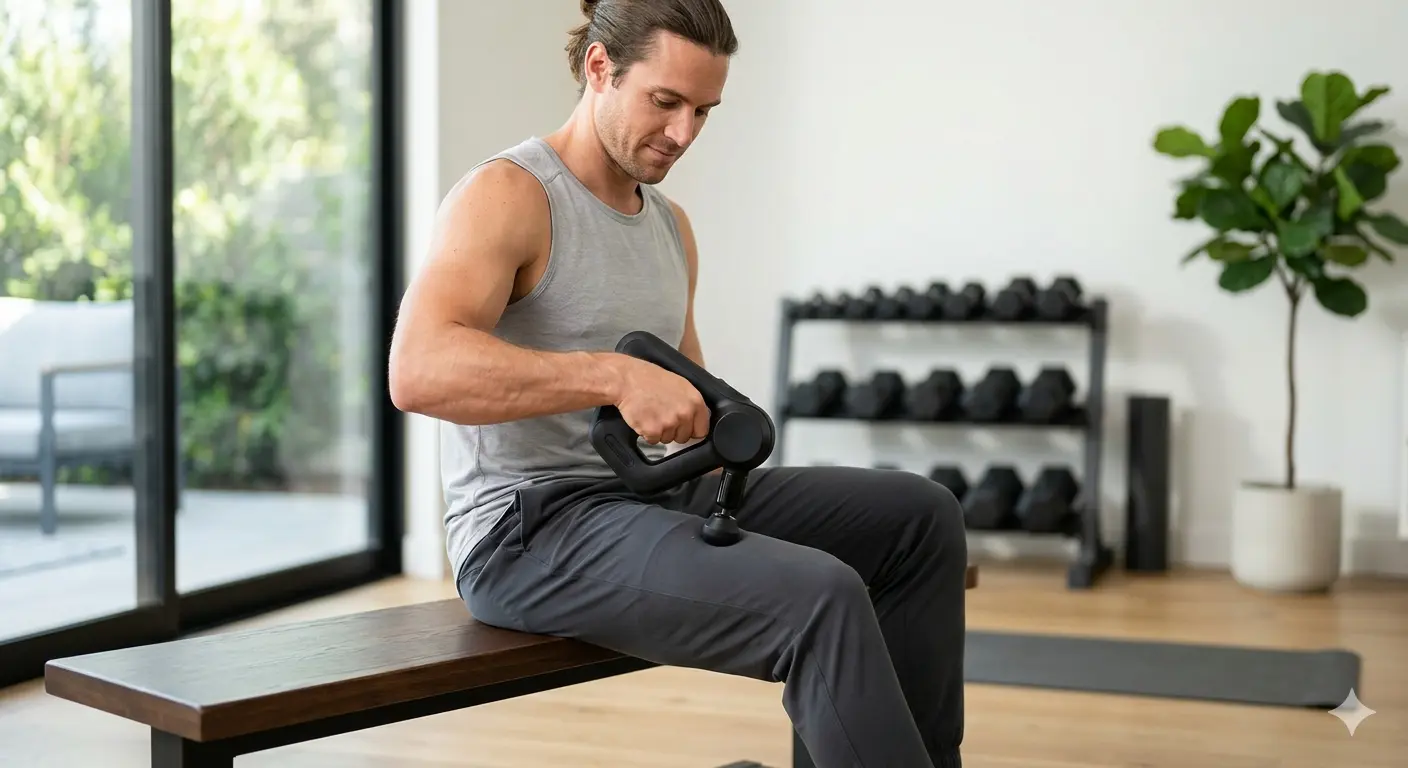
Hold the device gently against your muscle and let it pulse. You should not press deeply into the muscle or force it. A light to moderate contact is usually enough.
Move slowly across the muscle, around one to two inches per second. The goal is not to rush, but to let the vibration gradually relax the tissue.
Focus on the muscle itself, not joints or bones. For example, use it on the middle of your thigh or shoulder, not directly on your knee or elbow.
Keep each area short. Around 30 to 120 seconds per muscle group is usually enough. Spending too long in one spot can actually cause irritation rather than relief.
A Simple Full-Body Routine
If you’re not sure where to start, a basic full-body approach can help.
For the lower body, begin with your calves. Move slowly up the hamstrings, then the quads, and finish with the glutes. These are large muscle groups that tend to hold a lot of tension, especially if you train legs or sit for long periods.
For the upper body, start with the shoulders. Then move to the upper back, focusing on the area around the shoulder blades. You can also lightly work the biceps and triceps if they feel tight.
If you want to use it on your core, be very cautious. Light use on the obliques can be fine for some people, but you should avoid applying pressure directly to the abdomen, especially if you’re new to massage guns.
You don’t need to treat your entire body every time. Focus on the areas that feel tight or sore.
Common Mistakes to Avoid
One of the biggest mistakes people make is pressing too hard. It might feel like more pressure equals better results, but that’s not how massage guns work. Too much force can actually cause bruising or discomfort.
Another common mistake is staying too long in one spot. If you hold the device in one place for several minutes, you can irritate the tissue instead of relaxing it.
Using it on injuries is another problem. A massage gun is not meant for treating acute pain or swelling. If something is injured, it needs proper recovery time.
Ignoring pain signals is also risky. There is a difference between mild discomfort and sharp pain. If something hurts in a bad way, stop immediately.
Finally, some people use it too aggressively, moving it quickly or treating it like a drill. Slow and controlled movement is far more effective.
Warm-Up vs Recovery Use
Using a massage gun before and after workouts serves different purposes.
Before exercise, the goal is activation. You only need a short session, focusing on key muscle groups you’re about to use. This helps increase blood flow and range of motion.
After exercise, the focus shifts to recovery. You can spend a bit more time on sore or tight areas, helping your muscles relax.
The intensity should always match the purpose. Light and quick before workouts, slower and slightly longer after.
Safety Guidelines You Should Follow
There are a few simple safety rules that are worth keeping in mind.
Avoid bones, joints, and tendons. Stick to soft muscle tissue.
Be cautious around sensitive areas like the neck and lower back. If you’re unsure, use lower intensity or skip the area.
If you have any medical conditions related to circulation, nerves, or chronic pain, it’s a good idea to check with a professional before using a massage gun regularly.
Also, avoid overuse. A full session doesn’t need to be long. In most cases, 10 to 15 minutes total is more than enough.
For most active people, using a massage gun after workouts three to five times per week is enough.
How Often Should You Use It?
Beginners can start with two to three sessions per week and increase as needed.
Daily use is fine as long as it’s light and not excessive. The key is to pay attention to how your body responds.
If you feel sore or irritated, take a break and let your muscles recover naturally.
Combining It With Other Recovery Methods
A massage gun works best as part of a broader recovery routine.
Stretching helps improve flexibility and complements the effects of percussive therapy. Hydration is also important, as muscles recover better when you’re properly hydrated.
Sleep is one of the most important recovery tools you have. No device can replace good rest.
Foam rolling can also be used alongside a massage gun, depending on preference. Some people use both, while others prefer one over the other.
Final Thoughts
A massage gun is a powerful tool, but only when used correctly. It’s not about applying the most pressure or spending the most time on a muscle. It’s about using controlled, consistent, and thoughtful application.
When you understand how it works and how your body responds, it becomes a simple and effective part of your recovery routine.
Start slowly, stay consistent, and focus on how your muscles feel rather than trying to force results. Over time, you’ll get a much better sense of what your body needs and how to use the tool effectively