Quiet Home Gym Setup Ideas
One of the biggest concerns people have when building a home gym isn’t space or cost. It’s noise.
If you live in an apartment, share walls with neighbors, or even just have family members at home, the idea of dropping weights, jumping around, or running on a treadmill can feel like a problem waiting to happen. A lot of people assume that working out at home automatically means making a lot of noise.
But that doesn’t have to be the case. With the right setup, equipment choices, and training style, you can build a home gym that is almost silent while still being highly effective.
The goal isn’t to limit your workouts. It’s to design them in a smarter way.
Why Noise Matters in a Home Gym
Noise is one of the main reasons people give up on home workouts or hesitate to start in the first place. In shared living environments, sound travels more than most people realize, especially through floors and walls.
Downstairs neighbors are often the most affected by vibration from jumping, running, or dropping weights. Even if something doesn’t seem loud to you, it can feel much more intense in another apartment.
Inside your own home, noise can also be an issue. Early morning or late-night workouts can disturb family members or roommates, which makes consistency harder to maintain.
Over time, if your workouts are causing disruption, it can lead to frustration or restrictions. That’s why building a quiet setup from the beginning makes such a big difference. It creates a sustainable environment where you can train consistently without worrying about disturbing others.
Where Most Gym Noise Actually Comes From
To reduce noise effectively, it helps to understand where it comes from.
A lot of it comes from impact. Dropping dumbbells or kettlebells onto the floor creates vibration that travels through the building. Even small drops can create more disturbance than you expect.
Foot impact is another major source. Running, jumping, and high-intensity movements generate repetitive force that transfers through the floor.
Equipment itself can also contribute. Some treadmills, bikes, and machines are louder than others depending on their design.
Finally, vibration is often more important than sound. Even if something doesn’t seem loud in your room, the vibration can still travel and be heard elsewhere.
The Principles of a Quiet Home Gym
A quiet home gym is built on a few simple ideas.
First, it’s about controlling impact. Reducing how much force hits the floor will immediately lower noise levels.
Second, it’s about slowing things down. Fast, explosive movements tend to create more sound and vibration than controlled movements.
Third, equipment choice matters. Some tools are naturally quieter and better suited for home use.
Finally, flooring plays a huge role. Even the quietest workout can become noisy if it’s done on bare floors.
Quiet-Friendly Strength Training Equipment
You don’t need heavy, loud equipment to build strength at home. In fact, some of the best tools are the quietest ones.
Resistance bands are one of the best options. They create tension without any impact, making them almost completely silent. They’re also versatile enough for full-body workouts.
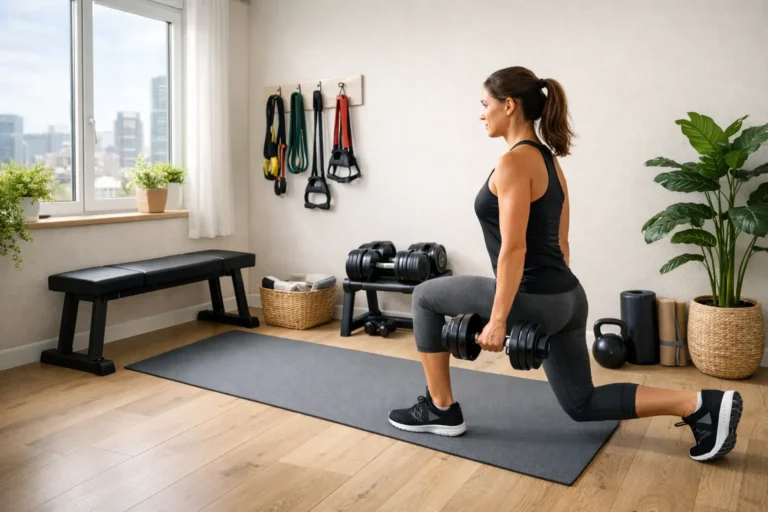
Adjustable dumbbells can work very well in a quiet setup as long as you use them carefully. The key is controlled movement and never dropping them.
Kettlebells can also be used quietly if handled properly. The main issue comes from setting them down too hard, so control is important.
Sandbags and soft weights are another option. Because they don’t make a hard impact when placed down, they naturally reduce noise.
Suspension trainers are also extremely quiet. Since they rely on bodyweight resistance, they allow for strength training without any noise from equipment.
Quiet Cardio Options for Home
Cardio is often where noise becomes a problem, but there are still plenty of quiet alternatives.
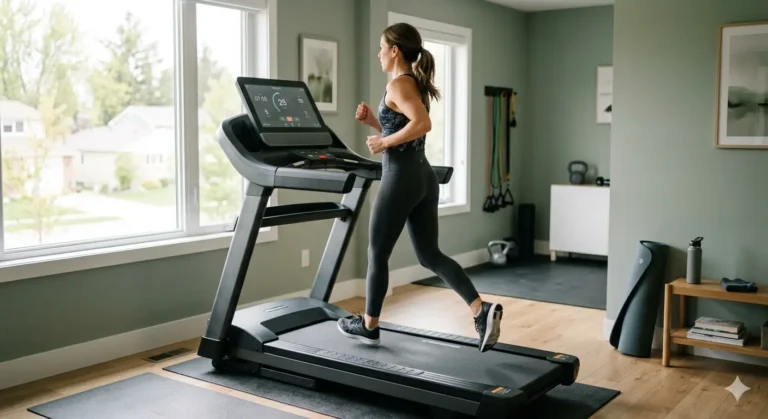
Walking is one of the simplest and most effective low-noise cardio options. Even treadmill walking, if done on a well-cushioned machine, can be relatively quiet compared to running.
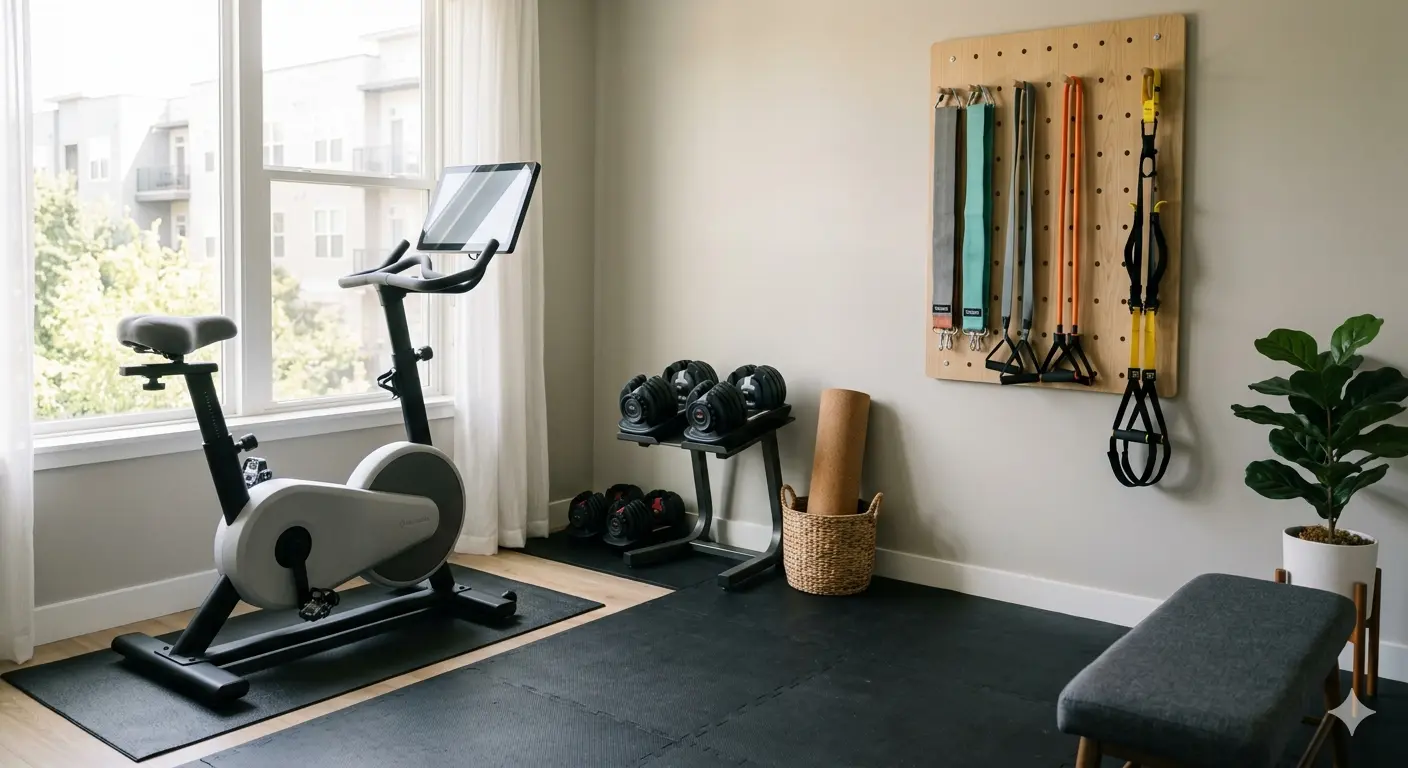
Magnetic resistance bikes are another great choice. Unlike air bikes, they operate with very little noise and are ideal for apartments or shared spaces.
Magnetic rowers are also much quieter than air or water rowers. They provide a smooth, controlled motion without loud resistance sounds.
If you enjoy jumping rope, you can still replicate the movement without impact by doing shadow skipping or low-impact stepping variations.
Low-impact HIIT workouts are another option. Instead of jumping exercises, you can use movements like step-ups, marching in place, or controlled bodyweight circuits.
Flooring Makes a Bigger Difference Than You Think
If there’s one upgrade that has the biggest impact on noise reduction, it’s flooring.
Rubber gym mats are the foundation of most quiet home gyms. They absorb shock and reduce vibration significantly.
Foam tiles can also help, especially for bodyweight training or lighter equipment.
A combination of carpet and mats can provide extra cushioning and further reduce sound transmission.
For heavier setups, a DIY lifting platform can be useful. It helps distribute weight and reduces impact on the floor beneath.
Placement also matters. If possible, avoid setting up directly against shared walls and instead use more central areas of your space.
How to Arrange Your Home Gym for Less Noise
Where and how you set up your gym plays a big role in noise control.
If you have multiple room options, ground-floor spaces are usually the best choice. They naturally reduce the impact on neighbors below.
Try to leave space between your workout area and shared walls. Even a small buffer can reduce sound transfer.
Keep your equipment organized and spaced out. Clutter increases the chance of accidental drops or collisions, which create unnecessary noise.
Storage also matters. If equipment is easy to put away properly, it’s less likely to be left in a way that creates noise or damage.
Training Techniques That Reduce Noise
The way you train can be just as important as the equipment you use.
Slowing down your movements is one of the simplest ways to reduce noise. Controlled repetitions, especially during the lowering phase of a lift, reduce impact and improve muscle engagement at the same time.
Avoid dropping weights entirely. Even small dumbbells should be placed down gently.
Instead of jumping exercises, use low-impact alternatives. Step-based movements can often provide the same cardiovascular benefit without the noise.
Time under tension training is another great method. Slower reps increase difficulty without increasing impact.
Quiet Home Gym Equipment Options
If you’re building out your setup, some equipment is naturally better for quiet environments.
Rubber-coated dumbbells are much quieter than metal ones when placed down.
Magnetic resistance machines, such as bikes or rowers, are designed specifically for low-noise use.
Compact cable systems can also provide strength training options without any impact noise.
Even small details like choosing quiet fans or stable benches can contribute to a more peaceful workout environment.
Common Mistakes That Increase Noise
One of the biggest mistakes people make is trying to train like they’re in a commercial gym. That often includes dropping weights or doing explosive movements that don’t translate well to home environments.
Another common issue is ignoring flooring. Bare floors amplify even small sounds.
Overloading a small space with too much equipment can also increase vibration and reduce control.
Finally, choosing exercises without considering impact can quickly turn a quiet setup into a noisy one.
Sample Quiet Home Gym Setups
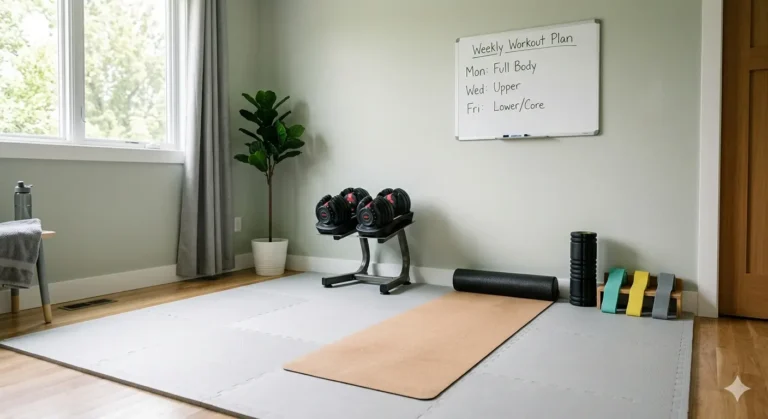
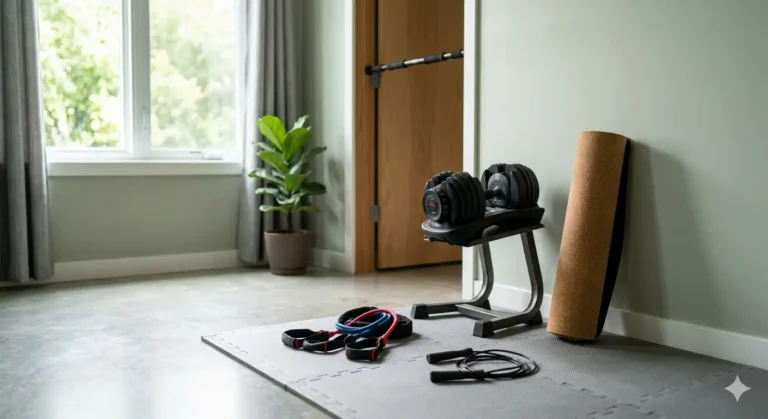
A minimal setup might include resistance bands, a yoga mat, and light dumbbells. This is ideal for apartments and quiet training environments.
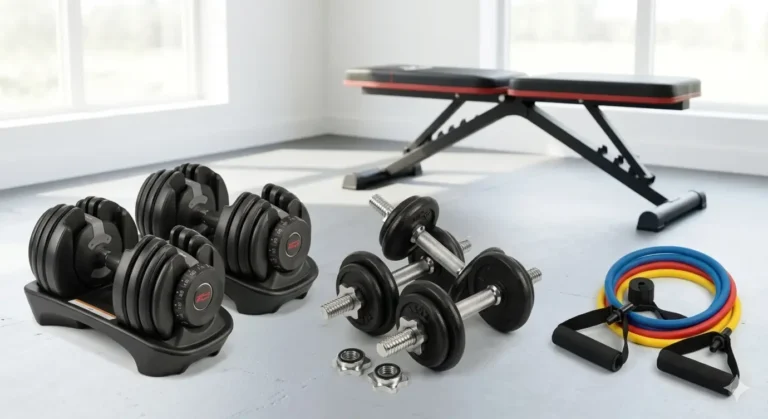
A strength-focused setup could include adjustable dumbbells, a bench, and rubber flooring. This allows for more traditional lifting with controlled noise.
A hybrid setup might combine a magnetic bike with bands and dumbbells for both cardio and strength training.
For very small spaces, a bodyweight-only setup can still be extremely effective when combined with resistance bands.
Budget Considerations
You don’t need a large budget to build a quiet gym.
With a low budget, you can focus on mats, resistance bands, and bodyweight training tools.
A mid-range budget allows you to add dumbbells, better flooring, and a bench.
A higher budget opens up quiet cardio machines and more complete setups, but they are not essential for success.
Staying Consistent in a Quiet Setup
One of the best ways to stay consistent is to make your setup easy to access. If your equipment is simple to use and doesn’t require setup every time, you’re more likely to stick with it.
A clear routine also helps. Low-impact training can still be structured and challenging.
Keeping your space clean and organized makes workouts more inviting.
Finally, using guided programs or workouts can help you stay on track without overthinking your routine.
Final Thoughts
A quiet home gym is not about limiting your training. It’s about being more intentional with how you train.
When you choose the right equipment, protect your flooring, and focus on controlled movement, you can build a setup that is almost silent while still being highly effective.
You don’t need to jump, drop weights, or rely on noisy machines to get results. You just need a smarter approach.
Start simple, build gradually, and design a space that allows you to train consistently without worrying about noise.