Best Bike Lights for Commuting (2026): 5 Top Picks Compared
Commuting by bicycle requires lights that do more than illuminate the road. A good commuter lighting setup should help you see and be seen in traffic, handle changing weather, last through your daily journey, and attach securely to your bicycle.
This guide compares five bike lights and lighting systems for everyday commuters, including budget-friendly headlights, complete front-and-rear sets, and a rear light with vehicle-detection radar. We’ll cover brightness, battery life, mounting, durability, and value to help you choose a practical setup for your commute.
The best bike lights for commuting for most cyclists are the Cygolite Metro Plus 800 paired with a reliable rear light. The Metro Plus 800 provides useful forward illumination for everyday urban riding, while its practical controls and multiple lighting modes make it suitable for regular commutes. Cygolite’s Metro Plus 800 is also highlighted as a budget front-light pick by Bicycling’s 2026 editors.
Quick Comparison of the Best Bike Lights for Commuting.
The five options below cover a range of commuting needs, including budget headlights, compact lighting systems, and rear radar.
| Product | Best For | Weight Range | Adjustment Type | Key Feature | Check Price |
| Cygolite Metro Plus 800 | Everyday commuting | Compact front light | Multiple brightness modes | 800-lumen output | View on Amazon |
| Knog Blinder 900 | Premium commuter headlight | Compact front light | Multiple modes | Compact, high-output design | View on Amazon |
| NiteRider Lumina Combo Set | Complete front and rear setup | Two-light set | Separate light controls | Coordinated front and rear lights | View on Amazon |
| Lezyne Connect Smart 1000XL/KTV | Commuting and road riding | Front and rear units | Multiple modes | Front and rear package | View on Amazon |
| Garmin Varia RTL515 | Rear visibility and radar | Compact seatpost unit | Multiple light modes and radar alerts | Vehicle detection | View on Amazon |
Weight Range and Adjustment Type are adapted from the requested comparison format: bike lights are not adjustable-weight fitness equipment. For lights, size, mounting style, brightness settings, and beam adjustment are the relevant buying factors. Prices are estimates, not verified live offers.
Product Reviews: Best Bike Lights for Commuting.
1. Cygolite Metro Plus 800
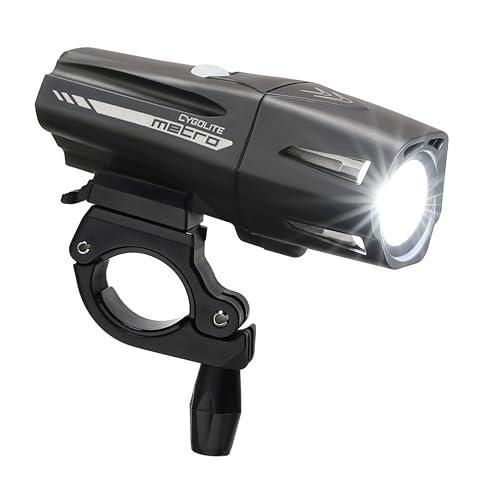
Best budget pick
Best for: Daily commuters, students, and riders looking for practical front lighting at an accessible price.
The Cygolite Metro Plus 800 is a straightforward headlight for cyclists who need useful illumination on their everyday routes. Its 800-lumen maximum output makes it suitable for many urban commutes, including routes with a mixture of streetlights and darker sections.
Bicycling’s 2026 guide identifies the Metro Plus 800 as a budget front-light recommendation, making it a relevant option for riders who want to keep their equipment costs under control.
Key Features
- Maximum output of 800 lumens.
- Multiple lighting modes.
- Rechargeable front-light design.
- Handlebar mounting.
- Designed for everyday urban and road cycling.
Pros
- Useful output for many commuting conditions.
- Multiple modes accommodate different lighting environments.
- More affordable than many premium headlights.
- Straightforward option for riders who do not need radar or advanced connectivity.
Cons
- Requires a separate rear light.
- Maximum output may not be sufficient for fast riding on completely unlit roads.
- Battery runtime depends on the selected mode.
Why We Recommend It
The Metro Plus 800 is a sensible starting point for commuters who need a dependable headlight without investing in high-end features.
It is particularly suitable for regular urban riding, where a practical beam, convenient controls, and appropriate rear lighting matter more than an extremely high maximum lumen rating.
Pair it with a separate red rear light to create a complete commuting setup.
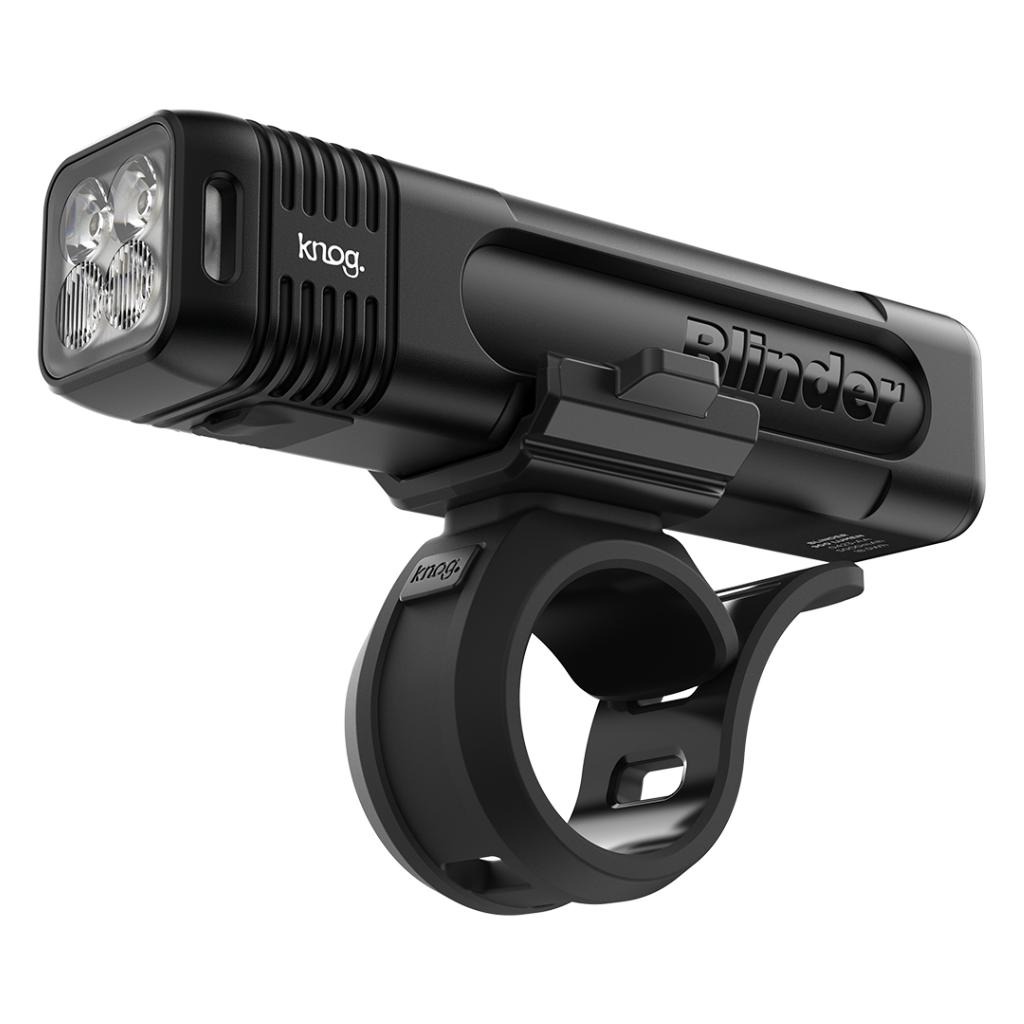
2. Knog Blinder 900
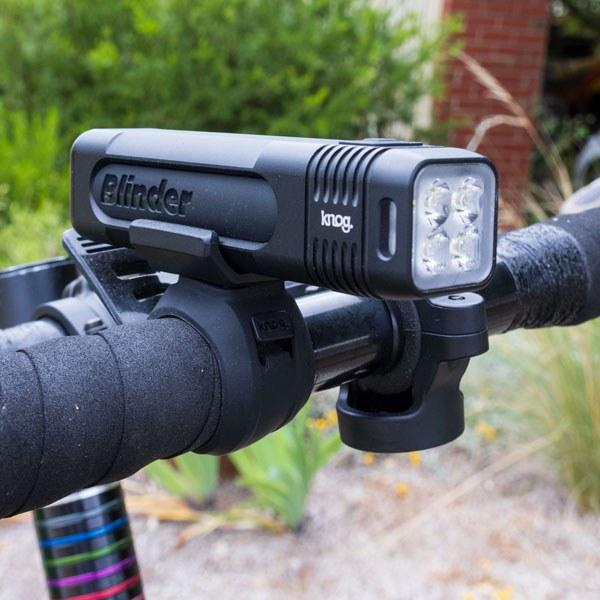
Best premium compact light
Best for: Commuters who want a compact, higher-output headlight with convenient mounting.
The Knog Blinder 900 is designed for riders who want substantial front illumination in a compact package. It is particularly relevant for cyclists who use their bicycles for commuting during darker months and want a light that can also serve on recreational rides.
CyclingNews highlights the Blinder Pro 600 as an urban cycling option with convenient mounting and an IP67 waterproof rating. The Blinder 900 is a separate, higher-output model in Knog’s Blinder range, so confirm the exact model’s specifications when shopping.
Key Features
- Up to 900 lumens of output.
- Compact handlebar-mounted design.
- Multiple brightness and flashing modes.
- Rechargeable battery.
- Designed for commuting and road cycling.
Pros
- Compact design helps keep handlebars uncluttered.
- Useful brightness for a range of everyday routes.
- Multiple modes help manage battery life.
- Suitable for riders who also use their bicycle recreationally.
Cons
- Higher purchase price than basic commuter lights.
- Requires a separate rear light.
- Maximum brightness can reduce runtime considerably.
Why We Recommend It
The Blinder 900 is worth considering if you want a compact front light that can handle a mixture of commuting and recreational cycling.
Its combination of output and small form factor makes it an appealing alternative to larger headlights, especially for commuters with limited handlebar space.
As with any high-output headlight, position the beam carefully to illuminate the road without dazzling oncoming cyclists, pedestrians, or drivers.
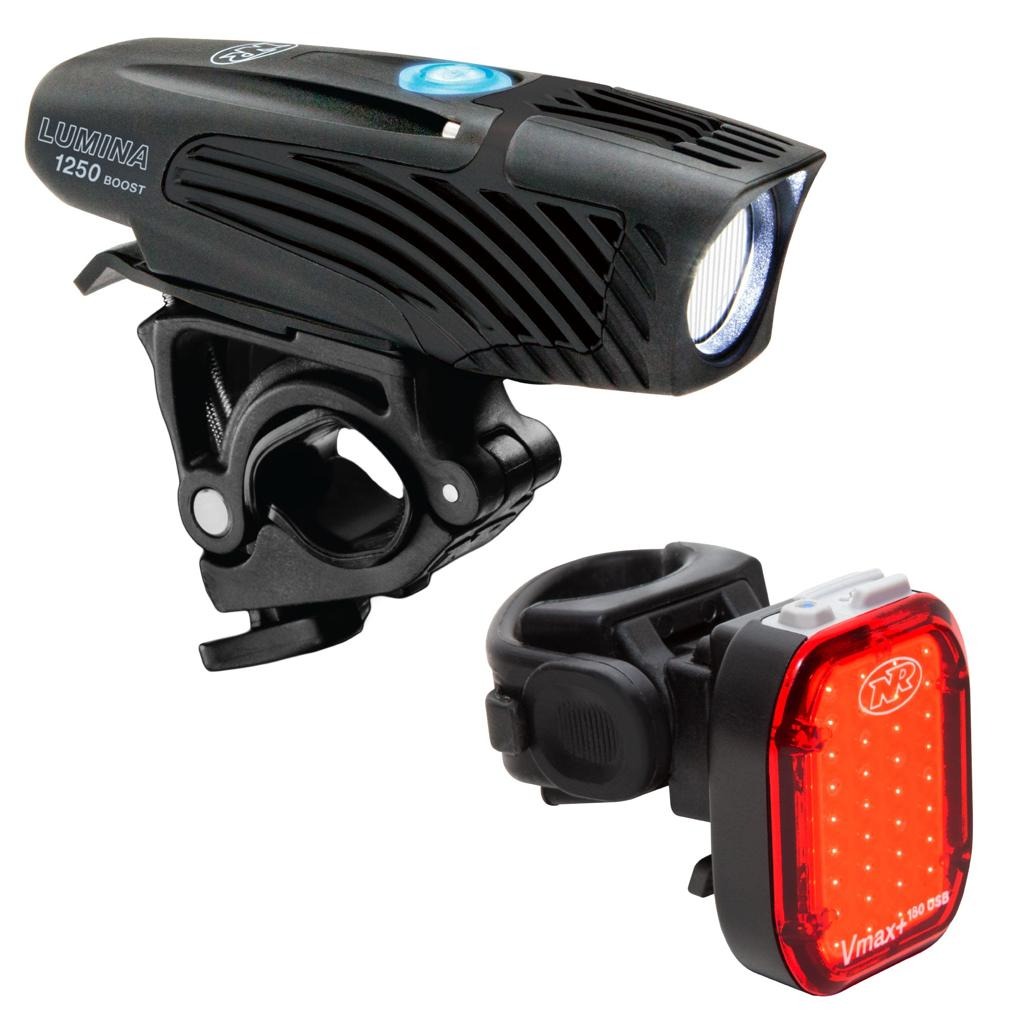
3. NiteRider Lumina Combo Set
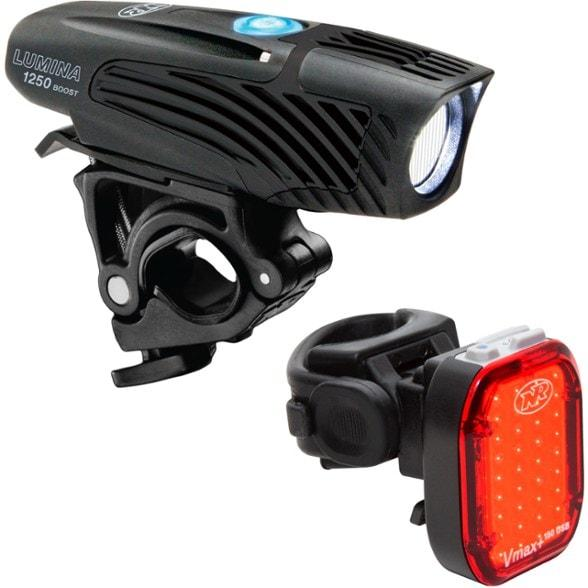
Best complete setup
Best for: Commuters purchasing front and rear lights together.
The NiteRider Lumina Combo Set is a practical option for riders who want to equip their bicycle with front and rear lighting in one purchase.
NiteRider sells several Lumina and rear-light combinations, so exact output, battery life, and package contents vary by version. Bicycling’s 2026 guide includes the Lumina Combo Set among its recommended value lighting options.
Key Features
- Front headlight paired with a rear safety light.
- Rechargeable lighting system.
- Multiple lighting modes.
- Handlebar and rear mounting, depending on the included models.
- Designed for road cycling and everyday commuting.
Pros
- Covers front and rear lighting requirements.
- Convenient for first-time commuter cyclists.
- Reduces the need to purchase two separate products.
- Different brightness settings help accommodate changing conditions.
Cons
- Exact specifications depend on the package version.
- A bundled rear light may not include radar functionality.
- Some commuters may prefer a more powerful front light for unlit routes.
Why We Recommend It
A complete lighting set can be a convenient choice when setting up a bicycle for commuting.
Rather than spending the entire budget on a powerful headlight, the Lumina combination approach lets you address visibility from both directions. That makes it especially useful for new commuters who need a simple starting point.
Before purchasing, check whether the specific set includes the Lumina 1200 Boost, another Lumina headlight, or a different front-light version.
4. Lezyne Connect Smart 1000XL/KTV
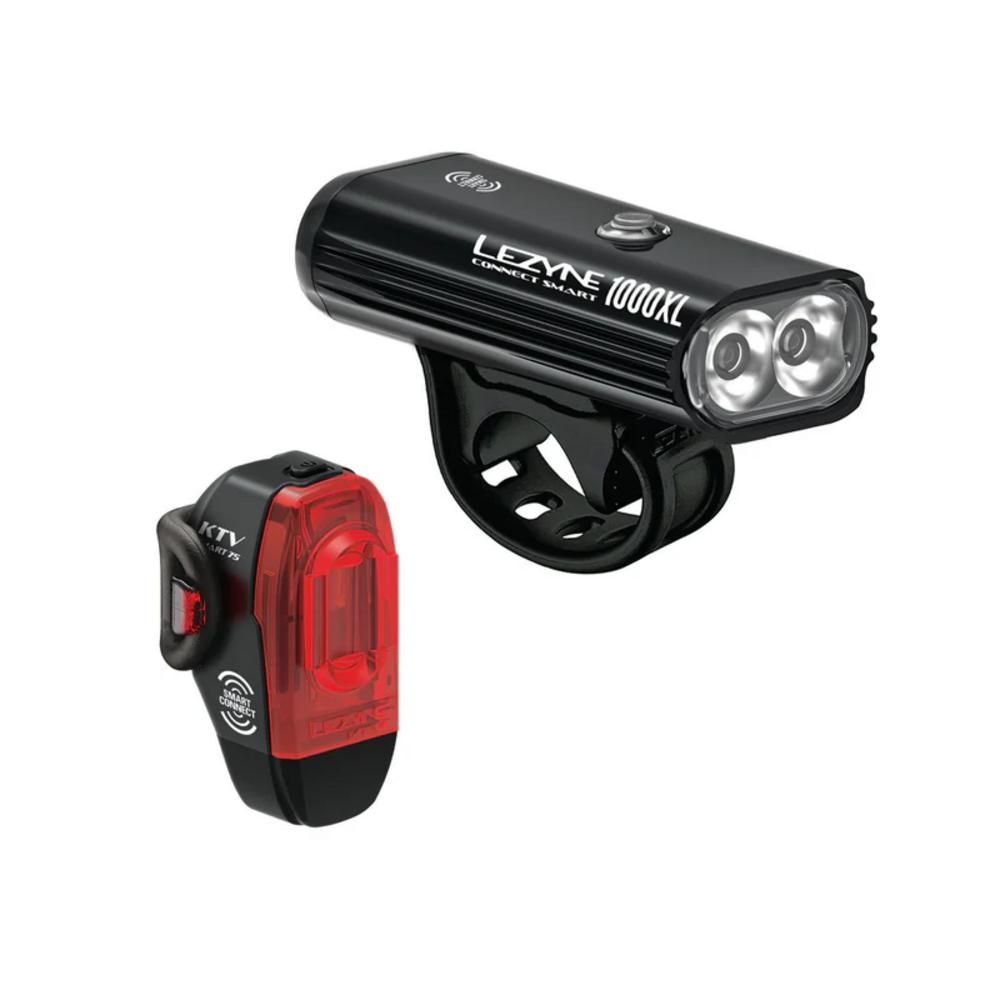
Best for commuting and road riding
Best for: Cyclists who want a coordinated front and rear light package for daily travel.
The Lezyne Connect Smart 1000XL/KTV combines a front headlight with a rear light, offering a convenient way to purchase a complete lighting system.
The 1000XL front unit provides forward illumination, while the KTV rear unit is intended to improve visibility from behind. The combination appears in BikeRide’s September 2026 bike-light listings and is also included in REI’s cycling-light recommendations.
Key Features
- Front headlight with up to 1,000 lumens.
- Separate rear safety light.
- Multiple lighting modes.
- Rechargeable units.
- Compact mounting for road and commuter bicycles.
Pros
- Complete front and rear package.
- Suitable for everyday commuting and recreational rides.
- Multiple modes accommodate different conditions.
- Convenient for riders who prefer matching equipment.
Cons
- Exact connectivity features depend on the model and package.
- Does not provide the same rear radar functionality as the Garmin Varia.
- Runtime varies by brightness setting.
Why We Recommend It
The Lezyne set is a practical option for commuters who want to address both forward illumination and rear visibility in a single purchase.
Its front-light output is appropriate for many everyday routes, while the rear light helps create a more complete setup for riding in traffic.
Check the retailer’s package description carefully to confirm the included mounting hardware, charging connections, and exact KTV rear-light version.
5. Garmin Varia RTL515
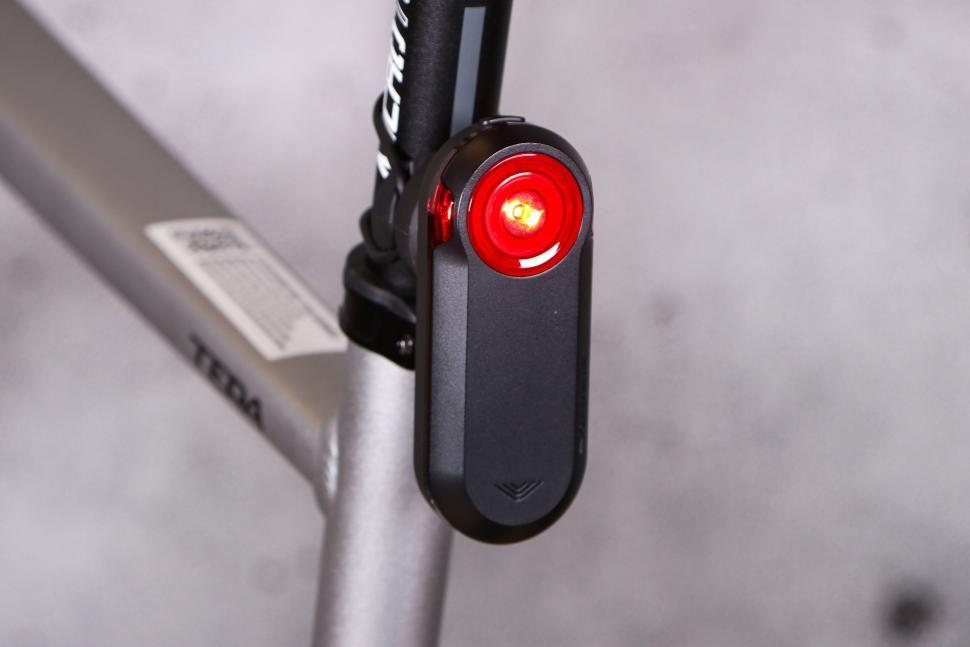
Best radar-equipped rear light
Best for: Road commuters and cyclists who want additional information about approaching traffic.
The Garmin Varia RTL515 is more than a conventional rear light. It combines a red tail light with radar that detects vehicles approaching from behind and can send alerts to compatible cycling computers or smartphones.
Bikerumor’s 2026 guide recommends the RTL515 as a rear radar light, noting its ability to detect multiple approaching objects and its integration with compatible Garmin computers.
Key Features
- Integrated rear-facing radar.
- Red rear safety light.
- Multiple light modes.
- Wireless connectivity with compatible devices.
- Seatpost mounting with compatible mounting hardware.
Pros
- Adds approaching-vehicle information to a conventional rear light.
- Can detect multiple vehicles.
- Compatible with supported cycling computers and devices.
- Combines radar and rear lighting in one unit.
Cons
- Costs substantially more than a standard rear light.
- Some features require compatible devices.
- Does not replace visual traffic checks or attentive riding.
Why We Recommend It
The RTL515 is worth considering for commuters whose routes involve regular interaction with motor traffic, particularly on roads without protected cycling infrastructure.
Its radar can provide additional information about approaching vehicles, which some riders may find useful for situational awareness.
However, it is not essential for every commute. Riders who mainly use protected cycle paths or short urban routes may find a conventional rear light sufficient.
Comparison Section
Cygolite Metro Plus 800 vs Knog Blinder 900 vs NiteRider Lumina Combo Set
These three products represent different approaches to commuter lighting: an affordable standalone headlight, a compact premium headlight, and a complete front-and-rear package.
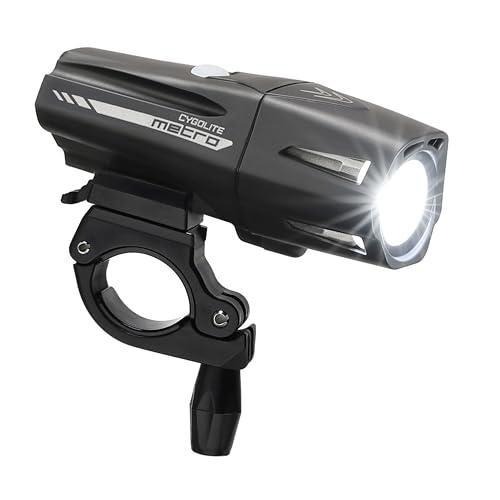
Size and Mounting
The Cygolite Metro Plus 800 is a practical handlebar-mounted headlight for everyday commuting. It is a reasonable choice for riders who want straightforward lighting without a complicated setup.
The Knog Blinder 900 is aimed at commuters who prefer a compact, higher-output headlight. Its smaller form factor can be useful when handlebar space is limited by a phone mount, cycling computer, or handlebar bag.
The NiteRider Lumina Combo Set differs because it includes both front and rear lighting. That can simplify purchasing and reduce the time spent checking compatibility between separately selected lights.
Before buying, check the handlebar diameter, mounting clearance, and whether the light can be removed easily when you lock your bicycle outside.
Brightness and Beam Pattern
| Feature | Cygolite Metro Plus 800 | Knog Blinder 900 | NiteRider Lumina Combo |
| Front output | 800 lumens | 900 lumens | Varies by set |
| Rear light included | No | No | Yes |
| Main use | Everyday commuting | Commuting and mixed riding | Complete commuter setup |
| Radar | No | No | No |
Maximum lumen ratings do not tell the whole story. A light with a well-controlled beam can illuminate the road more usefully than a higher-output light with poor distribution.
For city commutes, the beam should provide adequate forward illumination without dazzling other road users. If your commute includes unlit roads, consider the distance illuminated, peripheral visibility, and sustained brightness.
Adjustment Mechanism and Ease of Use
Unlike adjustable gym equipment, bike lights do not have weight ranges or weight-adjustment systems. The important controls are brightness modes, mounting adjustments, and beam positioning.
The Cygolite and Knog are standalone front lights with different brightness settings. The NiteRider combo gives you separate front and rear units, each positioned for its own purpose.
For daily commuting, look for:
- A simple button that can be operated with cycling gloves.
- A secure mount that stays in position over rough pavement.
- A battery indicator that makes charging easy to plan.
- Quick removal when parking the bicycle.
Durability and Weather Resistance
A commuter light needs to tolerate vibration, changing temperatures, and exposure to rain.
Check the manufacturer’s water-resistance rating for the exact model rather than assuming that every product in a brand’s range has the same protection.
The Knog Blinder Pro 600, for example, is listed with an IP67 waterproof rating in CyclingNews’ 2026 guide. That specification should not automatically be applied to the Blinder 900 or other Knog models.
For any of these options, inspect the mounting system, charging-port protection, and warranty terms before purchase.
Price and Overall Value
The Cygolite Metro Plus 800 is suitable for shoppers prioritizing an affordable front light. The Knog Blinder 900 offers a compact alternative for riders willing to spend more on a higher-output headlight. The NiteRider set can be convenient when purchasing front and rear lighting together.
The best value depends on the total cost of your complete setup. A moderately priced headlight paired with a good rear light may be more useful for commuting than an expensive front light with no rear coverage.
Related reading: Best bike lights for night riding
Buying Guide: How to Choose the Best Bike Lights for Commuting
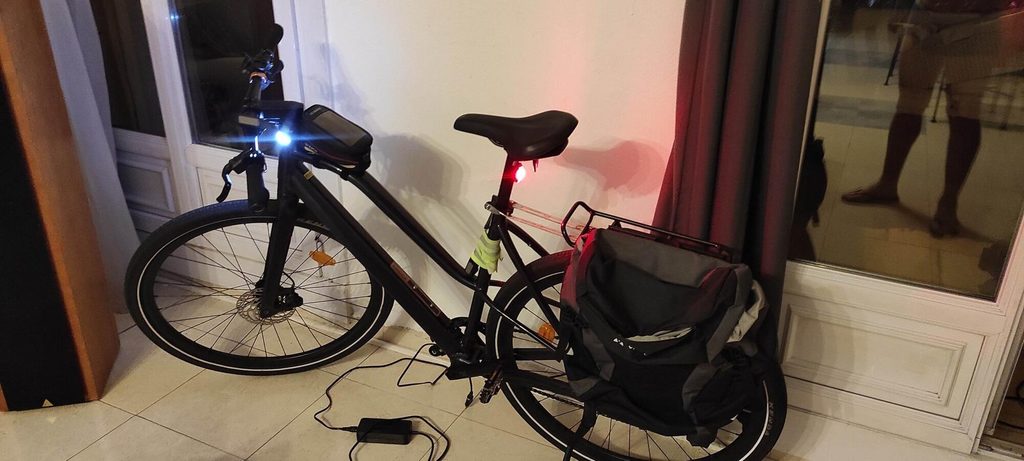
The right commuter bike light depends on where you ride, how long your journey takes, and whether your priority is seeing the road, being seen in traffic, or both.
1. Brightness and Lumen Output
Lumens measure the total visible light output from a light source. For commuters, however, the shape and distribution of the beam are just as important as the maximum lumen rating.
Use the following table as a general starting point when shopping for a front light.
| Commuting Conditions | Suggested Front-Light Output |
| Well-lit city streets | 200–500 lumens |
| Mixed urban and suburban routes | 500–1,000 lumens |
| Unlit roads or poorly lit cycle paths | 800–1,500 lumens |
| Fast riding on dark roads | Consider higher output and a suitable beam pattern |
These are general shopping guidelines, not legal minimums or guarantees of adequate illumination.
For a typical city commute, a light with moderate output and good beam control may be more practical than an extremely powerful headlight. On completely unlit roads, a wider beam and sufficient forward distance become more important.
Check independent reviews for beam photos and runtime measurements. Some headlights only maintain their maximum advertised output for a limited period before reducing brightness to manage heat and battery consumption.
2. Front Light vs. Rear Light
A complete commuter lighting setup should address visibility in both directions.
Front headlight
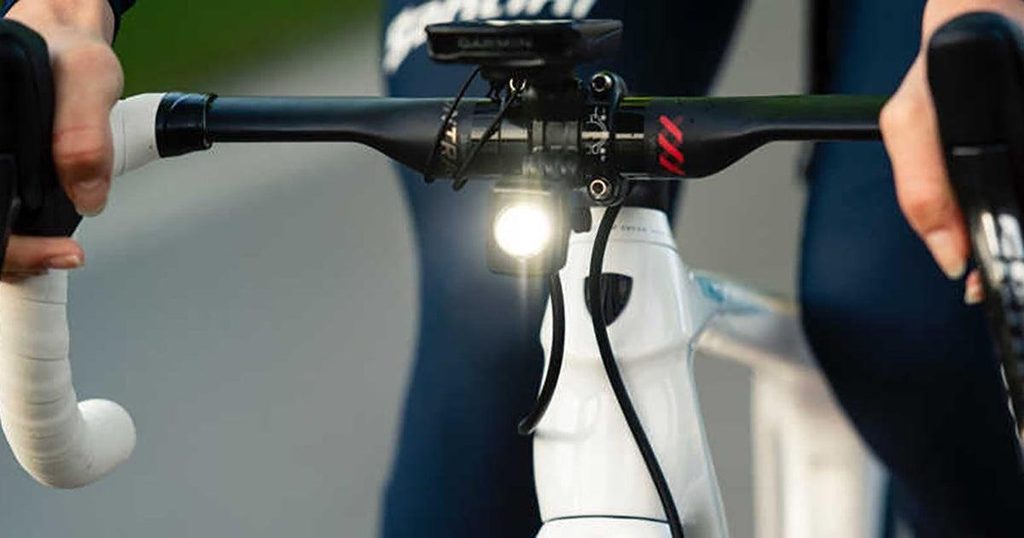
A white headlight helps illuminate the route ahead and makes the bicycle visible from the front. Look for secure mounting, useful beam distribution, and sufficient runtime for your journey.
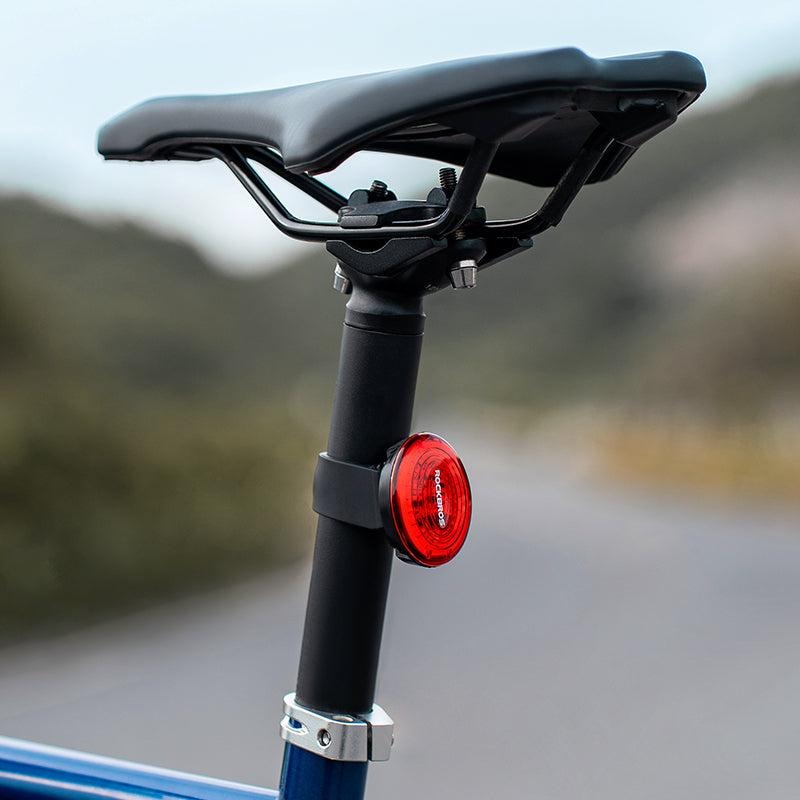
Rear safety light
A red rear light helps other road users recognize the bicycle from behind. Position it so that bags, clothing, and accessories do not obstruct the light.
If you commute in busy traffic, consider a rear light with good side visibility as well as visibility from directly behind.
Flashing modes can attract attention, but permitted modes vary by location. Use lighting that complies with local requirements and does not dazzle or distract other road users.
3. Battery Life and Charging
Battery life is particularly important for commuters who ride to work and return after dark.
Before purchasing, check the following:
- Runtime at the brightness setting you will actually use.
- Charging time and connector type.
- Battery-level indicator.
- Whether the light can be charged conveniently at work or home.
- Availability of a backup light for unexpected delays.
Manufacturer runtime claims vary by mode. A light advertised with a long maximum runtime may achieve that figure only in a low-output or flashing mode.
For a daily commute, choose a light that can cover your round trip with a reasonable reserve. Charging regularly and checking the battery before leaving are simple ways to avoid running out of power during your journey.
4. Size, Mounting, and Storage
Compact lights can be easier to remove and store, especially if you park your bicycle outside or use more than one bicycle.
Check that the mount fits your handlebars or seatpost and does not interfere with your cycling computer, phone mount, brake controls, or handlebar bag.
For commuters with baskets or front racks, verify that the headlight beam is not obstructed by the bicycle’s accessories.
A quick-release mounting system is useful if you need to remove the light when leaving your bicycle unattended.
For home storage, consider whether the light can be charged conveniently without removing other accessories from the bicycle.
5. Durability and Weather Resistance
Commuter lights need to withstand regular vibration, rain, and temperature changes.
Look for:
- A secure mounting system that resists movement on rough roads.
- Durable housing and protected charging ports.
- A clearly stated water-resistance rating.
- A reliable battery indicator.
- Manufacturer warranty and support.
An IP rating can help explain a product’s resistance to dust and water, but check the exact model and manufacturer’s instructions.
Do not assume that a water-resistant light is suitable for submersion or that every model in a product family has the same rating.
For winter commuters, also consider whether the light can be removed easily for charging and storage indoors.
6. Is Bike Radar Worth It for Commuting?
Rear radar can be useful for riders who regularly share roads with motor vehicles.
The Garmin Varia RTL515 detects approaching vehicles and can send alerts to compatible devices. It provides additional information about traffic behind the cyclist, but it does not replace visual checks or attentive riding.
Consider radar if your commute includes rural roads, busy traffic, or stretches with limited cycling infrastructure.
For short trips on protected cycle paths, a conventional rear light may be sufficient.
7. Set a Realistic Commuter Lighting Budget
When budgeting for lights, consider the complete system rather than buying only a front headlight.
For additional cycling equipment content on workoutgearreviews.com check out Best bike lights for night riding
FAQs
1. How many lumens do I need for commuting?
For well-lit city streets, a front light in the 200–500-lumen range may be sufficient, depending on conditions. For darker routes, consider 500–1,000 lumens or more, with attention to beam pattern and runtime. Your riding speed and local lighting requirements also matter.
2. Do I need both a front and rear bike light?
A front light helps illuminate the road ahead and makes you visible from the front, while a rear light improves visibility from behind. A complete front-and-rear setup is a practical choice for commuting, particularly in low-light conditions. Check your local regulations for required lighting and reflectors.
3. Are rechargeable bike lights worth it for commuting?
Rechargeable lights are convenient for regular commuters because they can be charged at home or work without repeatedly replacing disposable batteries. Check charging time, runtime at useful brightness settings, and battery replacement options before purchasing.
4. Is a 1,000-lumen bike light too bright for city commuting?
A 1,000-lumen light can be useful on darker sections of a commute, but maximum output is not always necessary on illuminated streets. Choose a model with adjustable brightness and position the beam to avoid dazzling other road users. A well-controlled beam can be more useful than a higher lumen rating alone.
5. Are flashing bike lights legal for commuting?
Rules governing flashing lights vary by location, including permitted colors, mounting positions, and flash patterns. Check the current cycling regulations where you ride. When riding at night, use a suitable headlight for seeing the road as well as a rear light for visibility.
6. Is the Garmin Varia RTL515 worth it for commuting?
The Varia RTL515 may be useful for commuters who regularly ride on roads with motor traffic and want additional information about approaching vehicles. Its radar features require compatible devices for the intended alert experience, and it costs more than a conventional rear light. It does not replace looking behind or paying attention to traffic.
Final Recommendation
For most commuters, the Cygolite Metro Plus 800 paired with a quality rear light offers a practical starting point. The NiteRider Lumina Combo Set is worth considering if you want front and rear lighting together, while the Knog Blinder 900 is an alternative for riders seeking a compact, higher-output headlight.
For commuters who value vehicle-detection radar, the Garmin Varia RTL515 adds functionality beyond a conventional rear light.
Compare current prices, confirm the exact model specifications, and choose a complete setup that suits your commute, weather conditions, and local cycling regulations.