Best GPS Running Watch in 2026: 5 Top Picks Compared
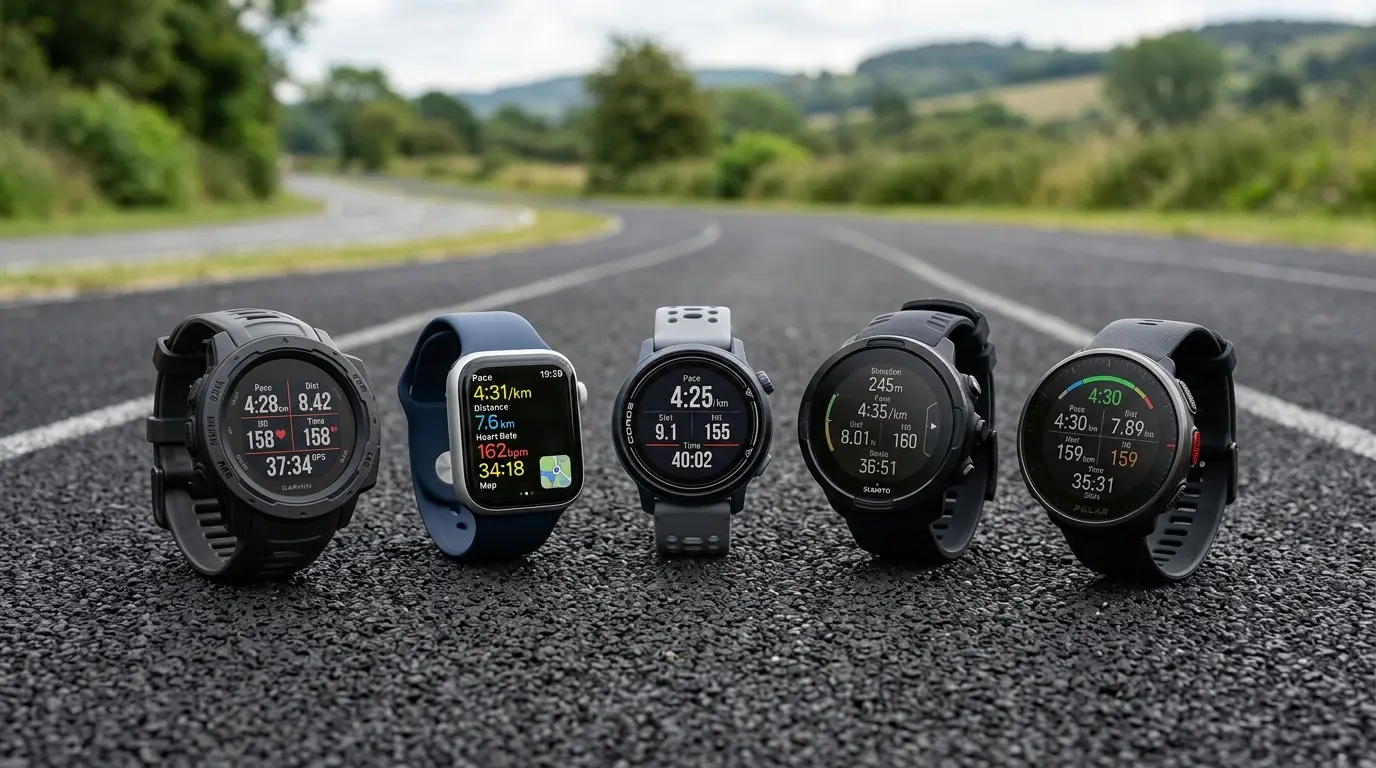
The best GPS running watch for most serious runners is the Garmin Forerunner 970. It combines accurate multi-band GPS, full-color maps, a bright AMOLED display, extensive training and recovery tools, an LED flashlight, and up to 15 days of smartwatch battery life. Garmin lists up to 26 hours of GPS use, while the watch weighs about 56 g.
The right alternative depends on what you value most. The Apple Watch Ultra 3 is the best choice for iPhone users who want a premium smartwatch alongside running features. The COROS PACE 4 is our value pick because it weighs only 32 g with its nylon band while offering up to 41 hours of GPS use. The Suunto Race 2 is particularly appealing for trail runners and athletes who prioritize maps, navigation, and long GPS battery life. Polar’s Vantage V3 remains a strong option for runners who want deep recovery and multisport analytics.
Quick Comparison of the Best GPS Running Watches
| Product | Best For | Weight Range | Adjustment Type | Key Feature | Check Price |
| Garmin Forerunner 970 | Serious runners & triathletes | 56 g / 47 mm | Silicone or nylon band | Maps + multi-band GPS + flashlight | View on Amazon |
| Apple Watch Ultra 3 | iPhone users | 61.6–61.8 g / 49 mm | Trail, Alpine or Ocean band | Dual-frequency GPS + smartwatch features | View on Amazon |
| COROS PACE 4 | Best value & lightweight running | 32–40 g | Nylon or silicone band | 41-hour GPS battery | View on Amazon |
| Suunto Race 2 | Trail & endurance runners | 65–76 g / 49 mm | Silicone band | Offline maps + up to 55-hour GPS battery | View on Amazon |
| Polar Vantage V3 | Recovery & multisport training | 57 g / 47.3 mm | 22 mm quick-release band | Recovery analytics + maps | View on Amazon |
For GPS watches, “Weight Range” below is adapted to show the watch’s weight and case size rather than a conventional weight range.
Product Reviews: Best GPS Running Watches
1. Garmin Forerunner 970
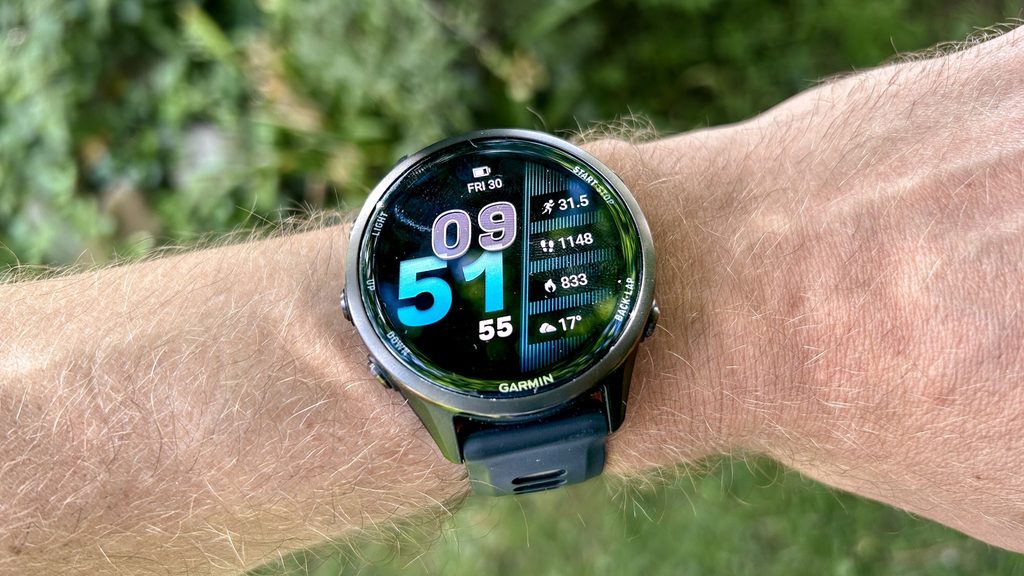
Best for: Serious runners, marathoners, triathletes, and athletes who want detailed training data.
Key Features
- 1.4-inch AMOLED display
- Multi-band GPS with SatIQ technology
- Full-color built-in maps
- Up to 26 hours of GPS battery life
- Up to 15 days in smartwatch mode
- Sapphire lens and titanium bezel
- Built-in LED flashlight
- Running economy and running tolerance metrics
- Training readiness and recovery features
- Music storage and Garmin Pay
- Built-in microphone and speaker for compatible phone functions
Garmin positions the Forerunner 970 as its premium running and triathlon watch. It adds advanced running metrics while retaining the navigation and training ecosystem that has made the Forerunner family popular with endurance athletes.
Pros
- Excellent combination of GPS accuracy and training features
- Detailed maps are useful for unfamiliar routes
- AMOLED display is bright and easy to read
- Lightweight relative to many premium outdoor watches
- Flashlight is genuinely useful for early-morning or evening runs
Cons
- Expensive
- More features than casual runners may ever use
- Premium training metrics can take time to learn
Why We Recommend It
The Forerunner 970 is the easiest recommendation if running performance is your priority and budget is secondary. It offers a particularly complete package: GPS, maps, training analysis, recovery data, race-oriented tools and smartwatch functions in a relatively lightweight case.
Independent testing has also highlighted its strong running accuracy and unusually detailed training feature set, although its premium price is a significant consideration.
2. Apple Watch Ultra 3
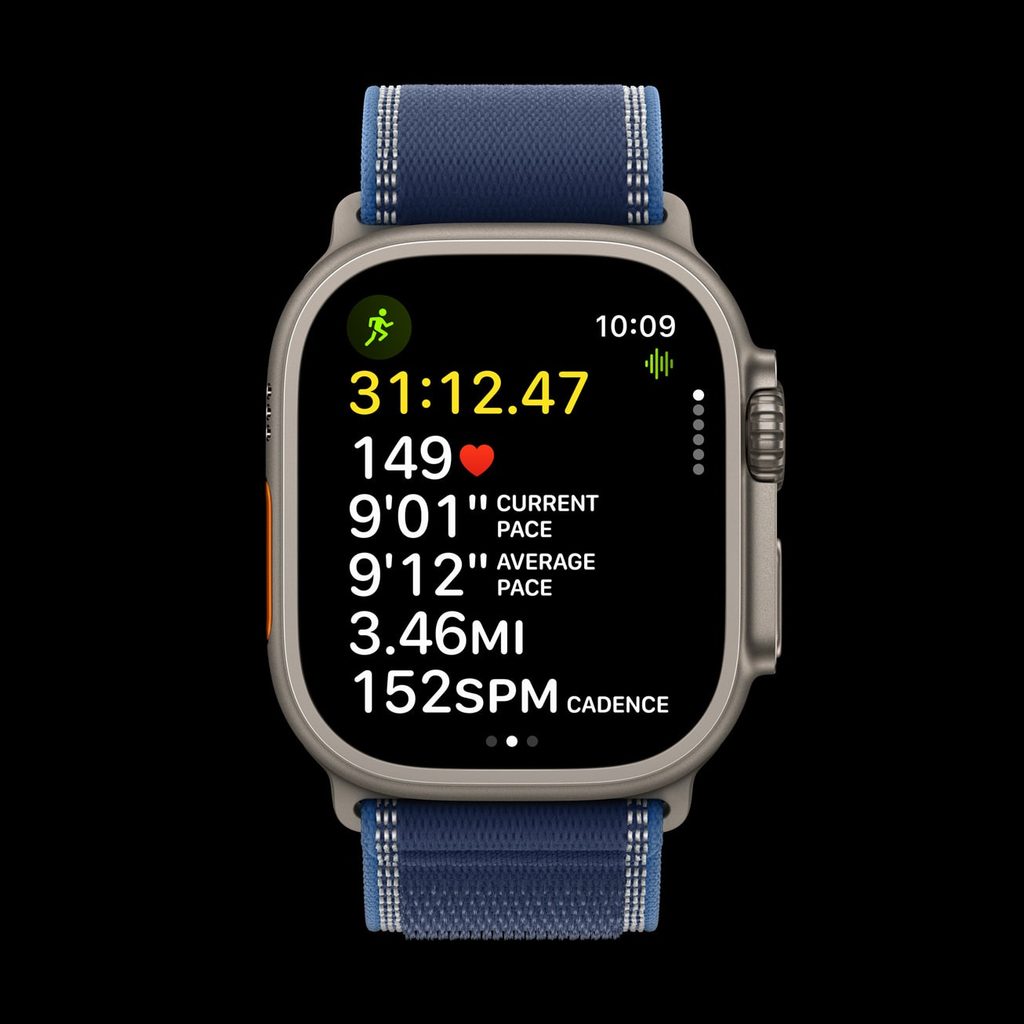
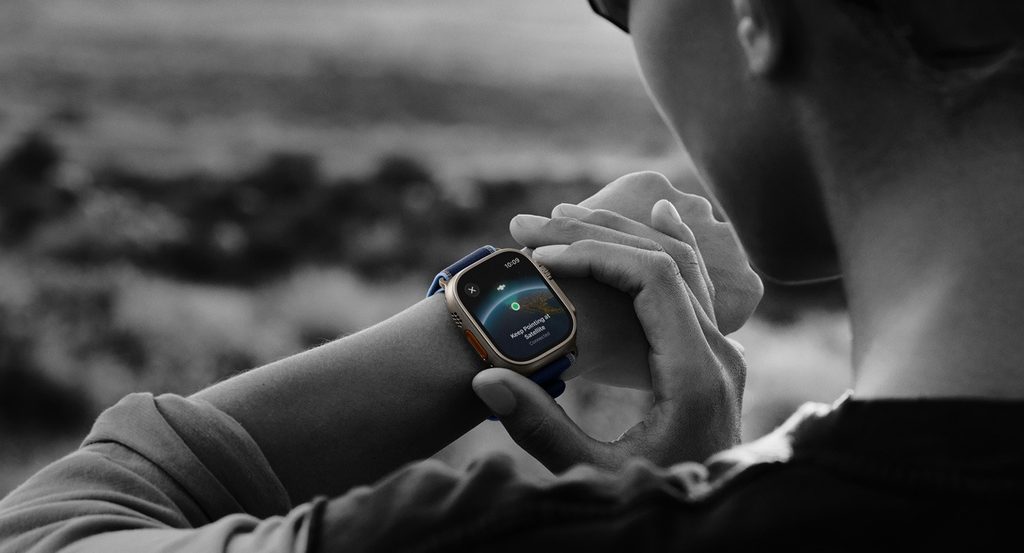
Best for: iPhone owners who want a running watch that also functions as a premium everyday smartwatch.
Key Features
- 49 mm Grade 5 titanium case
- 61.6–61.8 g depending on finish
- Dual-frequency GPS
- Up to 42 hours of normal battery use
- Up to 72 hours in Low Power Mode
- Up to 3,000-nit display brightness
- ECG and advanced heart-rate features
- Cellular connectivity
- Emergency SOS and satellite communication features
- 64 GB storage
- Water resistance to 100 meters
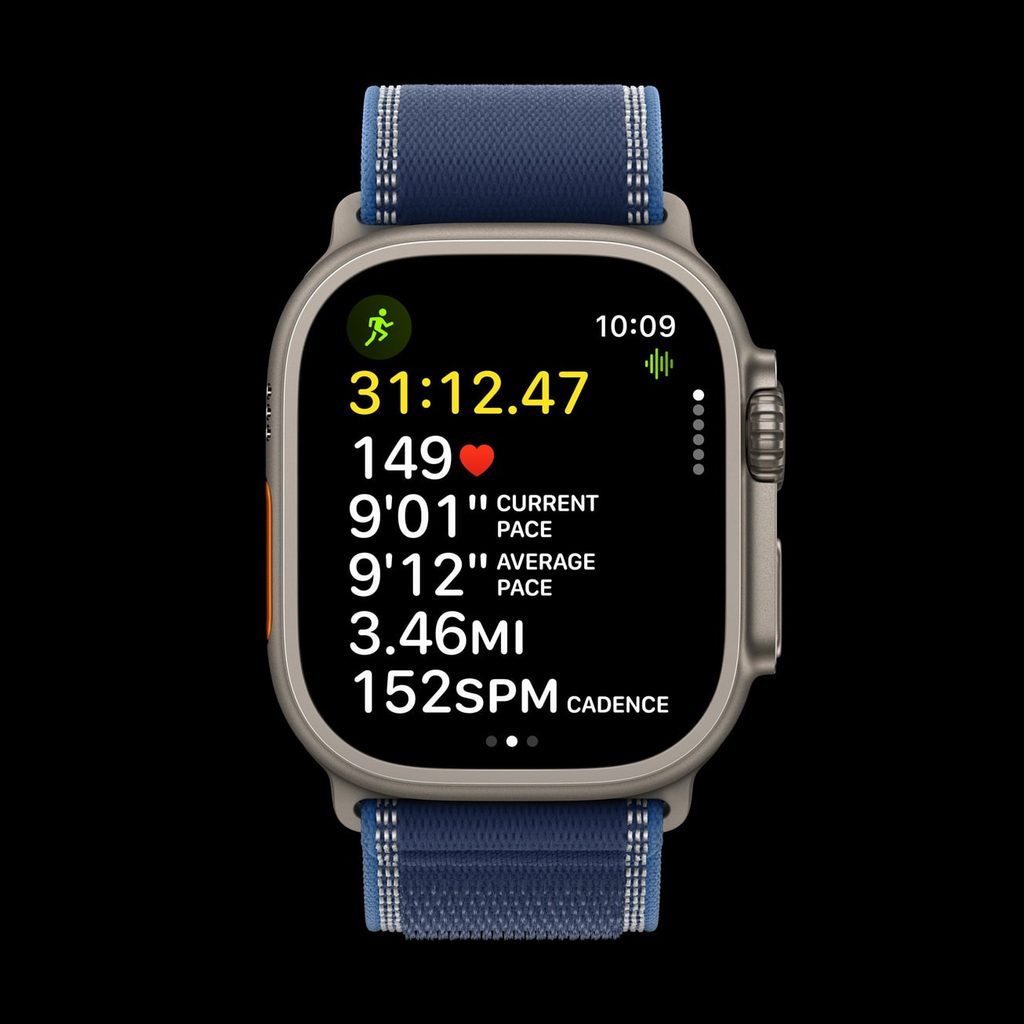
Apple’s Ultra 3 is less specialized than the Garmin but considerably more versatile as an everyday smartwatch. It combines advanced running metrics with notifications, calls, music, apps, health features and cellular connectivity. Apple lists up to 42 hours of battery life and up to 72 hours in Low Power Mode.
Pros
- Excellent display
- Strong GPS capabilities
- Best smartwatch integration for iPhone users
- Premium titanium construction
- Excellent safety and connectivity features
Cons
- Heavier than lightweight running watches
- Battery life is shorter than several dedicated GPS watches
- Requires an iPhone
- Expensive
Why We Recommend It
Choose the Ultra 3 if you don’t want a separate smartwatch and running watch. It is particularly attractive for runners who also want calls, music, apps, cellular service and a broad set of health features.
For a dedicated training-first experience, however, Garmin and COROS remain more focused on endurance sports.
3. COROS PACE 4
Best for: Runners who want serious GPS and training tools without paying premium-watch prices.
Key Features
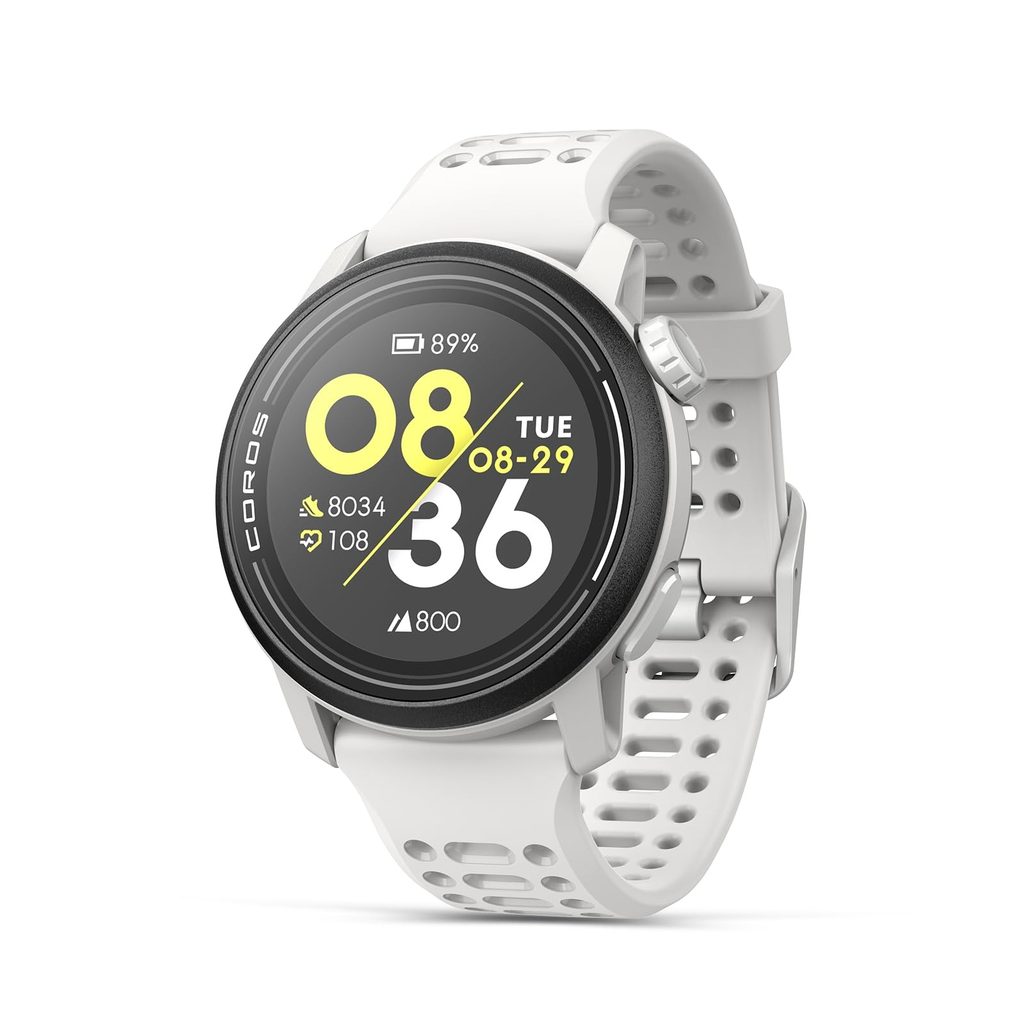
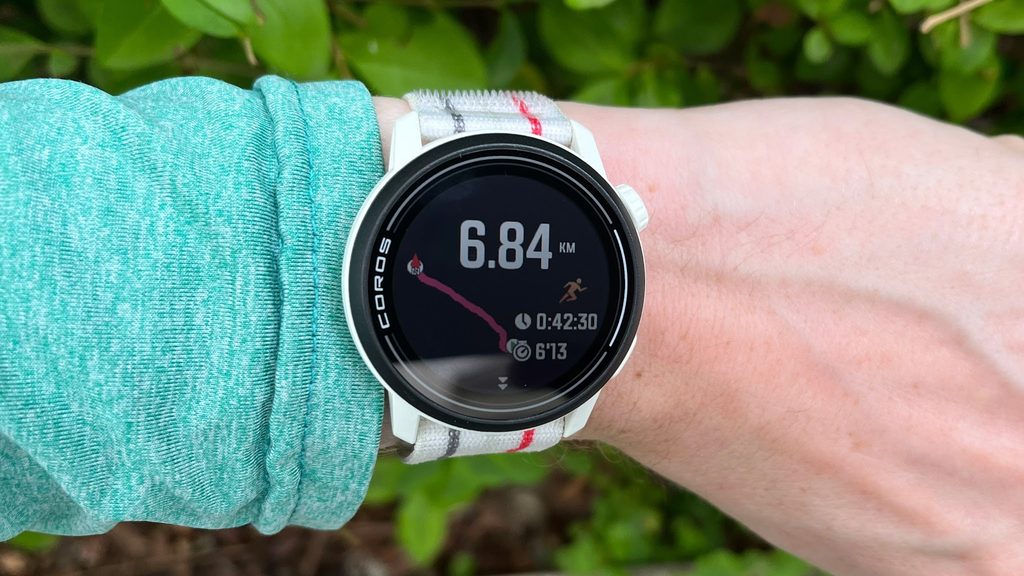
- 32 g with nylon band
- 40 g with silicone band
- 1.2-inch AMOLED touchscreen
- Up to 41 hours of GPS use
- Up to 19 days of daily use
- 11.8 mm thickness
- Dual-frequency GPS
- Race prediction and marathon planning
- Breadcrumb navigation
- Voice features
- Customizable running data screens
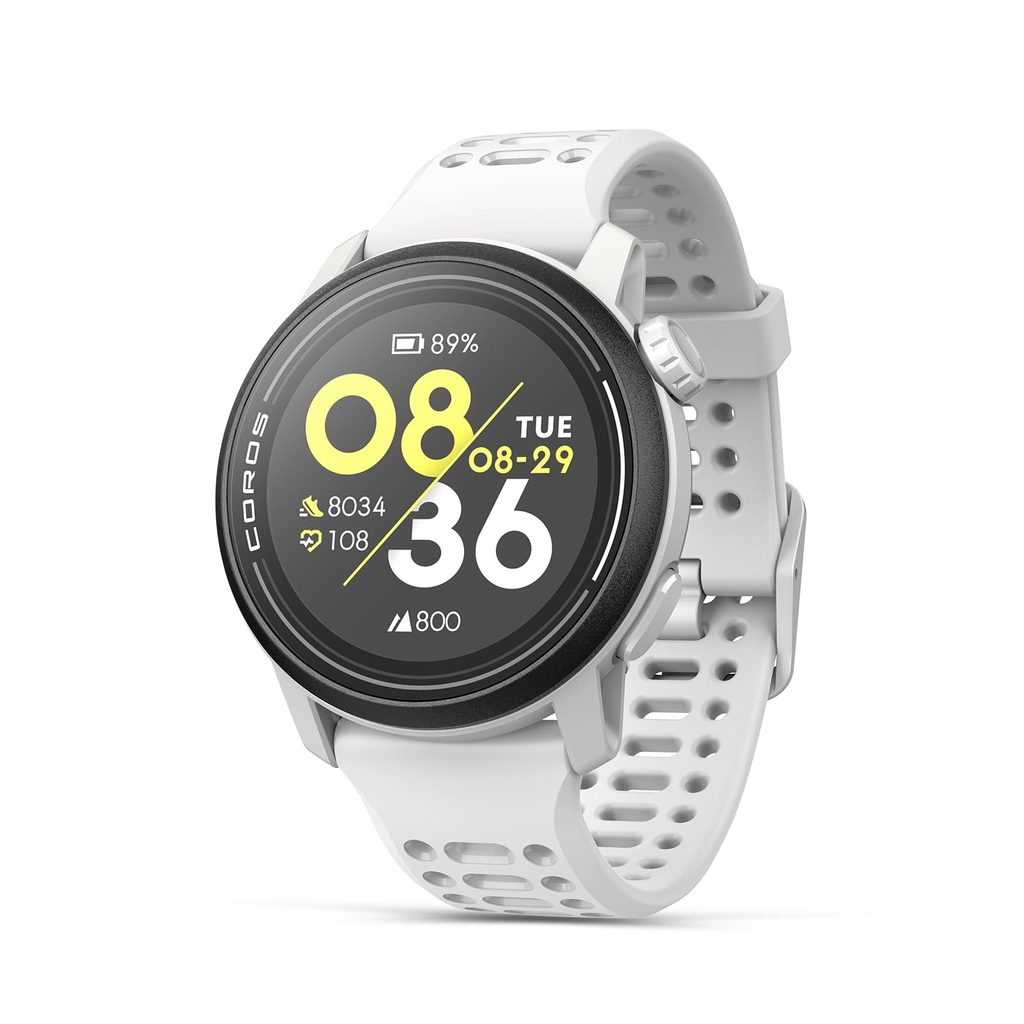
The PACE 4 is one of the strongest value propositions in the current GPS-watch market. COROS designed it around low weight, long battery life and straightforward training tools.
Pros
- Exceptionally lightweight
- Long GPS battery life
- Attractive price
- Easy-to-use training interface
- Excellent option for runners who dislike bulky watches
Cons
- Fewer smartwatch features than Apple Watch
- Navigation is less sophisticated than some premium outdoor watches
- Build and display experience are aimed more at performance than luxury
Why We Recommend It
The PACE 4 makes sense for runners who want to spend money on training rather than on smartwatch extras. At 32 g with its nylon band, it is dramatically lighter than many premium alternatives, yet its 41-hour GPS rating is enough for long-distance training and racing.
It is our pick for buyers who want the best balance of price, weight, battery life and running functionality.
4. Suunto Race 2
Best for: Trail runners, ultra-distance athletes and runners who frequently navigate unfamiliar terrain.
Key Features
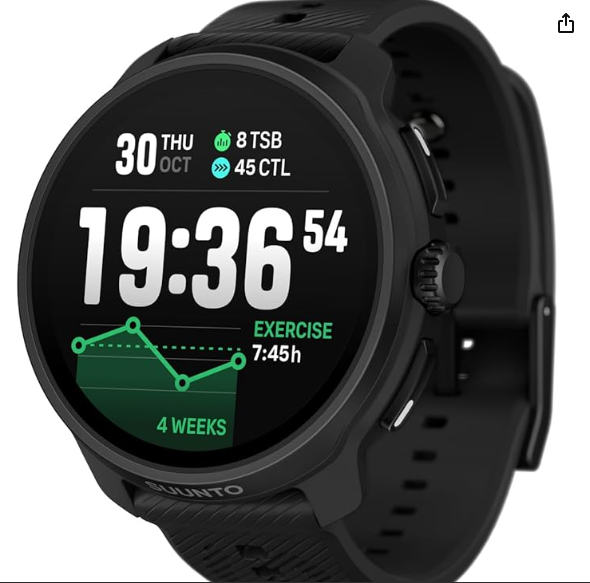
- 1.5-inch AMOLED display
- Up to 55 hours of battery life
- 115+ sport modes
- Dual-band GPS
- Free offline maps
- Improved navigation
- Training and recovery analytics
- Suunto Coach
- Racing, pacing and nutrition tools
- Sapphire crystal on titanium models
- Up to 18 days of daily use with heart rate enabled
Suunto’s Race 2 is particularly compelling when navigation and battery life matter. The company lists up to 55 hours of battery life and free offline maps, making it better suited to long trail outings than many conventional running watches.
Pros
- Excellent battery life
- Strong mapping and navigation
- Large, bright AMOLED display
- Excellent choice for trail running
- Broad multisport functionality
Cons
- Heavier than the COROS PACE 4
- Large 49 mm case may feel bulky on smaller wrists
- Less polished smartwatch ecosystem than Apple
Why We Recommend It
If your typical run includes trails, mountains or unfamiliar routes, the Race 2 deserves serious consideration. Its combination of offline maps, dual-band GPS and long battery life addresses the problems that matter most when you’re far from home.
5. Polar Vantage V3
Best for: Athletes who care about recovery, physiological data and multisport training.
Key Features
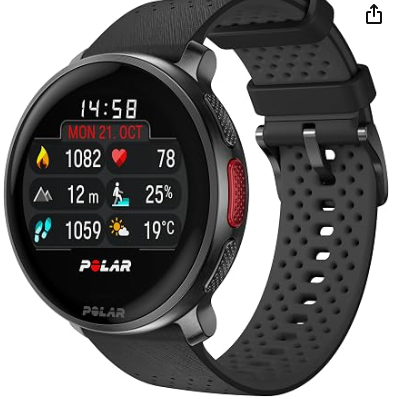
- 47.3 mm case
- 57 g total weight
- 1.39-inch AMOLED display
- Dual-frequency GPS
- Offline topographic maps
- Wrist ECG
- SpO2 measurement
- Skin-temperature tracking
- Advanced heart-rate monitoring
- Training Load Pro
- FuelWise
- Running power
- Up to 43 hours in performance training mode
- Up to 140 hours in eco training mode
- Up to 10 days of smartwatch use
The Vantage V3 takes a slightly different approach from Garmin. Polar puts considerable emphasis on recovery, physiological insights and training-load analysis alongside GPS and navigation.
Pros
- Excellent recovery and training analytics
- Dual-frequency GPS
- Offline maps
- Comfortable 57 g weight
- Strong multisport capabilities
- No need to buy into a huge smartwatch ecosystem
Cons
- Expensive
- Interface can take some learning
- Smartwatch features are less extensive than Apple’s
Why We Recommend It
The Vantage V3 is a good choice for athletes who want their watch to help answer not only “How far did I run?” but also “How am I recovering?” and “How should I train next?”
It is especially interesting for runners who cross-train with cycling, swimming or other sports.
Comparison Section
Garmin Forerunner 970 vs COROS PACE 4 vs Apple Watch Ultra 3
These three watches target noticeably different buyers.
Garmin Forerunner 970 is the strongest choice for runners who want the deepest dedicated training ecosystem. It provides detailed maps, multi-band GPS, running-specific metrics, recovery information and long battery life without becoming as bulky as many rugged outdoor watches.
COROS PACE 4 wins on simplicity and weight. At 32 g with the nylon band, it is roughly half the weight of the Apple Watch Ultra 3. Its 41-hour GPS rating also makes it highly practical for marathon training and long weekend runs.
Apple Watch Ultra 3 is the better choice when running is only one part of your wearable needs. It gives iPhone users a much richer smartwatch experience, including cellular connectivity, apps, calls, music, health features and safety functions.
Size
For smaller wrists, the PACE 4 has the clearest advantage. The Garmin is still relatively lightweight at 56 g, while the 49 mm Apple and Suunto watches are physically larger.
Adjustment Mechanism
All five watches use replaceable wristbands rather than a complicated mechanical sizing system. Nylon bands tend to provide the lightest feel, while silicone bands are easier to rinse and dry after sweaty workouts.
Durability
The Garmin Forerunner 970 uses a titanium bezel and sapphire lens. Apple uses Grade 5 titanium and a sapphire crystal display. The premium Suunto Race 2 titanium model also uses sapphire crystal. These materials are preferable if you regularly run trails or travel with your watch.
Price
The PACE 4 is by far the easiest on the wallet. Garmin and Polar sit at the premium end, while Apple and Suunto occupy the upper-middle to premium range.
Ease of Use
For dedicated running, Garmin and COROS are the easiest recommendations. Apple is more intuitive if you’re already familiar with iPhone apps, while Polar and Suunto reward buyers who are willing to spend more time learning their training ecosystems.
Buying Guide
Choosing the best GPS running watch isn’t simply about finding the watch with the most features. The better approach is to match the watch to your running volume, phone, training goals and budget.
GPS Accuracy
GPS accuracy matters most when you’re using the watch for pace, distance, navigation or structured workouts.
Look for dual-frequency or multi-band GPS if you regularly run through cities, wooded areas or mountainous terrain. Modern premium watches from Garmin, Apple, COROS, Polar and Suunto increasingly use multiple satellite frequencies to reduce positioning errors.
For uncomplicated road running in open areas, you may not need the most expensive GPS hardware.
Battery Life
Think about two numbers:
- Everyday battery life: how long the watch lasts between charges when you’re not running.
- GPS battery life: how long it can record an activity continuously.
For casual runners, a watch lasting a week in normal use is generally convenient. Marathoners and ultrarunners should pay much more attention to GPS battery life.
The PACE 4 offers up to 41 hours of GPS use, while Suunto Race 2 can reach 55 hours depending on configuration. Apple quotes up to 42 hours of normal use rather than positioning the Ultra 3 as the longest-lasting dedicated GPS watch.
Training Features
A beginner may only need:
- Pace
- Distance
- Time
- Heart rate
- GPS route
- Basic workout history
An experienced runner may benefit from:
- Training readiness
- Recovery analysis
- Race prediction
- Training load
- Running power
- Structured workouts
- Navigation
- Training plans
- Heart-rate variability trends
Don’t pay for advanced metrics you’ll never use.
Size and Comfort
Weight becomes surprisingly important once you’re wearing a watch for several hours every day.
The COROS PACE 4 is exceptionally light at 32 g with a nylon band. The Garmin Forerunner 970 is around 56 g, Polar’s Vantage V3 is 57 g, Apple Watch Ultra 3 is approximately 62 g, and the Suunto Race 2 is heavier still.
If you have a smaller wrist, prioritize case diameter and thickness rather than looking only at the feature list.
Display
AMOLED displays are attractive and highly readable, particularly for everyday smartwatch use. However, they can consume more power than simpler displays.
If you primarily run in daylight and want maximum battery life, don’t automatically assume the brightest display is the best display.
Durability
For normal road running, almost any reputable GPS running watch should be sufficiently durable.
Trail runners and outdoor athletes should pay closer attention to:
- Sapphire versus standard glass
- Titanium versus polymer bezels
- Water resistance
- Button design
- Temperature ratings
- Replaceable bands
- Availability of replacement parts
Smartwatch Features
Decide how much you actually want your running watch to behave like a smartphone.
Apple Watch Ultra 3 is the obvious choice if calls, apps, cellular connectivity and notifications matter. Garmin provides useful smartwatch functionality while remaining heavily focused on sport. COROS, Suunto and Polar put more emphasis on training than general-purpose apps.
Phone Compatibility
This is one of the easiest ways to narrow the field.
If you use an iPhone and want deep Apple integration, the Ultra 3 is difficult to beat. If your priority is dedicated endurance training, Garmin, COROS, Suunto and Polar deserve closer attention.
For more equipment recommendations, see our Best home gym equipment for small spaces guide.
FAQs
Are GPS running watches worth it?
For regular runners, a GPS watch can make training more measurable and consistent by recording pace, distance, heart rate, routes and workout history. The value increases if you’re following a structured training plan or preparing for a race.
How accurate are GPS running watches?
Modern multi-band and dual-frequency GPS watches can be highly accurate, particularly in open areas. Accuracy can still vary around tall buildings, dense trees, steep mountains and other environments where satellite signals are obstructed or reflected.
What is the best GPS running watch for beginners?
A beginner does not necessarily need a $700-plus watch. A simpler Garmin or COROS model can provide the essential pace, distance, heart-rate and GPS features without the complexity and cost of a premium multisport watch.
Is the Garmin Forerunner 970 worth the money?
For serious runners, it can be. Its combination of multi-band GPS, maps, AMOLED display, advanced running metrics, recovery tools, flashlight and long smartwatch battery life makes it one of the most complete dedicated running watches available.
Is COROS better than Garmin for running?
Neither is universally better. COROS is particularly compelling for runners who prioritize low weight, battery life, simple controls and value, while Garmin generally offers a broader training ecosystem and more extensive smartwatch and navigation features.
Do I need a GPS watch if I run on a treadmill?
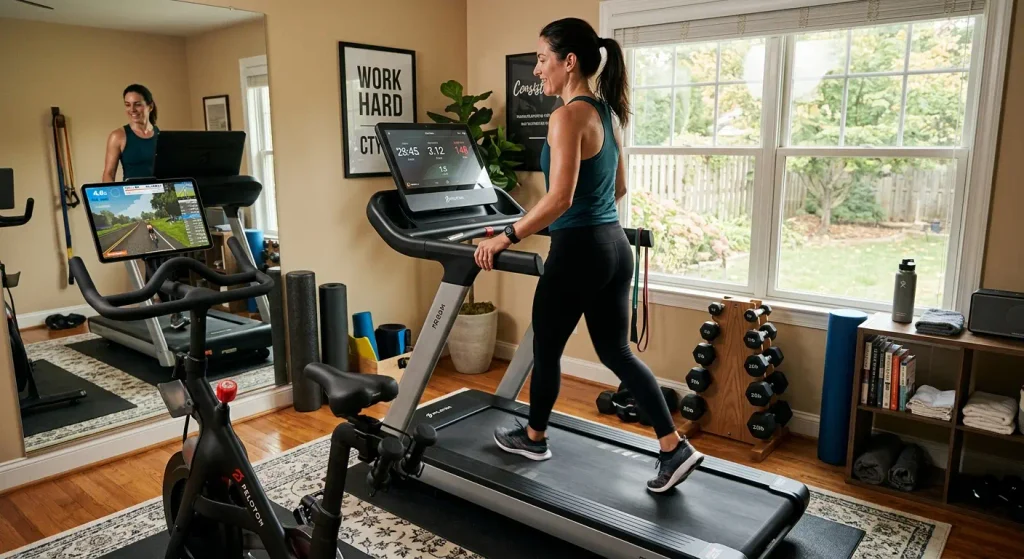
Not necessarily. A GPS signal doesn’t provide much benefit indoors, although a good running watch can still record heart rate, time and treadmill workouts. For a home-gym runner who spends most sessions indoors, training features and compatibility with treadmill or fitness apps may matter more than maximum GPS accuracy.
Our Final Verdict
For most buyers, the Garmin Forerunner 970 is the best GPS running watch overall because it balances serious training tools, GPS accuracy, maps, battery life, comfort and everyday usability.
But the best choice depends on your priorities:
- Best overall: Garmin Forerunner 970
- Best for iPhone users: Apple Watch Ultra 3
- Best value: COROS PACE 4
- Best for trail and endurance: Suunto Race 2
- Best for recovery and multisport analysis: Polar Vantage V3
Before buying, focus on the features you’ll actually use every week. A $249 watch that you wear consistently is a better investment than a $750 watch whose advanced features never leave the box.