Best Bike Saddle for Long Rides: 5 Comfortable Options for Road, Gravel, MTB & More
The Brooks England B17 is our top overall pick for riders looking for the best bike saddle for long rides, particularly touring cyclists, commuters and riders who prefer an upright or moderately upright position. Its proven leather construction, wide supportive shape and long-term durability make it a compelling choice for riders who prioritize comfort over minimum weight. The B17 has also remained a popular long-distance saddle because the leather can gradually conform to the rider.
However, the B17 isn’t automatically the best saddle for everyone. Saddle comfort is highly individual, and factors such as sit-bone width, riding position, saddle shape and bike fit can matter more than the amount of padding. For road and gravel riders, the Selle Italia SLR TM Boost Superflow is a lighter performance-oriented alternative, while the WTB Volt is a versatile choice for MTB, gravel and mixed riding. The Selle Royal Respiro is worth considering for upright recreational riding and commuting, while the Fizik Tempo Argo R5 is a strong option for riders who want a modern short-nose endurance saddle.
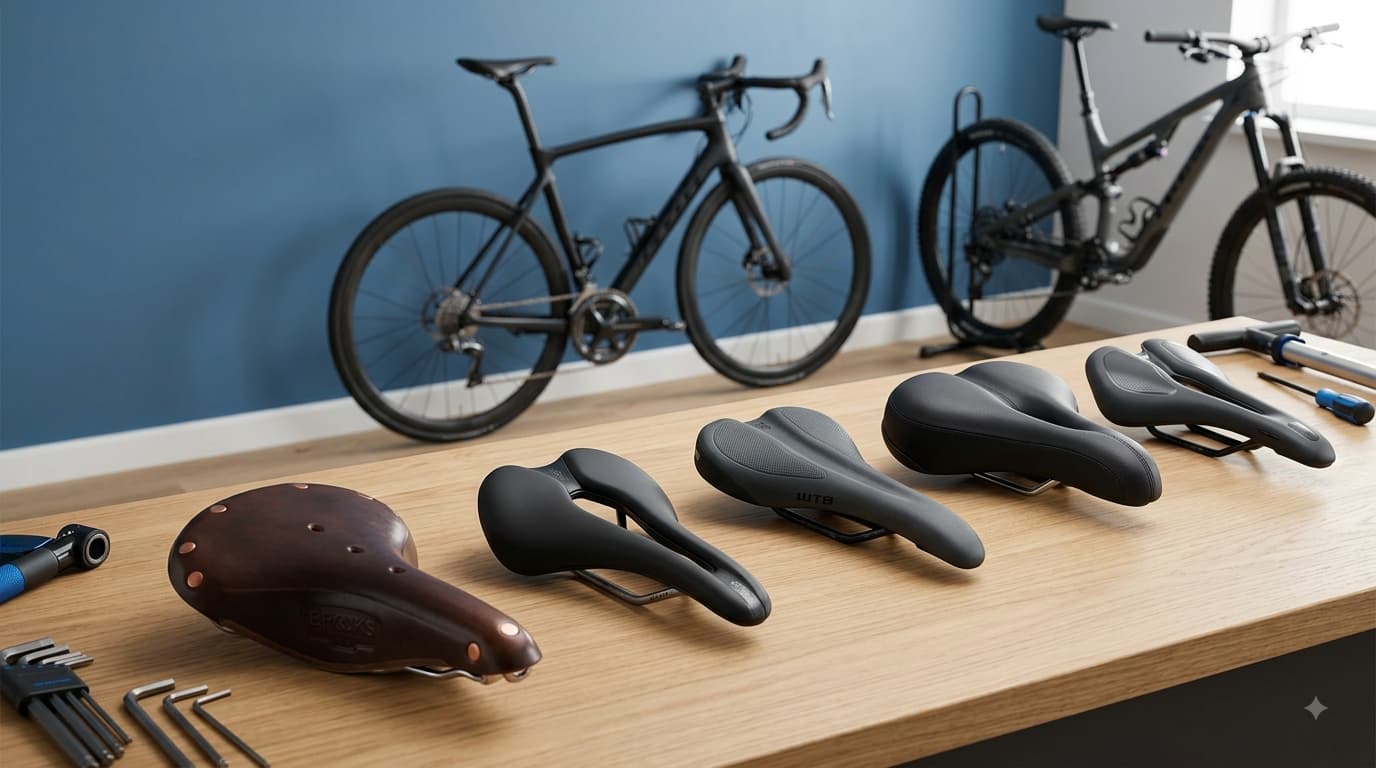
Quick Comparison of the Best Bike Saddles for Road Cycling, Gravel, MTB, Commuting and Touring.
| Product | Best For | Weight Range | Adjustment Type | Key Feature | Check Price |
| Brooks England B17 | Touring & long-distance comfort | ~520–580 g depending on version | Fixed saddle; rail adjustment | Leather top and classic hammock-style support | View on Amazon |
| Selle Italia SLR TM Boost Superflow | Road endurance | ~220–250 g depending on version | Fixed saddle; rail adjustment | Large Superflow pressure-relief cutout | View on Amazon |
| WTB Volt | MTB, gravel & mixed riding | ~300–350 g depending on version | Fixed saddle; rail adjustment | Versatile shape and central relief channel | View on Amazon |
| Selle Royal Respiro | Commuting & upright riding | ~400–500 g depending on version | Fixed saddle; rail adjustment | Ventilated cover and comfort-oriented design | View on Amazon |
| Fizik Tempo Argo R5 | Road & endurance riding | ~250–270 g depending on width | Fixed saddle; rail adjustment | Short-nose shape and pressure-relief channel | View on Amazon |
Important: Bike saddles don’t have adjustable “weight ranges” or adjustment mechanisms like gym equipment. In this table, “weight range” refers to approximate saddle weight, while “adjustment type” indicates that the saddle itself is fixed but can be positioned on the seatpost using its rails.
Product Reviews: Best Bike Saddles
1. Brooks England B17
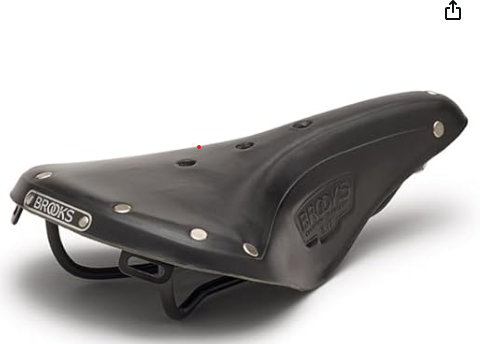
Best for: Touring, commuting, bikepacking and riders who prioritize long-term comfort and durability.
The Brooks England B17 is one of the most recognizable long-distance bicycle saddles ever made. Unlike modern foam-and-plastic performance saddles, the B17 uses a leather top that is designed to develop a more personalized feel with use.
That’s also what makes it different from the other saddles in this comparison.
The B17 isn’t particularly light, and riders looking for a racing-oriented saddle may find its traditional design too heavy. But for touring and long-distance riding, weight isn’t always the most important consideration.
Independent comparisons consistently highlight the B17’s comfort and durability, with one current comparison rating it substantially higher than the Selle Royal Respiro for both comfort and durability.
Key Features
- Genuine leather saddle top
- Classic long-nose design
- Steel or upgraded rail options depending on model
- Multiple width/version options
- Designed for touring and everyday cycling
- Leather construction intended to adapt over time
- Extremely established design
Pros
- Excellent long-distance reputation
- Extremely durable construction
- Leather can become more personalized with use
- Comfortable for upright and moderate riding positions
- Classic design
- Excellent choice for touring and bikepacking
Cons
- Heavy compared with modern road saddles
- Requires more care than synthetic saddles
- Leather may take time to break in
- Not ideal for riders seeking a minimalist racing saddle
Why We Recommend It
The B17 is our best overall choice for long-distance comfort because it approaches saddle design from a completely different perspective.
Rather than trying to make the saddle extremely light and heavily padded, Brooks uses a relatively firm leather platform that supports the rider over a large area.
It’s particularly compelling if your long rides involve touring, commuting or an upright position rather than aggressive road racing.
One important caveat: leather saddles are personal. Some cyclists love the way they develop over time, while others prefer modern synthetic materials that require less maintenance.
2. Selle Italia SLR TM Boost Superflow
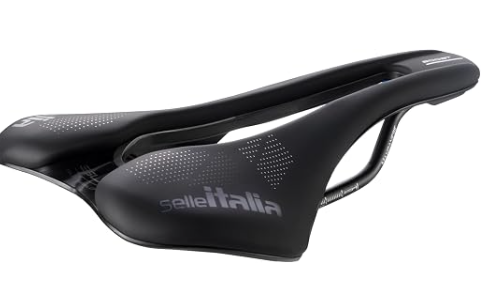
Best for: Road cyclists, endurance riders and riders who want a lightweight saddle with substantial pressure relief.
The Selle Italia SLR TM Boost Superflow is almost the opposite of the Brooks B17.
Where the Brooks emphasizes leather, support and durability, the SLR TM Boost focuses on efficient pedaling, low weight and pressure relief.
Its short-nose Boost profile is designed around modern road-riding positions, while the large Superflow opening reduces pressure in the central area.
Current long-distance saddle guides continue to recommend the SLR TM Boost Superflow as a lightweight endurance option, particularly for riders who want pressure relief without moving to a very heavily padded saddle.
Key Features
- Short-nose Boost shape
- Superflow central cutout
- Tubular manganese rails on applicable versions
- Synthetic technical cover
- Performance-oriented shape
- Multiple width/model variations
- Lightweight construction
Pros
- Much lighter than the Brooks B17
- Excellent pressure relief
- Good match for road cycling
- Efficient pedaling position
- Strong choice for endurance riding
- Modern performance-oriented design
Cons
- Less suited to very upright bikes
- Firm feel may not suit every rider
- Fit is highly dependent on width and riding position
Why We Recommend It
If your definition of a long ride is 100 miles of road cycling rather than a week-long touring trip, the Selle Italia is arguably a better choice than the Brooks.
The important distinction is that long-distance comfort doesn’t necessarily require a soft saddle.
A properly shaped firm saddle can provide excellent support while minimizing movement and pressure. The Superflow opening is particularly useful for riders who experience pressure in the central area.
3. WTB Volt
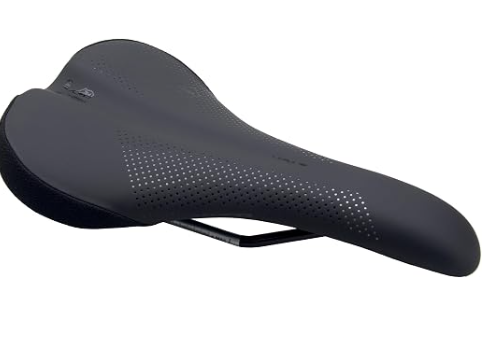
Best for: Mountain biking, gravel, trail riding and cyclists who use one bike for multiple disciplines.
The WTB Volt is one of the most versatile choices in this lineup.
It’s designed to provide a balance between support, padding and freedom of movement. That makes it particularly useful for MTB and gravel riders who may frequently move between seated and standing positions.
The Volt is available in different configurations, including different rail and padding options. Current cycling saddle guides continue to identify it as a strong gravel and MTB option, with one 2026 guide highlighting its medium padding, central relief channel and multiple width options.
Key Features
- Central pressure-relief channel
- Medium-padding options
- Multiple widths
- Rounded profile
- MTB-oriented design
- Gravel compatibility
- Multiple rail configurations
Pros
- Excellent versatility
- Great for MTB and gravel
- Multiple width options
- Good balance of padding and support
- Reasonable price
- Works well for recreational riders
Cons
- Not as lightweight as racing saddles
- Shape may not suit aggressive road riders
- Numerous versions can make choosing the right model confusing
Why We Recommend It
The WTB Volt is the saddle we’d recommend to someone who says:
“I ride a little bit of everything.”
If your bike sees pavement during the week and gravel or trails on weekends, the Volt’s versatility makes more sense than buying a highly specialized road saddle.
It’s also a strong value proposition for riders who don’t want to spend premium-saddle money.
4. Selle Royal Respiro
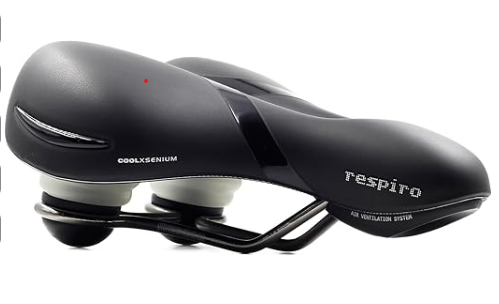
Best for: Commuting, recreational cycling, hybrid bikes and upright riding positions.
The Selle Royal Respiro takes a comfort-first approach.
Its broad shape and ventilated construction make it particularly appealing to riders who sit relatively upright. That’s an important distinction because saddle shape should correspond to riding position.
A rider sitting upright places pressure on the rear portion of the saddle, while a rider leaning forward on a road bike generally needs a narrower, more performance-oriented shape.
Current comparisons position the Respiro as a strong value-oriented comfort saddle, particularly when compared with premium leather options such as the Brooks B17.
Key Features
- Ventilated saddle design
- Comfort-oriented padding
- Wide rear section
- Multiple versions for different riding positions
- Synthetic weather-resistant materials
- Designed primarily for commuting and recreational use
Pros
- Comfortable for upright riding
- Good value
- Ventilation helps in warm conditions
- Good commuter option
- Easier maintenance than leather
Cons
- Too wide for some aggressive road positions
- Heavier than performance saddles
- May feel overly cushioned to experienced road cyclists
Why We Recommend It
The Respiro is a good reminder that the best bike saddle for long rides isn’t always a road-racing saddle.
If you’re riding a hybrid, city bike or upright commuter, buying a narrow racing saddle simply because it appears on “best saddle” lists can be a mistake.
The Respiro’s broader, comfort-oriented design makes much more sense for riders who maintain an upright posture.
5. Fizik Tempo Argo R5
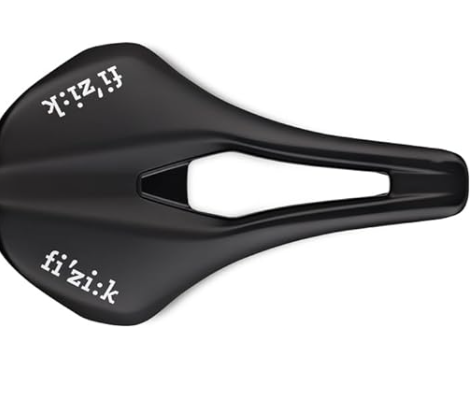
Best for: Road cycling, endurance riding and cyclists who prefer a modern short-nose saddle.
The Fizik Tempo Argo R5 is the modern endurance-oriented option in our lineup.
Its short-nose shape is designed to provide a stable platform while accommodating modern riding positions. The design is particularly appealing to cyclists who prefer to remain relatively fixed on the saddle during long road rides.
It sits between the traditional Brooks approach and the lightweight race-focused philosophy of the Selle Italia.
Key Features
- Short-nose profile
- Central pressure-relief channel
- Endurance-oriented padding
- Wing-flex style shell design
- Lightweight construction
- Road and gravel compatibility
- Multiple width options depending on version
Pros
- Modern endurance geometry
- Good pressure management
- Lightweight
- Strong road-bike option
- Stable platform
- Good balance between comfort and performance
Cons
- Less suitable for very upright bikes
- Not as inexpensive as basic comfort saddles
- Fit still depends heavily on rider anatomy
Why We Recommend It
The Tempo Argo R5 is a strong option for riders who want long-distance road comfort without the bulk of a traditional touring saddle.
If you’re building an endurance road bike or regularly riding several hours at a time, its short-nose design is worth considering.
Comparison — Brooks B17 vs Selle Italia SLR vs WTB Volt
Choosing between the top three largely comes down to how you ride.
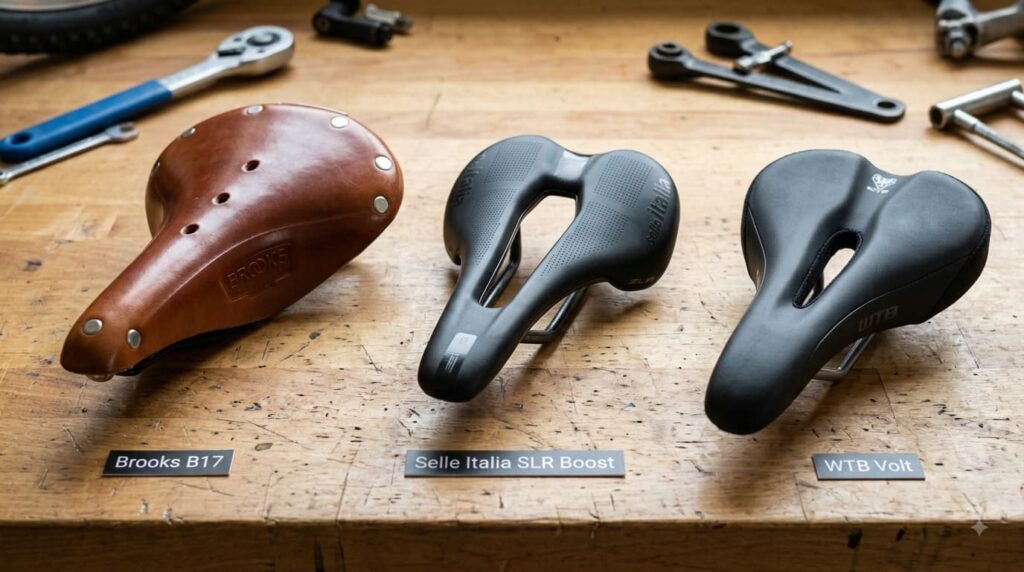
Brooks B17 vs Selle Italia SLR TM Boost Superflow
These saddles have almost nothing in common.
The Brooks B17 is wider, heavier and built around a leather top. The Selle Italia SLR is narrower, lighter and designed around modern road-bike geometry.
Choose the Brooks if you’re touring, commuting or riding a bike with a relatively upright position.
Choose the Selle Italia if you’re riding a road bike and want efficient support with a large central pressure-relief opening.
Brooks B17 vs WTB Volt
The WTB Volt is more versatile for riders who move between MTB, gravel and road riding.
The B17 has a more traditional touring orientation.
The Volt is also significantly lighter and less maintenance-intensive, while the Brooks offers the unique characteristics of leather.
Selle Italia vs WTB Volt
For road cycling, the Selle Italia gets the advantage.
For MTB and mixed terrain, the WTB Volt is the better fit.
The Volt’s shape gives riders more freedom to move around the bike, whereas the Selle Italia is better suited to maintaining a consistent road-riding position.
Quick Comparison
| Feature | Brooks B17 | Selle Italia SLR | WTB Volt |
| Long-distance touring | ⭐⭐⭐⭐⭐ | ⭐⭐⭐ | ⭐⭐⭐⭐ |
| Road endurance | ⭐⭐⭐ | ⭐⭐⭐⭐⭐ | ⭐⭐⭐⭐ |
| Gravel | ⭐⭐⭐⭐ | ⭐⭐⭐⭐½ | ⭐⭐⭐⭐⭐ |
| MTB | ⭐⭐⭐ | ⭐⭐⭐ | ⭐⭐⭐⭐⭐ |
| Upright riding | ⭐⭐⭐⭐⭐ | ⭐⭐ | ⭐⭐⭐⭐ |
| Weight | ⭐⭐ | ⭐⭐⭐⭐⭐ | ⭐⭐⭐⭐ |
| Durability | ⭐⭐⭐⭐⭐ | ⭐⭐⭐⭐ | ⭐⭐⭐⭐ |
| Value | ⭐⭐⭐⭐ | ⭐⭐⭐⭐ | ⭐⭐⭐⭐⭐ |
Buying Guide: How to Choose the Best Bike Saddle for Long Rides
The most important thing to understand is that there is no universally comfortable bike saddle.
A saddle that feels fantastic for one rider can cause pressure, numbness or discomfort for another.
Current cycling guidance emphasizes saddle shape, sit-bone width and riding position rather than simply choosing the most padded model.
Saddle Width
Width is one of the first things to consider.
Your sit bones need to be adequately supported by the saddle.
A saddle that’s too narrow may place excessive pressure on sensitive tissue, while one that’s too wide can interfere with your thighs.
A practical method is to measure your sit-bone width at home. Current guidance suggests that the saddle should generally provide additional width beyond the measured sit-bone spacing, although the exact amount depends on the saddle design and riding position.
If a brand offers multiple widths, use its sizing recommendations rather than simply buying the widest option.
Riding Position
Your position on the bicycle is just as important as your anatomy.
Upright
For city bikes, hybrids and upright commuters, look at wider comfort saddles such as the Selle Royal Respiro or traditional designs such as the Brooks B17.
Moderate
Gravel and endurance riders can often use medium-width saddles such as the WTB Volt or Fizik Tempo Argo.
Aggressive
Road racers who spend much of the ride leaning forward may prefer narrower performance saddles such as the Selle Italia SLR TM Boost Superflow.
Padding
More padding isn’t necessarily better.
Very soft saddles can feel fantastic during a short test ride but create problems on longer rides because your body sinks into the padding.
A moderately firm saddle that supports the sit bones can be more comfortable over several hours.
That’s why professional saddle recommendations often emphasize shape and fit rather than simply selecting the thickest foam.
Cutouts and Pressure Relief
A central cutout or pressure-relief channel can reduce pressure on soft tissue.
The Selle Italia SLR TM Boost Superflow is an excellent example, with its large Superflow opening.
However, cutouts aren’t automatically beneficial for everyone.
The shape around the opening matters, and the wrong saddle can still create pressure around the edges.
Saddle Rails
Saddle rails connect the saddle to the seatpost.
Common materials include:
- Steel
- Chromoly
- Manganese
- Titanium
- Carbon
For most recreational cyclists, rail material isn’t the first specification to prioritize.
A properly fitting $70 saddle is usually a better purchase than a $250 saddle with exotic rails that doesn’t suit your anatomy.
Weight
Weight matters most to performance-oriented riders.
For touring and commuting, a heavier saddle can be completely reasonable if it provides the comfort and durability you need.
A 300-gram weight saving isn’t particularly useful if the saddle causes discomfort during a four-hour ride.
This is one reason the Brooks B17 remains relevant despite weighing considerably more than modern road saddles.
Durability
Look at the entire construction rather than one material.
For touring, leather can provide outstanding longevity if properly maintained.
For commuters, synthetic covers can be easier to maintain because they’re less sensitive to weather and moisture.
For performance riders, shell and rail construction matter more because minimizing weight is a greater priority.
Saddle Position
Even an excellent saddle can feel terrible if it’s installed incorrectly.
Check:
- Saddle height
- Fore-aft position
- Saddle angle
- Handlebar position
- Reach
- Overall bike fit
If changing saddles doesn’t solve persistent discomfort, the problem may be bike fit rather than the saddle itself.
As current cycling experts emphasize, saddle shape and overall bike fit can be more important than simply buying a softer or more expensive seat.
Long Rides Require More Than a Comfortable Saddle
Your saddle is only one part of the comfort equation.
For long rides, also consider:
- Quality padded cycling shorts
- Proper saddle height
- Handlebar reach
- Tire pressure
- Bike fit
- Regular position changes
- Hydration
- Chamois fit
If you haven’t already, see our guide to the Best Cycling Shorts for another important part of long-distance comfort.
FAQs
What is the best bike saddle for long rides?
For many touring and recreational cyclists, the Brooks B17 is an excellent long-distance choice because of its supportive leather construction and durability. Road cyclists may prefer a lighter performance saddle such as the Selle Italia SLR TM Boost Superflow or Fizik Tempo Argo R5. The best choice ultimately depends on your sit-bone width and riding position.
Is a wider bike saddle better for long rides?
Not necessarily. A wider saddle can be more comfortable for riders with a more upright position, but an overly wide saddle can interfere with pedaling. Your saddle should provide appropriate sit-bone support without causing thigh contact or restricting movement.
How do I stop my bike saddle from hurting?
Start by checking saddle width, height, angle and fore-aft position. Your cycling shorts and overall bike fit also affect comfort. If discomfort persists, try a different saddle shape rather than simply choosing one with more padding.
Are hard bike saddles more comfortable on long rides?
They can be. A firm saddle can provide better support and prevent excessive sinking into soft padding during long rides. Comfort depends more on the saddle’s shape, width, pressure distribution and compatibility with your riding position than on softness alone.
Is the Brooks B17 good for long-distance cycling?
Yes, particularly for touring, commuting and relatively upright riding. Its leather construction and supportive shape have made the B17 a long-standing choice for distance riders, although it is considerably heavier than modern performance saddles and requires more maintenance.
Should I choose a road or comfort saddle?
Choose based on your riding position and cycling style, not simply the type of bicycle you own. Aggressive road positions generally work better with narrower performance-oriented saddles, while upright commuter and hybrid positions can benefit from wider comfort saddles.
Final Verdict: What’s the Best Bike Saddle for Long Rides?
Our overall winner is the Brooks England B17, but only for the type of rider it was designed to serve.
If you primarily tour, commute or ride with an upright-to-moderate position, the B17’s combination of support, durability and long-term comfort makes it an excellent investment.
For road endurance, we’d choose the Selle Italia SLR TM Boost Superflow.
For MTB, gravel and mixed riding, the WTB Volt is our favorite.
For upright commuting and recreational riding, the Selle Royal Respiro makes more sense.
And for a modern road/endurance saddle, the Fizik Tempo Argo R5 deserves serious consideration.
Our Final Rankings
| Rank | Saddle | Best For |
| 1 | Brooks England B17 | Best overall for touring and long-distance comfort |
| 2 | Selle Italia SLR TM Boost Superflow | Best for road endurance |
| 3 | WTB Volt | Best for MTB, gravel and mixed riding |
| 4 | Selle Royal Respiro | Best for commuting and upright riding |
| 5 | Fizik Tempo Argo R5 | Best modern endurance road saddle |
The most important lesson is simple: don’t buy a saddle based only on reviews, padding or price.
Your sit-bone width, riding position and bike fit determine whether a saddle will actually be comfortable. That’s why a $70 WTB Volt can be a better choice for one rider than a $200 performance saddle, while a Brooks B17 may be perfect for a touring cyclist but completely wrong for an aggressive road racer.
When possible, buy from a retailer with a reasonable return or test policy. A saddle often requires more than a five-minute test ride to evaluate properly.
For most riders, the best bike saddle for long rides isn’t the one with the most technology—it’s the one that supports your body in the position you actually ride in for hours at a time.