Best Bike Helmet With Lights: 5 Options for Safer, More Visible Rides
Choosing the best bike helmet with lights means finding a helmet that combines reliable impact protection, a comfortable fit, and useful lighting for visibility in low-light conditions. Whether you’re commuting, cycling around the neighborhood, or riding early in the morning, an integrated light can make your helmet more practical.
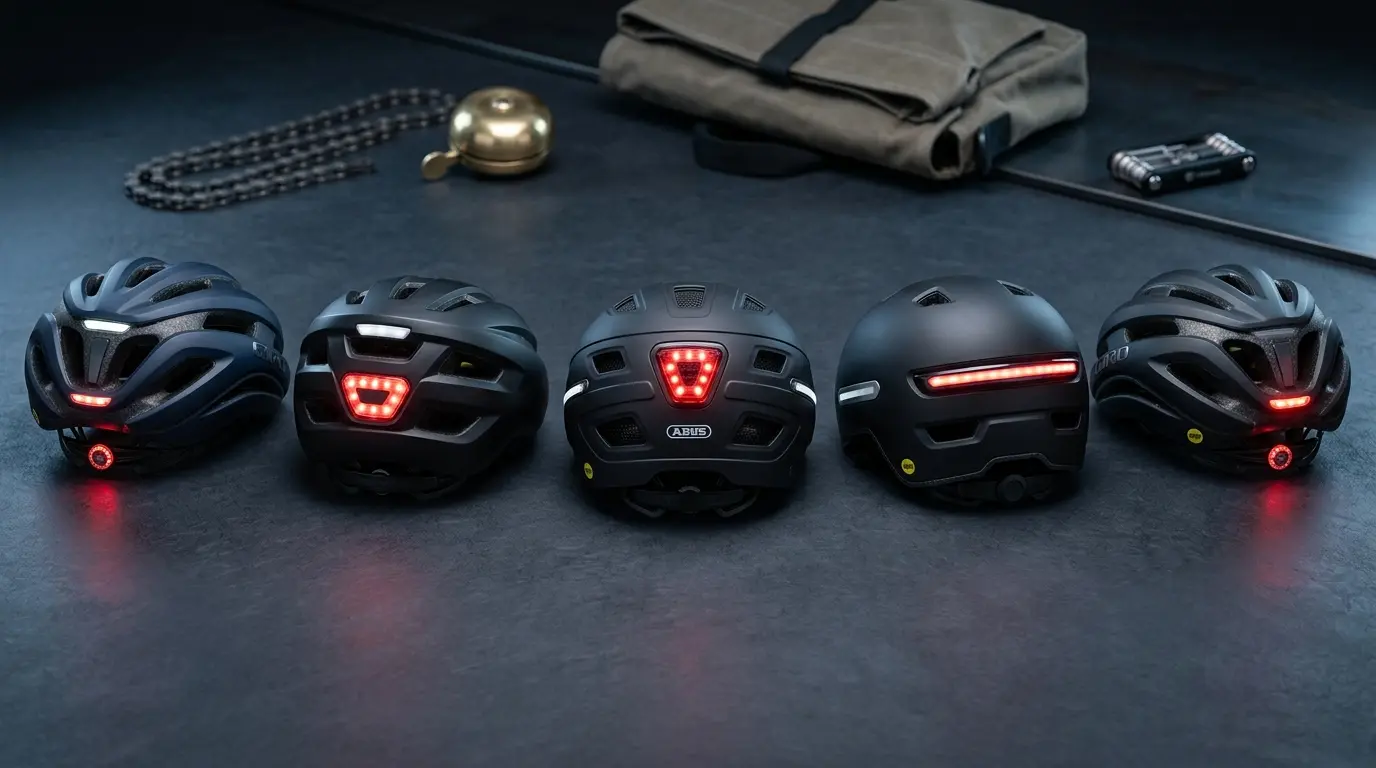
For most adult cyclists, the right choice depends on fit, light placement, battery life, safety certification, and riding conditions. This guide compares five helmets, including the Giro Escape MIPS LED, Lumos Ultra MIPS, UNIT 1 AURA MIPS, Giro Caden MIPS II LED, and the ABUS Hyban 2.0 MIPS Adult Urban Helmet.
The Giro Escape MIPS LED is a strong option for commuters looking for the best bike helmet with lights. It combines an integrated rear LED, MIPS rotational-impact management, and a commuter-focused design, making it suitable for everyday urban cycling and recreational rides.
For more advanced lighting, the Lumos Ultra MIPS offers front and rear LEDs with turn signals, while the UNIT 1 AURA MIPS adds smart lighting features. The ABUS Hyban 2.0 MIPS is another option for urban riders who want a durable, city-oriented helmet with integrated rear lighting and MIPS protection.
A helmet light improves visibility but does not replace a properly positioned bicycle headlight and rear light. Always check that the helmet fits securely and meets the safety standard applicable to your location and type of riding.
Quick Comparison of the Best Bike Helmets with Lights for Commuting, Recreational Cycling, and Urban Riding.
The five selections cover integrated rear lighting, smart signaling, and commuter comfort. Prices and availability vary by retailer, model year, and size.
| Product | Best For | Lighting / Protection | Key Feature | Check Price |
| Giro Escape MIPS LED | Everyday commuting | Rear LED, MIPS | Commuter-focused design | View on Amazon |
| Lumos Ultra MIPS | Smart visibility | Front and rear LEDs, MIPS | Integrated turn signals | View on Amazon |
| UNIT 1 AURA MIPS | Premium smart features | Integrated lighting, MIPS | Connected lighting features | View on Amazon |
| Giro Caden MIPS II LED | Practical city riding | Rear LED, MIPS | Everyday commuter styling | View on Amazon |
| ABUS Hyban 2.0 MIPS Adult Urban Helmet | Urban commuting | Check exact LED configuration and MIPS version | Hard-shell urban design | View on Amazon |
Product Reviews: Best Bike Helmet With Lights
The following reviews focus on intended use, lighting, fit, and practical trade-offs. Specifications can vary between model years and regional versions, so check the manufacturer’s documentation and the exact retailer listing before purchasing.
1. Giro Escape MIPS LED Helmet
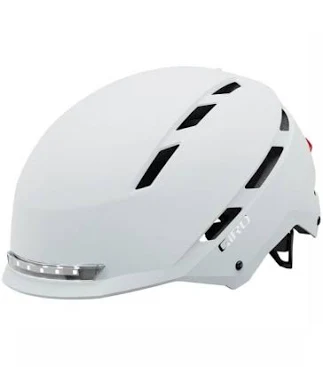
Best for everyday commuting
Best for: City commuters who want a practical helmet with integrated rear lighting and rotational-impact management.
The Giro Escape MIPS LED is designed for riders who regularly cycle on city streets and want visibility features built into their everyday gear. Its integrated rear light reduces the need to attach a separate light to the helmet.
The commuter-oriented design makes it suitable for routine trips, recreational rides, and cycling through urban areas.
Key Features
- Integrated rear LED for additional visibility.
- MIPS system designed to help manage rotational motion during certain angled impacts.
- Commuter-focused shell design.
- Adjustable fit system and padded interior, depending on configuration.
- Lighting and charging specifications vary by version.
Pros
- Integrated rear lighting is convenient for daily use.
- MIPS provides an additional rotational-impact management feature.
- Suitable for everyday commuting and casual urban rides.
- Reduces the need for a separate helmet-mounted rear light.
Cons
- Rear lighting does not replace a bicycle headlight and rear light.
- The commuter design may be heavier than minimalist road helmets.
- Integrated electronics require occasional charging and maintenance.
Why We Recommend It
The Escape MIPS LED is a practical option for someone who wants a commuter helmet with built-in rear visibility and MIPS.
It is particularly relevant for daily riders who prefer a straightforward setup over turn signals, smartphone connectivity, or elaborate lighting controls.
2. Lumos Ultra MIPS
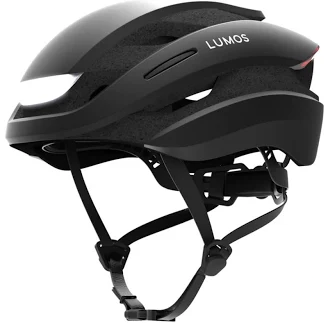
Best for smart lighting
Best for: Commuters who want front and rear lighting with turn-signal functionality.
The Lumos Ultra MIPS is aimed at cyclists who want to communicate their presence and intended direction more clearly. Its lighting system offers more functionality than a basic rear LED, including front and rear illumination and turn signals.
It is designed for urban riders who want integrated lighting and signaling without relying entirely on separate accessories.
Key Features
- Integrated front and rear LED lighting.
- Turn-signal functionality.
- App-connected controls and compatible accessories, depending on configuration.
- Rechargeable battery.
- Multiple lighting modes.
Pros
- More lighting functionality than a rear-only helmet.
- Turn signals can help communicate intended direction.
- Useful for regular urban commuting.
- Integrated lighting creates a streamlined setup.
Cons
- Costs more than a basic commuter helmet.
- Smart features may require setup, charging, and compatible accessories.
- A helmet-mounted front light does not illuminate the road as effectively as a properly aimed bicycle headlight.
Why We Recommend It
The Lumos Ultra is worth considering for riders who value integrated lighting and signaling as part of their commuting equipment.
It may be useful for regular city cyclists who want a helmet that does more than display a rear light. The trade-off is that charging and electronic maintenance become part of the riding routine.
3. UNIT 1 AURA MIPS
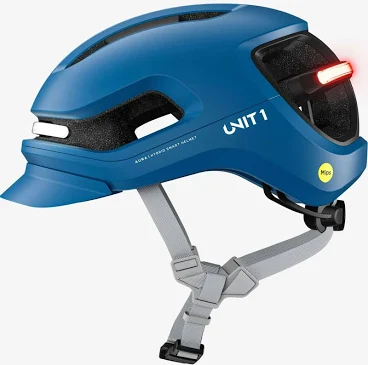
Best for premium smart features
Best for: Riders interested in connected lighting, signaling, and additional smart-helmet functions.
The UNIT 1 AURA MIPS is a premium option that combines integrated lighting with smart features. It is designed for cyclists who want a more connected commuting experience rather than a conventional helmet with a single rear light.
Depending on the configuration, the product family offers integrated lighting and smart functions. Confirm which features and accessories are included in the exact model you purchase.
Key Features
- Integrated lighting system.
- Turn-signal functionality on supported configurations.
- MIPS rotational-impact management in the specified model.
- Smart features and compatible connected controls.
- Multiple sizes and configurations.
Pros
- Combines lighting and smart functionality in one system.
- Turn signals offer additional communication options.
- MIPS is included in the specified model.
- Designed around everyday urban use.
Cons
- Premium pricing makes it a substantial purchase.
- Additional electronic components require charging and maintenance.
- Features and accessories may differ by retailer or configuration.
Why We Recommend It
The AURA is worth considering for cyclists who want an integrated smart-helmet experience and are comfortable paying more for connected features.
For someone who mainly rides short recreational trips in daylight, its additional functions may not be necessary. For frequent commuters, integrated lighting and signaling may be more useful.
4. Giro Caden MIPS II LED
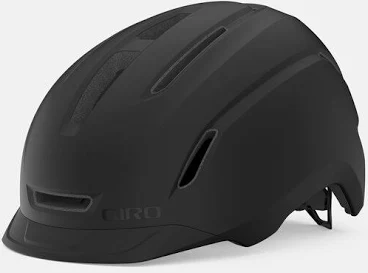
Best for practical city riding
Best for: Riders who want a commuter-style helmet with rear lighting and MIPS.
The Giro Caden MIPS II LED is another option for everyday urban cycling. It focuses on a practical combination of commuter styling, rear lighting, and rotational-impact management.
The Caden range is intended for city and everyday use, making it relevant to riders who want a helmet for commuting, local errands, and casual rides.
Key Features
- Integrated rear LED on the specified LED version.
- MIPS rotational-impact management.
- Adjustable fit system.
- Urban-oriented styling.
- Ventilation and removable padding, depending on configuration.
Pros
- Commuter-focused design.
- Integrated rear lighting adds convenience.
- MIPS provides an additional rotational-impact management feature.
- Suitable for everyday cycling rather than only performance riding.
Cons
- Rear lighting does not provide the same functionality as front-and-rear smart systems.
- A separate bicycle headlight is still needed to illuminate the road.
- Confirm light operation and charging specifications for the exact model.
Why We Recommend It
The Caden MIPS II LED makes sense for riders who prefer a straightforward commuter helmet with an integrated rear light.
It is an alternative to more expensive smart helmets when turn signals and app-based controls are not important to your routine.
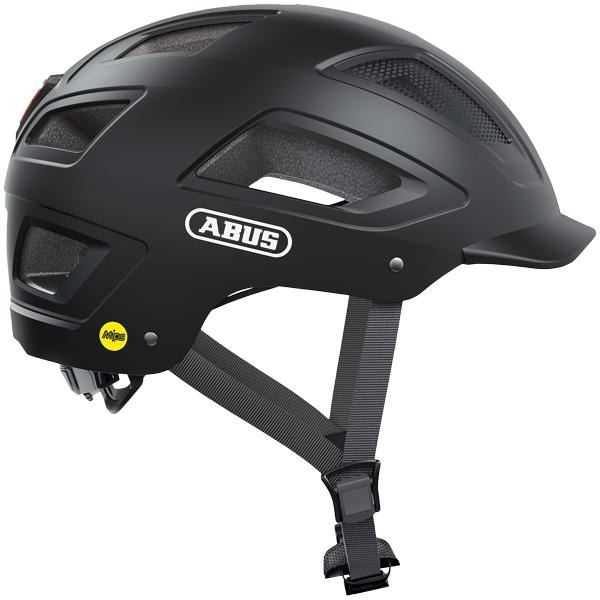
5. ABUS Hyban 2.0 MIPS Adult Urban Helmet
Best for urban commuting
Best for: Adult urban cyclists who want a hard-shell commuter helmet with MIPS and practical everyday features.
The ABUS Hyban 2.0 MIPS Adult Urban Helmet is designed for city cycling, commuting, and everyday transportation. Its urban styling and substantial outer shell make it visually different from lightweight road-racing helmets.
For buyers specifically seeking a bike helmet with lights, it is important to distinguish the Hyban 2.0 MIPS from ABUS versions that include integrated lighting. The Hyban product family has lighting-equipped variants, but the exact configuration should be confirmed on the retailer’s listing. Do not assume every Hyban 2.0 MIPS helmet includes a light simply because another version does.
Key Features
- MIPS rotational-impact management in the specified MIPS model.
- Hard-shell urban commuter design.
- Adjustable retention system for fit customization.
- Ventilation openings for airflow during everyday rides.
- Integrated rear light on compatible lighting-equipped versions; verify the exact model.
- Adult sizing, with availability depending on retailer and market.
Pros
- Urban-focused design suited to commuting and everyday cycling.
- MIPS offers an additional rotational-impact management feature.
- Hard-shell construction is suited to regular city use.
- Adjustable fit helps accommodate different head shapes.
- Lighting-equipped versions can reduce the need for an additional helmet-mounted light.
Cons
- Not every Hyban 2.0 MIPS listing necessarily includes integrated lighting.
- A hard-shell commuter helmet may feel heavier than a minimalist road helmet.
- Does not offer the same turn-signal functionality as dedicated smart helmets.
- Exact certification and features must be checked for the regional model.
Why We Recommend It
The ABUS Hyban 2.0 MIPS is worth considering for riders who prefer a traditional urban helmet design and want MIPS protection in a commuter-oriented package.
Its main appeal is the combination of an urban shell, adjustable fit, and everyday practicality. For buyers who specifically need integrated lighting, choose a confirmed light-equipped variant or pair the helmet with compatible bicycle-mounted lights.
Compared with the Lumos Ultra or UNIT 1 AURA, the Hyban is a more conventional option. It is suitable for riders who do not need connected controls or turn signals, provided the exact model meets their safety and lighting requirements.
Comparison Section
Giro Escape vs Lumos Ultra vs ABUS Hyban 2.0 MIPS
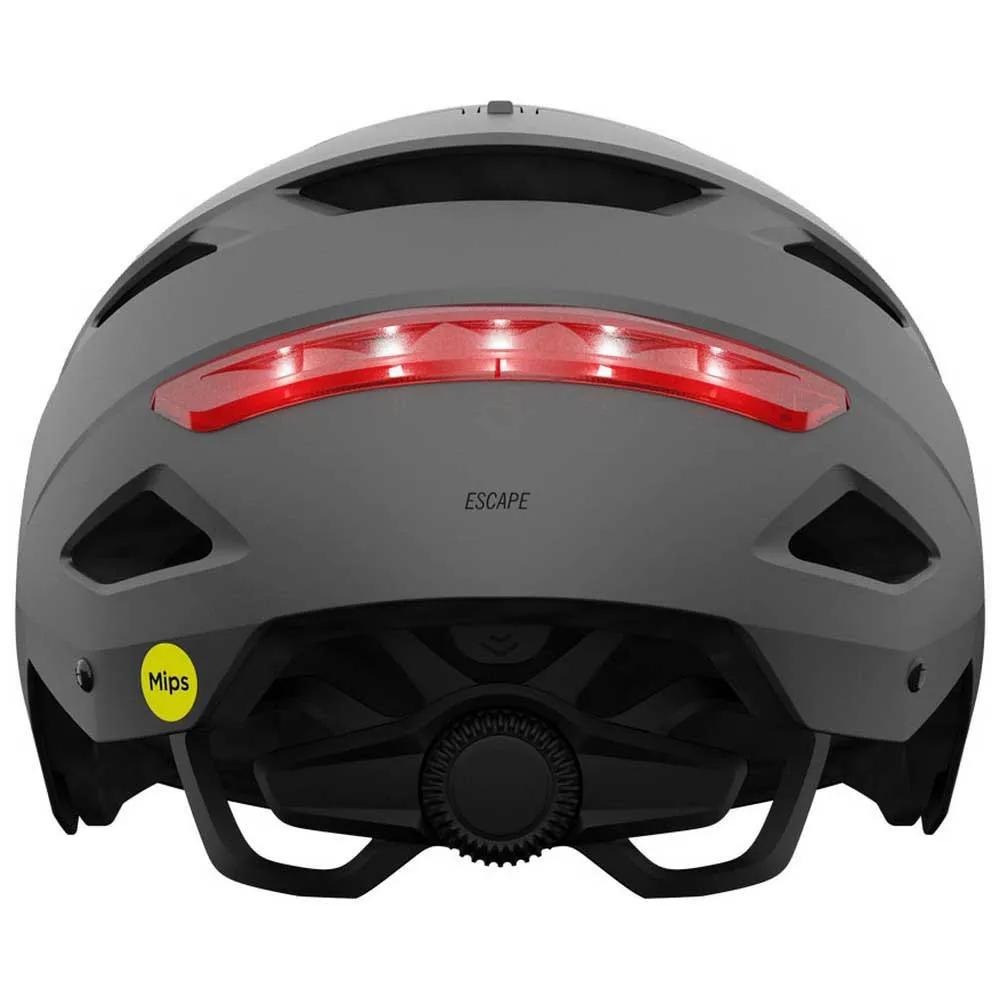
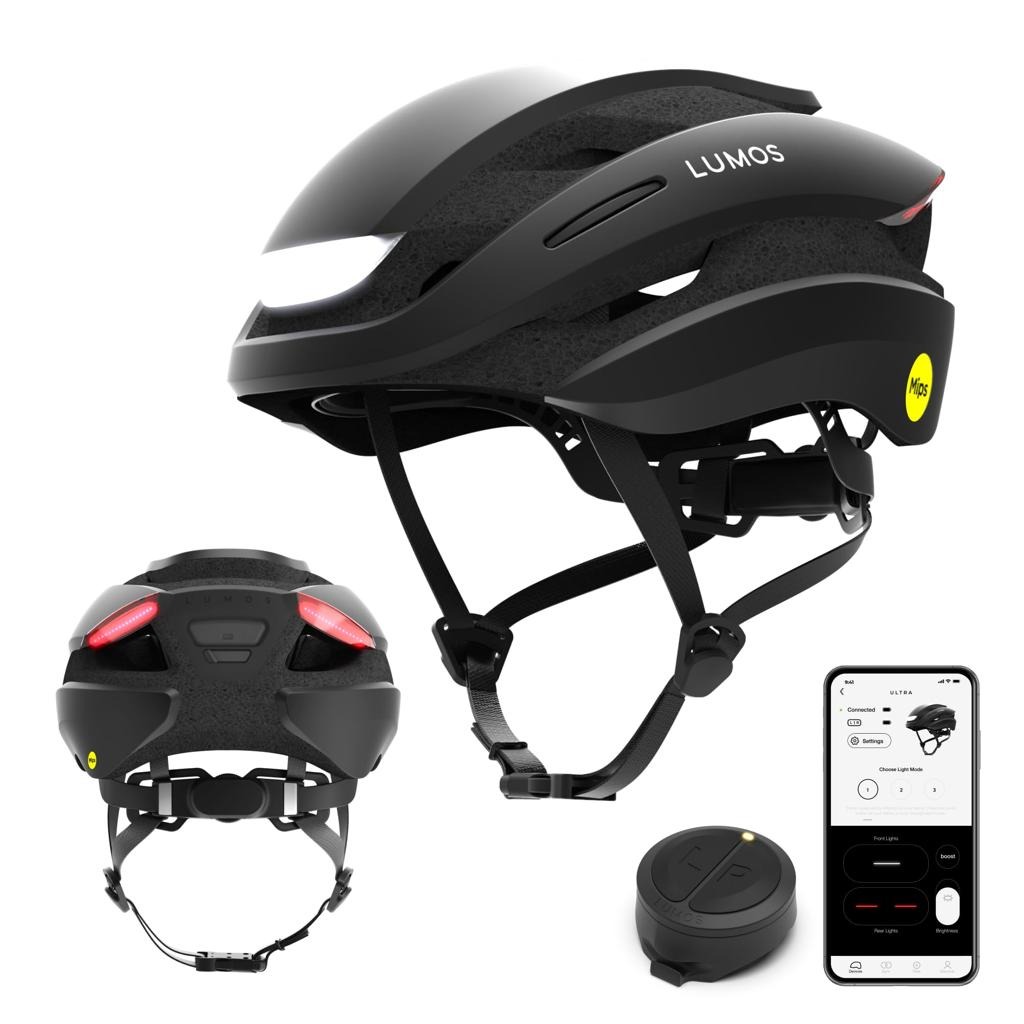
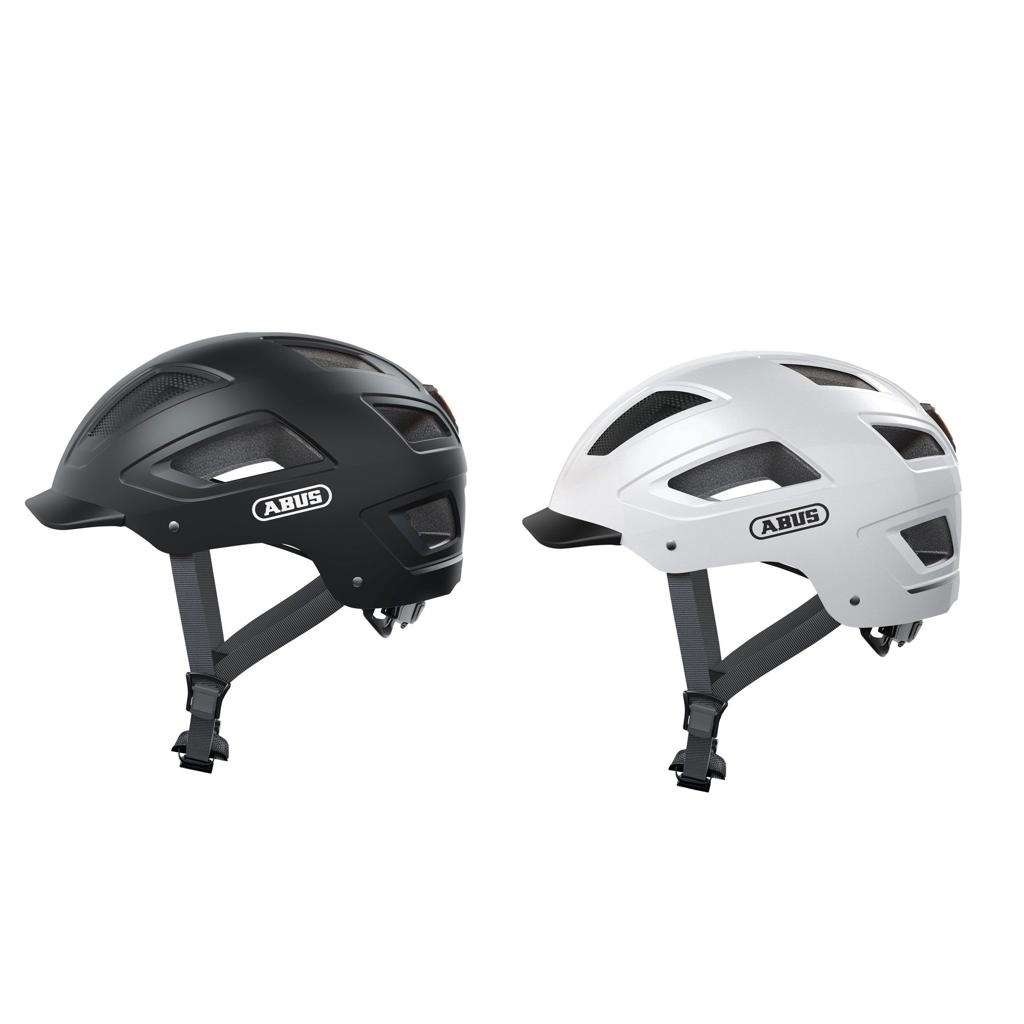
These three helmets serve different types of urban cyclists. The Giro Escape emphasizes straightforward rear visibility, the Lumos Ultra focuses on smart lighting, and the ABUS Hyban 2.0 MIPS offers a more traditional urban commuter design.
Size and fit
- Giro Escape: A commuter-focused helmet for riders who want a practical everyday design.
- Lumos Ultra: A smart helmet with integrated lighting hardware. Check its sizing chart and fit before ordering.
- ABUS Hyban 2.0 MIPS: An urban-oriented hard-shell helmet with an adjustable retention system.
Fit is more important than the number of LEDs or smart features. A helmet should sit level on the head, cover the forehead appropriately, and remain secure when the retention system is fastened.
Lighting and functionality
| Feature | Giro Escape MIPS LED | Lumos Ultra MIPS | ABUS Hyban 2.0 MIPS |
| Rear lighting | Integrated on LED model | Integrated | Depends on exact variant |
| Front lighting | Not its primary feature | Integrated | Check exact model |
| Turn signals | Not a primary feature | Available | Not a primary feature |
| MIPS | Yes, specified model | Specified version | Specified model |
| Intended use | Commuting | Smart urban commuting | Urban commuting |
The Lumos Ultra offers more integrated lighting functionality, while the Giro Escape is more straightforward. The ABUS Hyban’s lighting configuration should be checked carefully before buying.
Durability and maintenance
All three helmets require regular inspection and appropriate care. A helmet should be replaced after a significant impact, even if there is no obvious external damage.
Integrated lighting adds another maintenance consideration: batteries and electronics have a finite lifespan. A damaged or failing integrated lighting system may be harder to replace than a separate clip-on light.
Before purchasing, check:
- Whether the light or battery can be replaced separately.
- The charging connector and availability of replacement cables.
- Whether the manufacturer offers replacement parts.
- Warranty coverage for electronics and the helmet shell.
Price and value
The Giro Escape may suit someone looking for a practical commuter helmet with rear lighting. The Lumos Ultra is more relevant to riders who value turn signals and smart features.
The ABUS Hyban 2.0 MIPS is worth considering if you prefer a conventional urban design with MIPS and an adjustable fit. Check whether the listing includes an integrated light before comparing its price with lighting-equipped alternatives.
There is no need to pay for a complex smart system if a properly fitting certified helmet and separate bicycle lights meet your needs.
Which should you choose?
- Choose the Giro Escape for straightforward commuter lighting.
- Consider the Lumos Ultra if you want integrated front and rear lights with turn signals.
- Consider the ABUS Hyban 2.0 MIPS if you prefer an urban hard-shell design and want MIPS, checking the exact lighting configuration first.
The final choice should depend on fit, applicable safety certification, intended riding conditions, and how often you will use the lighting features.
Buying Guide: How to Choose the Best Bike Helmet With Lights
A bike helmet with lights should be selected as protective equipment first and a visibility accessory second. Lighting can improve how noticeable a cyclist is, but it cannot prevent every collision or replace safe riding practices.
1. Safety certification
Start by checking the safety certification for the country where you will ride.
For cycling helmets sold in the United States, look for compliance with the applicable U.S. Consumer Product Safety Commission bicycle helmet standard. In Canada, check for certification and labeling that meet the applicable Canadian requirements.
For e-bike riders, the required or appropriate helmet standard can depend on the e-bike’s classification, speed, and local regulations.
The Dutch NTA 8776 standard is specifically designed for speed-pedelec helmets. It should not be assumed that every helmet with an LED light is suitable for faster e-bike riding.
What to check before buying:
- The exact model and version.
- The safety certification printed on the helmet or its documentation.
- Whether the certification is appropriate for your riding location and bicycle type.
- The manufacturer’s instructions for fitting, use, and replacement.
A lighting feature or MIPS label does not, by itself, establish that a helmet meets every relevant safety standard.
2. Lighting: Rear LED vs front and rear lights
Not all bike helmets with lights provide the same coverage.
Rear LED lighting
A rear LED is intended to help make the cyclist more visible to traffic approaching from behind. It is particularly useful for commuting and riding in changing light conditions.
Front and rear lighting
Front lighting can make the rider more noticeable from the front, while a dedicated bicycle headlight remains important for illuminating the road ahead.
Consider the following lighting features when comparing models:
| Lighting feature | What to look for |
| Brightness | A clearly stated brightness rating and intended use. |
| Battery life | Runtime at the lighting mode you plan to use. |
| Charging | A practical charging connection and clear battery indicators. |
| Visibility angle | Whether the light can be seen from the sides as well as behind. |
| Controls | Simple controls that do not distract the rider. |
| Replacement parts | Availability of batteries, cables, or replacement light units. |
A helmet light is mounted higher than a typical seatpost light, which can make it easier for some drivers to notice. However, a helmet-mounted light moves as you turn your head, so it is not a substitute for a properly positioned bicycle light.
3. Fit and comfort
A helmet that does not fit correctly may move around during riding and may not provide the intended protection.
Start by measuring your head circumference according to the manufacturer’s instructions. Compare the measurement with the helmet’s size chart, then try the helmet on if possible.
A suitable helmet should:
- Sit level on your head rather than tilting far backward.
- Feel secure without causing uncomfortable pressure.
- Have straps that form a secure V around the ears.
- Stay in place when you move your head.
- Allow the retention system to be adjusted properly.
Do not choose a helmet based only on a retailer’s size label. Two helmets marked medium may fit differently.
Ventilation also matters. Riders who commute in warm weather may prefer a helmet with more airflow, while those cycling in colder conditions may value coverage and compatibility with appropriate weather gear.
4. Size, weight, and storage
Integrated lighting adds components to the helmet. Smart helmets may also include wiring, battery compartments, controls, or other electronics.
When comparing models, consider:
- Whether the helmet feels comfortable during your typical ride length.
- Whether the light housing interferes with your usual cycling gear.
- Whether the helmet can be stored without damaging the lighting system.
- Whether the charging cable and accessories are easy to keep track of.
A lighter helmet may feel more comfortable during longer rides, but weight should not be considered separately from fit and the helmet’s intended use.
5. Durability and materials
Most modern bicycle helmets use an energy-absorbing foam liner and an outer shell. The foam liner is designed to manage impact energy, while the outer shell helps protect the structure.
Check the manufacturer’s guidance for cleaning, storage, inspection, and replacement.
Avoid leaving a helmet in extreme heat or exposing it to chemicals that could damage its materials. Do not modify the shell, drill holes, or remove structural components to attach lights or accessories.
For integrated-light helmets, inspect the light housing and charging connection regularly. If the helmet has sustained a significant impact, follow the manufacturer’s replacement guidance rather than relying on the light’s continued operation as an indication that the helmet is safe.
6. Price and warranty
Helmet prices vary depending on the brand, certification, materials, and electronics.
A basic integrated rear light is generally less complicated than a system with front lighting, turn signals, wireless controls, or connected features. Premium pricing may reflect those additional functions, but it does not automatically mean that a helmet fits better or is safer for every rider.
Before purchasing, compare the total cost of ownership, including:
- The helmet itself.
- Replacement light components or batteries, if available.
- Any required controls or accessories.
- Shipping, return policies, and warranty terms.
For everyday cycling, a properly fitting certified helmet with reliable lights may be more practical than a complex smart helmet that is difficult to charge or maintain.
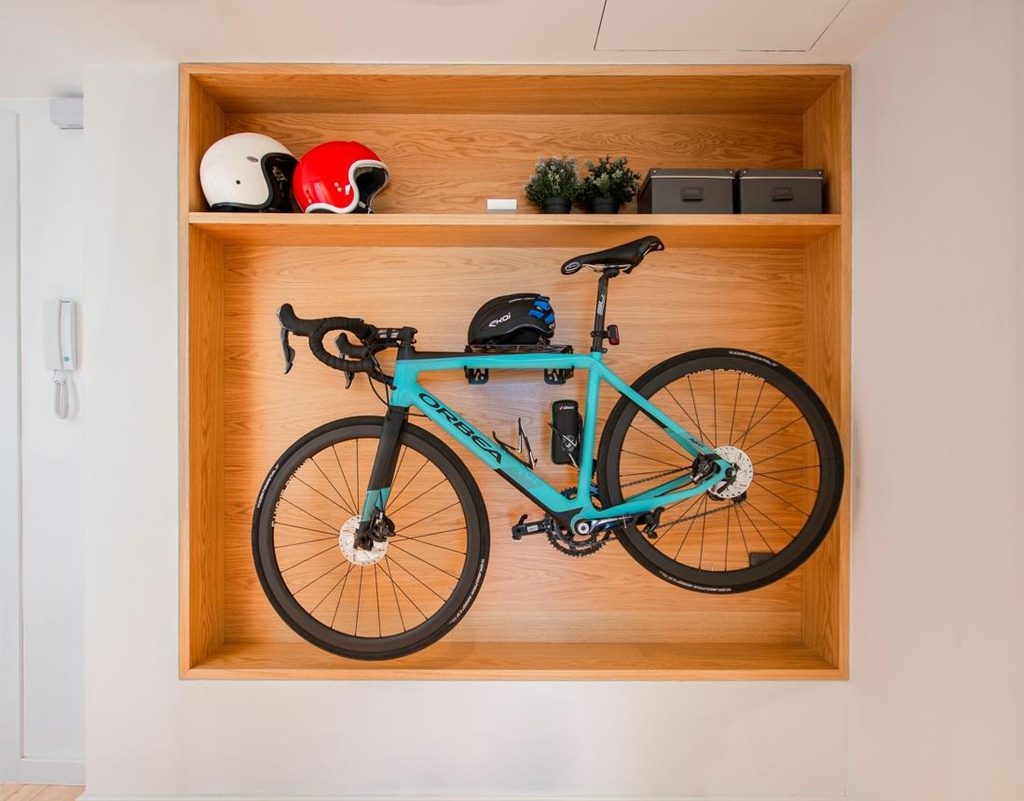
Keep the helmet in a cool, dry location, away from direct heat and chemicals. Store charging accessories where they can be found easily, and check the lights before heading out.
For more related content on WorkoutGearReviews.com, check this guide to:
FAQs
1. Are bike helmets with built-in lights worth it?
They can be convenient because the lighting is attached to the helmet and moves with your head. They are particularly useful for commuters who ride in changing light conditions. However, they should complement, not replace, bicycle-mounted lights.
2. Are helmet lights as effective as bicycle lights?
They serve different purposes. Helmet lights can improve visibility at head level, while handlebar lights illuminate the road ahead and bicycle-mounted rear lights provide a more consistent rear-facing signal. Using both can provide a more complete lighting setup.
3. Do bike helmets with lights need to be charged?
Rechargeable models need regular charging, and battery life varies by lighting mode and model. Check the manufacturer’s stated runtime and charge the helmet before longer rides. Avoid relying on a helmet light if its battery is nearly depleted.
4. Is MIPS necessary in a bike helmet?
MIPS is a rotational-impact management system designed to help reduce certain rotational forces during angled impacts. It is an additional helmet feature, not a substitute for a proper fit or applicable safety certification. Compare the full helmet design and fit rather than relying on one feature alone.
5. Can I use a regular bike helmet with a separate light?
Yes, provided the helmet meets the applicable safety requirements and the light is attached according to the manufacturer’s instructions. Avoid drilling holes, modifying the shell, or using mounts that could compromise the helmet. A separate light can also be easier to replace if it stops working.
6. How often should I replace a bike helmet with lights?
Follow the helmet manufacturer’s replacement recommendations and replace it after a significant impact, even if visible damage is limited. Also inspect the lighting system, straps, shell, and foam liner regularly. A functioning LED does not establish that a helmet remains structurally safe.
Final Thoughts
The best bike helmet with lights is one that fits securely, meets the appropriate safety standard, and provides lighting suited to your riding conditions.
The Giro Escape MIPS LED is worth considering for straightforward commuting, the Lumos Ultra offers additional signaling features, and the ABUS Hyban 2.0 MIPS is an option for riders who prefer a traditional urban helmet design with MIPS.
Before purchasing, confirm the exact model, certification, fit, battery specifications, and included accessories. In particular, verify whether the ABUS Hyban 2.0 MIPS listing includes an integrated light or requires a separate lighting accessory.
Pair the helmet with appropriate bicycle-mounted lights and follow local cycling requirements.