Best Bikepacking Phone Mounts (2026): 5 Top Picks for Navigation, Gravel, and Long-Distance Rides
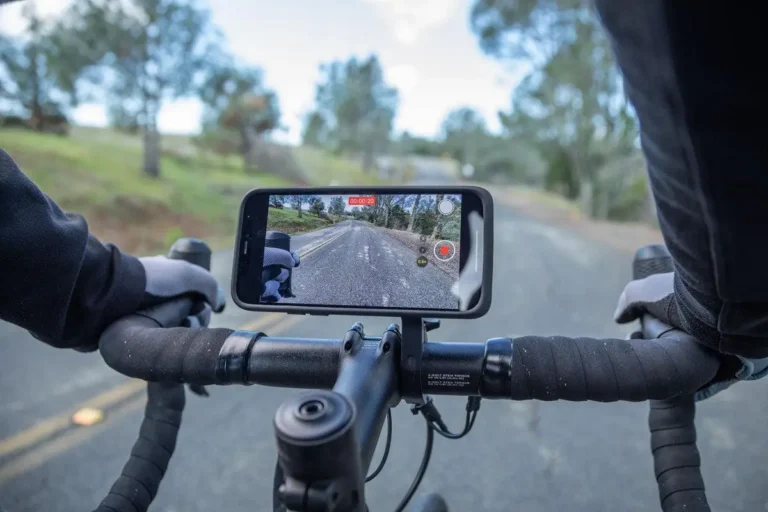
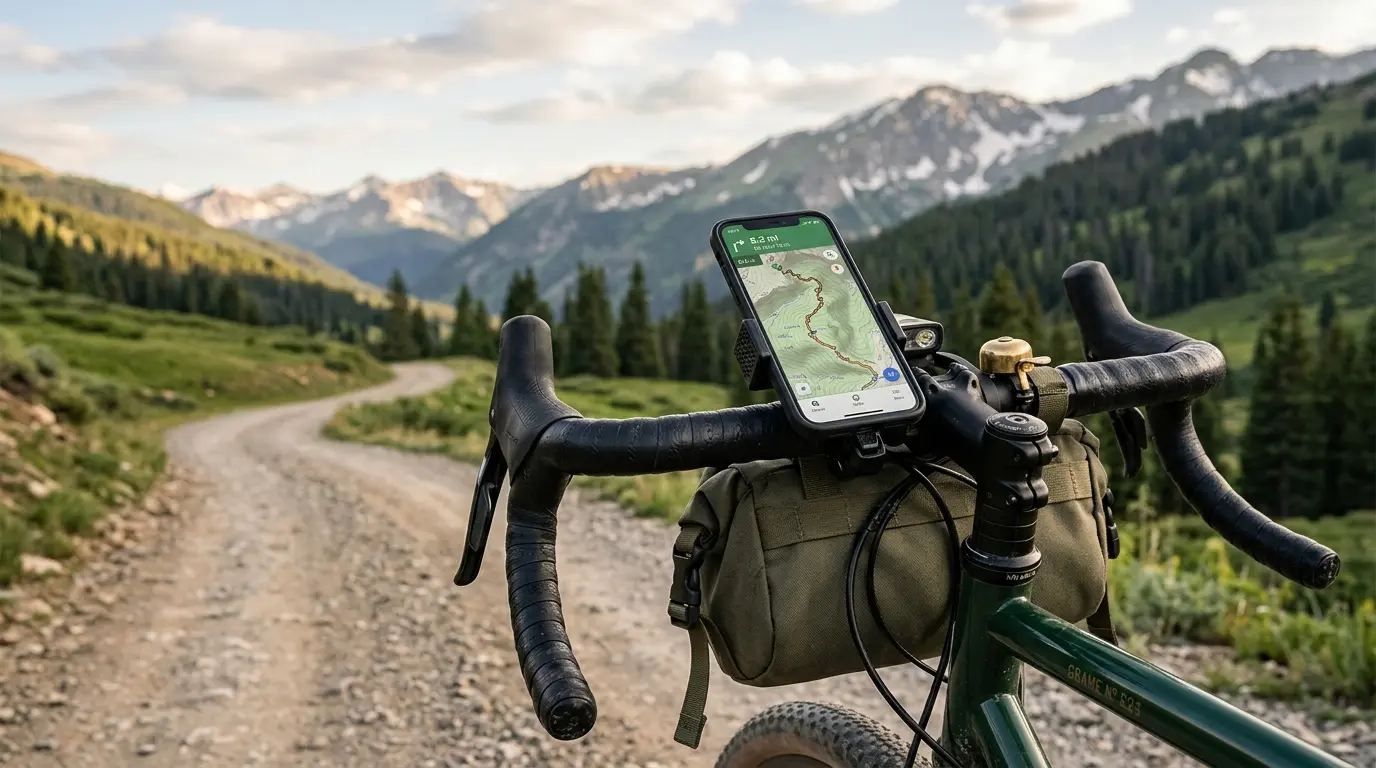
The best bikepacking phone mount for most riders is the Quad Lock Out Front Bike Mount. Its secure twist-lock attachment, stable handlebar positioning, and compatible phone-case system make it a strong choice for navigating gravel roads, forest tracks, and long-distance bikepacking routes. It is particularly suitable for riders who rely on their smartphones for GPS navigation and want a more secure alternative to basic rubber-strap holders.
For riders who want a premium mounting system, the Peak Design Out Front Bike Mount offers an intuitive magnetic-and-mechanical attachment. The SP Connect Bike Mount Pro is another good option for cyclists who prefer a compact twist-lock design, while the Topeak Omni RideCase II and Lamicall Universal Bike Phone Mount are worth considering for riders looking for adjustable, more affordable solutions.
When choosing the best bikepacking phone mount, prioritize secure attachment, compatibility with your handlebars and phone case, and resistance to movement on rough terrain. A mount that works well on smooth pavement may not provide the same stability on corrugated gravel or rocky backroads.
Quick Comparison of the Best Bikepacking Phone Mounts for Navigation, Gravel Riding, and Multi-day Cycling Trips.
| Product | Best For | Phone Compatibility | Mounting Type | Key Feature | Check Price |
| Quad Lock Out Front Bike Mount | Best overall | Compatible Quad Lock case or adapter | Twist-lock | Secure, stable attachment | View on Amazon |
| Peak Design Out Front Bike Mount | Premium performance | Compatible Peak Design case or adapter | Magnetic and mechanical | Fast attachment and removal | View on Amazon |
| SP Connect Bike Mount Pro | Compact mounting | Compatible SP Connect case or interface | Twist-lock | Low-profile design | View on Amazon |
| Topeak Omni RideCase II | Flexible phone compatibility | Broad range of phone sizes | Adjustable cradle | Adjustable positioning | View on Amazon |
| Lamicall Universal Bike Phone Mount | Budget-conscious riders | Most phones within the specified size limits | Adjustable clamp | Affordable, tool-free adjustment | View on Amazon |
Product Reviews: Best Bikepacking Phone Mounts
1. Quad Lock Out Front Bike Mount
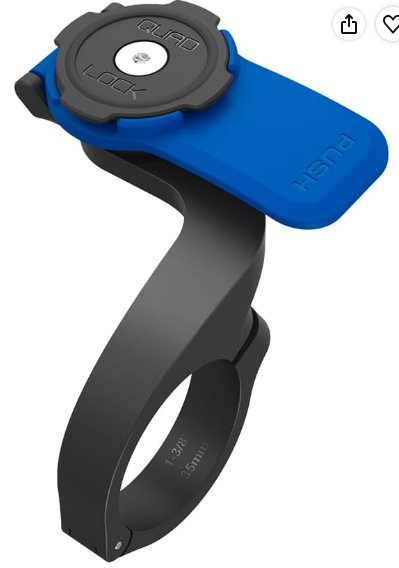
Best for: Bikepackers who need reliable navigation on gravel roads and mixed terrain.
Key Features
- Twist-lock attachment designed to pair with compatible Quad Lock phone cases or adapters.
- Out-front positioning that places the phone ahead of the handlebar.
- Compact construction that keeps the cockpit relatively uncluttered.
- Compatibility with a broader ecosystem of mounting accessories.
- Designed for cyclists who regularly attach and remove their phones.
Pros
- Secure mechanical attachment when correctly installed.
- Convenient screen positioning for following GPS routes.
- Established accessory ecosystem for different phones and mounting configurations.
- Suitable for riders who use their phones on multiple bikes with compatible mounts.
Cons
- Requires a compatible case or adapter, increasing the total cost.
- Attaching and removing the phone takes more deliberate movement than simply lifting it out of a cradle.
- Does not automatically eliminate vibration transmitted through the handlebars.
Why We Recommend It
The Quad Lock Out Front Bike Mount is a strong all-round choice because it prioritizes a positive mechanical connection rather than relying entirely on spring pressure or stretchy silicone. This is valuable when a bikepacking route includes washboard gravel, potholes, and repeated impacts.
The out-front position also makes turn-by-turn navigation easy to glance at without placing the phone directly over the handlebar stem. However, the quality of the installation matters: use the correct handlebar clamp and tighten it according to the manufacturer’s instructions.
Riders concerned about vibration should investigate the appropriate vibration-dampening accessory and check phone-manufacturer guidance, particularly for devices with optical image stabilization.
2. Peak Design Out Front Bike Mount
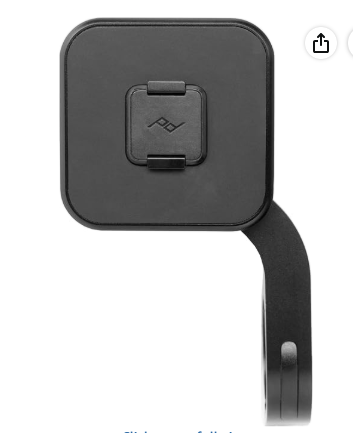
Best for: Riders who value quick phone access, refined construction, and a premium mounting system.
Key Features
- Magnetic alignment combined with mechanical retention.
- Compatible Peak Design mobile cases and supported adapters.
- Out-front positioning for navigation.
- Designed for convenient attachment and removal.
- Part of a larger mobile-accessory ecosystem.
Pros
- Quick, intuitive phone attachment.
- Mechanical retention adds security beyond magnetic alignment alone.
- Clean cockpit appearance.
- Convenient for frequent stops, route checks, and photography.
- Useful for cyclists who already own compatible Peak Design accessories.
Cons
- Generally costs more than a basic universal cradle.
- A compatible case or adapter adds to the initial expense.
- Compatibility should be confirmed before purchasing.
- Riders on especially rough routes still need to check mounting stability regularly.
Why We Recommend It
The Peak Design Out Front Bike Mount is an excellent premium alternative to Quad Lock. Its combination of magnetic alignment and mechanical retention is designed to make attaching the phone easier without depending on magnetic force alone to keep it in place.
That convenience is especially useful during bikepacking, when riders may repeatedly stop to check a map, photograph a campsite, or change a route. A well-positioned phone can make navigation less frustrating over a long day in the saddle.
Before buying, calculate the cost of the complete setup, including the mount and compatible case or adapter. If you change phones frequently, also check whether your next device will work with the same mounting ecosystem.
3. SP Connect Bike Mount Pro
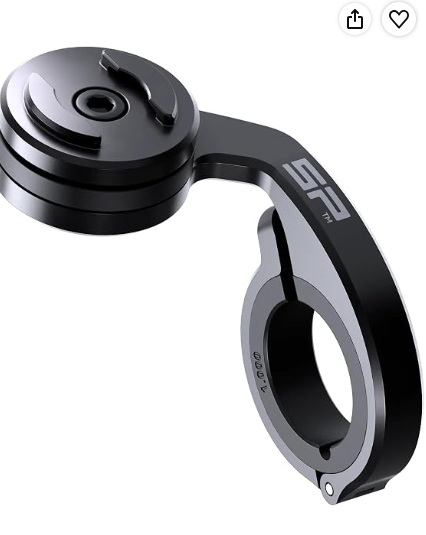
Best for: Cyclists who prefer a streamlined, case-based mounting system.
Key Features
- Twist-lock connection for compatible SP Connect interfaces.
- Compact mounting design.
- Options for compatible phone cases and universal attachment accessories.
- Intended for positioning a smartphone on a bicycle.
- Additional accessories available within the SP Connect ecosystem.
Pros
- Relatively compact appearance.
- Mechanical locking connection.
- Good option for riders who prefer a dedicated phone-mount system.
- Multiple compatible accessories may suit different cockpit configurations.
- Convenient for routine navigation and fitness tracking.
Cons
- Requires compatibility between the phone, case or interface, and mount.
- Additional accessories can increase the overall price.
- The correct model matters because SP Connect offers multiple mounting systems.
- A secure connection does not guarantee complete protection against vibration.
Why We Recommend It
SP Connect is worth considering if you want the advantages of a dedicated locking mount without choosing one of the other major systems. The Bike Mount Pro’s compact format can work well for riders who want to keep their handlebar area organized around a GPS device, lights, bags, and other bikepacking accessories.
Its biggest advantage is the integrated mounting approach: once the correct phone interface is installed, attaching the device becomes part of a repeatable routine.
Check the exact product generation before ordering. Different SP Connect interfaces and cases are not necessarily interchangeable, so compatibility is more important than choosing a mount based on appearance alone.
4. Topeak Omni RideCase II
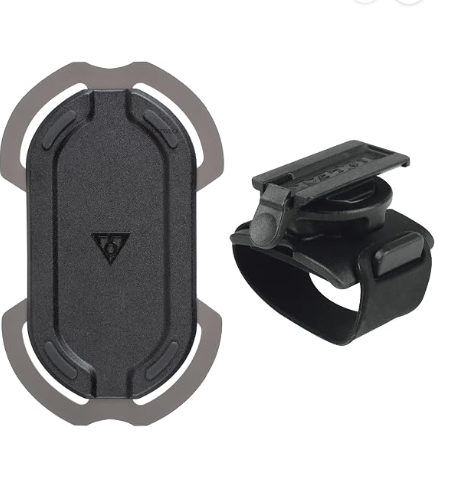
Best for: Riders who want flexible phone positioning without committing to a fully proprietary case system.
Key Features
- Adjustable phone-retention design.
- Intended to accommodate a range of smartphone sizes within its specifications.
- Adjustable viewing position, depending on configuration.
- Handlebar or stem mounting options according to the model.
- Useful for navigation and everyday cycling.
Pros
- More flexible phone compatibility than many case-specific systems.
- Adjustable positioning helps improve screen visibility.
- Potentially less expensive than a premium mount-and-case combination.
- Practical for riders who change phones.
- Suitable for everyday use as well as touring.
Cons
- Requires careful adjustment to secure the phone properly.
- Compatibility depends on phone dimensions and case thickness.
- More moving or adjustable parts can require periodic inspection.
- May not provide the same convenience as a dedicated locking case system.
Why We Recommend It
The Topeak Omni RideCase II is a practical option for bikepackers who do not want to purchase a dedicated phone case solely for mounting. Its adjustable retention design offers flexibility, particularly for households with different smartphones or cyclists who expect to upgrade devices.
The trade-off is that correct adjustment becomes especially important on rough terrain. Check that every retaining point is engaged and that the phone cannot shift or lift out when the bike encounters bumps.
For extended trips, test the mount on a loaded bike before departure. A setup that feels stable on a short paved ride may need repositioning once handlebar bags, cables, and other accessories are installed.
5. Lamicall Universal Bike Phone Mount
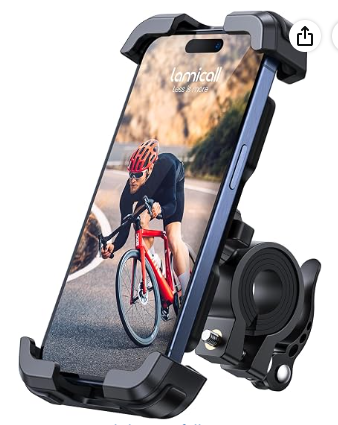
Best for: Casual bikepackers who want an inexpensive, adjustable phone holder.
Key Features
- Adjustable clamp-style phone retention.
- Designed for a range of smartphone sizes.
- Rotatable viewing position on compatible versions.
- Handlebar attachment with adjustable clamping hardware.
- Typically costs less than case-based locking systems.
Pros
- Low initial purchase price.
- Does not generally require a dedicated proprietary phone case.
- Straightforward adjustment for different devices.
- Useful for occasional navigation and commuting.
- Easy to consider as an entry-level option.
Cons
- Security depends heavily on the specific model and correct adjustment.
- Clamp components can shift if installation or maintenance is poor.
- Less reassuring than a dedicated mechanical locking interface on sustained rough terrain.
- Fit and compatibility can vary with bulky phone cases.
Why We Recommend It
The Lamicall Universal Bike Phone Mount is a reasonable starting point for riders who mainly cycle on paved roads, maintained gravel, or relatively smooth touring routes. Its universal-style clamp avoids the extra expense of a proprietary case and mounting ecosystem.
For demanding bikepacking, however, the cheapest mount is not always the best value. Repeated vibration, water, dust, and unexpected impacts place greater demands on the attachment system than ordinary commuting does.
If you choose this option, inspect the clamp, retaining points, and handlebar connection carefully. Consider a secondary tether where practical, and avoid using it on technical trails unless the exact model is designed and proven for that level of riding.
Comparison — Quad Lock vs Peak Design vs SP Connect
Choosing between the Quad Lock Out Front Bike Mount, Peak Design Out Front Bike Mount, and SP Connect Bike Mount Pro comes down to how you ride, how often you remove your phone, and how much you want to spend on a complete mounting system.
Size and Cockpit Position
All three systems are designed to keep a phone accessible while cycling. An out-front mount places the screen ahead of the handlebars, which can make route guidance easier to read. A compact alternative may be preferable if your cockpit is already crowded with lights, GPS computers, and handlebar bags.
Check the available handlebar space before buying. Bikepacking bags can interfere with mounting arms, cables, and access to controls, especially on drop-bar bikes.
Adjustment Mechanism
- Quad Lock: Uses a twist-lock connection that prioritizes a deliberate mechanical attachment.
- Peak Design: Combines magnetic alignment with mechanical retention for convenient attachment and removal.
- SP Connect: Uses a compatible twist-lock interface and offers a compact mounting approach.
The best mechanism is the one you can operate reliably with your phone and gloves, while keeping your attention on the trail when moving.
Durability and Rough-Terrain Performance
For long gravel rides, secure phone retention and a rigid handlebar connection are more important than appearance alone. Case-based locking systems can reduce the chance of a phone slipping free when correctly fitted, but no mount makes a phone indestructible.
Vibration also deserves attention. Sustained vibration may damage some smartphone camera stabilization systems. Riders covering long distances on rough roads should consult their phone manufacturer’s advice and consider an appropriate vibration-dampening solution.
Price and Total Ownership Cost
The price printed on the mount listing does not always represent the full cost. Compare the mount, compatible case or adapter, any dampener, and replacement parts before making a decision.
Peak Design may appeal to riders who value quick attachment, Quad Lock to riders prioritizing a well-established locking system, and SP Connect to cyclists who prefer its compact interface. The best value depends on the complete package, not simply the lowest mount-only price.
Ease of Use
For riders who frequently stop to check directions, ease of removal matters. A universal cradle avoids a proprietary case but usually requires more adjustment when changing phones. Case-based systems require an initial compatibility investment but can make repeated attachment more convenient.
Our verdict: Choose Quad Lock for a strong all-round balance of security and practicality, Peak Design for a premium attachment experience, and SP Connect for a compact alternative.
Compare more cycling accessories in our bikepacking gear guide.
Buying Guide: How to Choose the Best Bikepacking Phone Mount
A bikepacking phone mount must do more than keep a screen visible. It needs to stay secure through repeated impacts, work with your bike’s cockpit, and suit the conditions you expect to encounter.
Phone and Case Compatibility
Start with the exact phone model. Check its dimensions, the thickness of its protective case, and whether the mount requires a dedicated case or adapter.
Before ordering, confirm:
- The phone fits within the mount’s stated dimensions.
- The case or adapter is compatible with the exact mount generation.
- The attachment leaves buttons and charging ports accessible where needed.
- You can remove the phone without struggling with gloves.
- The screen remains readable in your preferred riding position.
A universal mount is attractive if you regularly change phones. A proprietary case system may be preferable if you want repeatable attachment and a more integrated fit.
Mounting Mechanism
There are three common approaches.
Twist-lock mounts: These use a compatible phone case or adapter that mechanically engages with the mount. They are a good choice for riders who prioritize secure retention and frequently use navigation.
Magnetic and mechanical systems: Magnets help align the phone, while a mechanical feature provides additional retention. These can make attaching and removing the phone easier, provided the complete system is correctly installed.
Universal clamps and cradles: These use adjustable arms, grips, or retaining points to accommodate different phones. They are usually less expensive and can be convenient for casual riding, but they require careful adjustment and regular checks.
For extended gravel and off-road travel, choose a system designed for the conditions rather than relying on a basic clamp simply because it fits your phone.
Size, Position, and Handlebar Space
A good mount keeps your phone visible without obstructing braking controls, gear shifting, lights, or access to handlebar bags.
Measure the available mounting area and check the clamp diameter specifications. This is particularly important for bikes with oversized bars, aero-shaped components, or crowded cockpits.
An out-front position can improve visibility, but it is not automatically ideal for every bike. A stem-mounted setup may be more practical where handlebar bags take up most of the available space.
Durability and Weather Resistance
Bikepacking exposes equipment to dust, rain, mud, temperature changes, and repeated vibration. Look for a well-constructed clamp, corrosion-resistant hardware, and a retention system that does not loosen easily.
Remember that a weather-resistant mount does not make your phone waterproof. If you regularly ride in heavy rain, use a suitable protective case and verify that the touchscreen remains usable when wet.
Vibration Protection and Camera Safety
Rough roads can transmit vibration through the handlebars into a mounted smartphone. Certain phones, especially those with optical image stabilization, can be vulnerable to sustained vibration.
A vibration-dampening accessory may help, but it should not be treated as a guarantee against damage. Follow the manufacturer’s guidance for your specific phone and avoid assuming that a mount intended for one type of vehicle is automatically suitable for another.
Installation and Maintenance
Install the mount according to the manufacturer’s instructions and torque specifications. Avoid overtightening clamps or attaching the mount to components that are not approved for it.
Before every long ride:
- Check the mounting bolts and clamp.
- Confirm that the phone locks securely.
- Check for cracks, loose parts, or worn retaining elements.
- Verify that bags and cables do not interfere with the mount.
- Test the screen angle while seated in your normal riding position.
A brief pre-ride check can help catch problems before they become expensive failures.
Price and Overall Value
A budget mount can be sufficient for occasional rides on smooth surfaces. For multi-day bikepacking, the consequences of losing a phone may justify investing in a more secure system.
Compare the full cost of the mount, case, adapters, and accessories. Also consider whether the same mounting ecosystem will work with your next phone or another bike.
For more equipment ideas, explore our guides to the best home and outdoor fitness equipment for small spaces and essential bikepacking gear for beginners.
FAQs
What is the best bikepacking phone mount?
The Quad Lock Out Front Bike Mount is our top all-round recommendation for riders who prioritize a secure mechanical attachment and convenient navigation. The Peak Design Out Front and SP Connect Bike Mount Pro are strong alternatives, while universal cradles offer a lower-cost entry point.
Are phone mounts safe for bikepacking on rough terrain?
A properly installed mount with secure phone retention can work well on gravel and mixed terrain, but no system is completely failure-proof. Inspect the mounting hardware regularly, test it on progressively rougher rides, and use a secondary tether where practical.
Can vibration damage a smartphone camera?
Yes. Sustained vibration can damage the optical image stabilization or autofocus components of some smartphone cameras. If you regularly ride on rough roads, check your phone manufacturer’s recommendations and consider a compatible vibration-dampening accessory.
Is a universal phone mount better than a case-specific mount?
A universal mount is often cheaper and more flexible when you change phones. A case-specific mount can offer a more integrated attachment and faster everyday use. The better choice depends on your phone, terrain, and willingness to invest in a dedicated mounting system.
Should I use a waterproof phone mount for bikepacking?
The mount itself does not necessarily need to be waterproof, but your phone needs appropriate protection from rain, mud, and splashes. Consider a weather-resistant phone case or a separate waterproof storage solution, and check whether the touchscreen works through any protective cover.
Can I use my phone instead of a dedicated cycling GPS?
Yes. A smartphone with offline maps and a suitable mounting system can provide navigation without requiring a separate cycling computer. However, battery life, weather exposure, screen visibility, and vibration protection become more important on multi-day trips, so carry a charging plan and a backup navigation option for remote routes.
Final Verdict
The best bikepacking phone mount is the one that securely fits your phone and bicycle while remaining practical throughout a long day of riding.
For most riders, the Quad Lock Out Front Bike Mount offers a compelling balance of secure retention and navigation convenience. Peak Design is an appealing premium alternative, SP Connect suits riders who prefer a compact locking system, and the Topeak Omni RideCase II and Lamicall are worth considering when phone flexibility or price matters more.
Before purchasing, verify current compatibility, the complete system cost, and the manufacturer’s recommendations for your phone and intended riding conditions. A little preparation can make navigation easier and help protect an expensive device far from home.