Best Commuter Bike Backpack: 5 Top Picks for Daily Commuting
The Fjällräven Räven 28 is our top pick for the best commuter bike backpack for most daily commuters. Its 28-liter capacity, padded laptop compartment, multiple organizational pockets, comfortable shoulder straps, and practical everyday design make it a strong choice for commuting by bike, train, bus, or on foot. Recent testing also found it versatile enough for both commuting and travel.
If weather protection is your priority, the Weatherman Venture Dry Pack is the better choice. For shoppers on a tighter budget, the JanSport Laptop Backpack offers a large 34-liter capacity and extensive organization for considerably less. The Incase Icon is especially appealing if protecting electronics is your main concern, while the Herschel Classic Backpack XL is a lightweight, spacious option for commuters who want a simple everyday bag.
For daily commuting, the best backpack isn’t necessarily the largest or most expensive. Comfort, laptop protection, organization, weather resistance, weight, and how well the pack stays stable while you’re riding all matter.
Quick Comparison of the Best Commuter Bike Backpacks for Daily Work, Cycling, Public Transportation, and Everyday Carry.
| Product | Best For | Capacity | Fit / Adjustment | Key Feature | Check Price |
| Fjällräven Räven 28 | Best overall | 28L | Adjustable padded shoulder straps | Excellent organization | View on Amazon |
| Weatherman Venture Dry Pack | Rainy commutes | 20L | Adjustable shoulder straps | Water-resistant nylon + waterproof lining | View on Amazon |
| JanSport Laptop Backpack | Best budget | 34L | Adjustable padded straps | Large capacity and many pockets | View on Amazon |
| Incase Icon Backpack | Laptop protection | Varies by version | Padded shoulder straps + sternum strap | Heavy laptop/electronics padding | View on Amazon |
| Herschel Classic Backpack XL | Lightweight commuting | 30L | Padded adjustable straps | Large capacity with low weight | View on Amazon |
Product Reviews: Best Commuter Bike Backpack
1. Fjällräven Räven 28
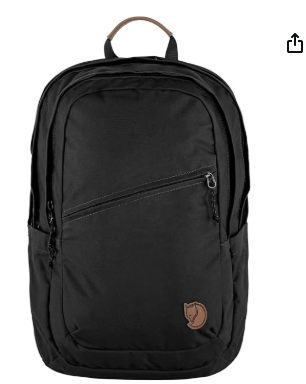
Best for: Most daily commuters
The Fjällräven Räven 28 earns our top overall position because it strikes a particularly useful balance between capacity, organization, comfort, and everyday versatility.
At 28 liters, it has enough room for typical work essentials without becoming an enormous travel-style backpack. Recent testing found that its three main compartments provide useful organization, including a padded laptop sleeve, smaller internal pockets, and side pockets for items such as water bottles.
For cyclists, that combination is valuable. You can separate your laptop from clothing, lunch, chargers, tools, and other commuting essentials instead of throwing everything into one large compartment.
Key Features
- Approximately 28L capacity
- Padded laptop compartment
- Three main compartments
- Multiple internal organizer pockets
- Side water-bottle pockets
- Adjustable shoulder straps
- Practical everyday design
- Suitable for commuting and travel
Pros
- Excellent organization
- Good capacity for daily commuting
- Comfortable shoulder straps
- Laptop protection
- Useful side pockets
- Works for cycling, transit, and walking
- Reasonable price for a premium-oriented commuter pack
Cons
- Not a fully waterproof cycling backpack
- Can feel bulky when heavily loaded
- Weather resistance is not its strongest feature
Why We Recommend It
The Räven 28 is the best choice for commuters who want one backpack that can handle almost everything.
It has enough capacity for a laptop, lunch, clothing, water bottle, charger, notebook, and personal items without going as large as many travel backpacks.
Its biggest weakness for cyclists is weather protection. If you routinely ride through heavy rain, the Weatherman Venture Dry Pack is worth considering instead.
2. Weatherman Venture Dry Pack
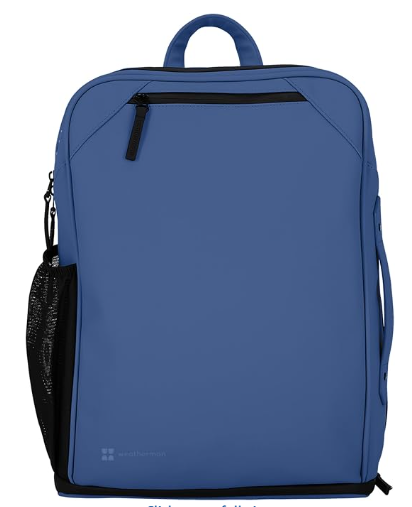
Best for: Commuters who regularly ride in wet weather
If rain is your biggest concern, the Weatherman Venture Dry Pack deserves serious consideration.
This 20-liter backpack uses water-resistant nylon with a waterproof lining and is designed specifically around weather-conscious everyday carry. Travel + Leisure selected it as its best commuter backpack for rainy days.
The 20-liter capacity is smaller than the Räven 28 and JanSport, but that isn’t necessarily a disadvantage for daily cycling. A more compact backpack can feel less cumbersome when you’re riding or navigating crowded trains.
Key Features
- Approximately 20L capacity
- Water-resistant nylon
- Waterproof interior lining
- Padded laptop storage
- Slim commuter-friendly profile
- Adjustable shoulder straps
- Can be carried in different orientations
- Dedicated umbrella storage
Pros
- Excellent choice for wet commutes
- Waterproof lining
- Compact profile
- Lightweight compared with larger packs
- Good laptop protection
- Suitable for bike and public-transit commuting
Cons
- Smaller capacity than the Räven and JanSport
- Interior organization could be better
- Premium price
Why We Recommend It
The Venture Dry Pack makes sense when weather protection matters more than maximum capacity.
A cyclist who carries a laptop, charger, lunch, water bottle, light jacket, and a few accessories may not need 30+ liters.
The smaller 20-liter format can also help prevent overpacking, which is useful when you’re riding every day.
3. JanSport Laptop Backpack
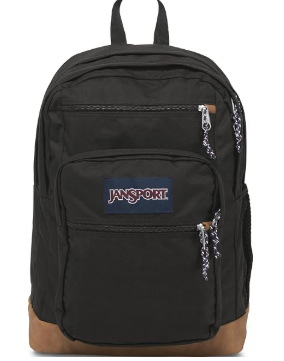
Best for: Budget-conscious commuters
The JanSport Laptop Backpack is our best budget pick.
Recent testing found the model offers a substantial 34-liter capacity along with multiple large compartments and front organization pockets, making it considerably more spacious than many traditional office backpacks.
For commuters who carry a laptop plus gym clothes, lunch, notebooks, headphones, chargers, and other daily essentials, that extra space can be extremely useful.
The trade-off is that it doesn’t have the refined weather protection or cycling-specific features of more expensive commuter packs.
Key Features
- Approximately 34L capacity
- Dedicated laptop compartment
- Multiple large compartments
- Several front pockets
- Water-bottle pocket
- Adjustable shoulder straps
- Large main storage area
- Budget-friendly price
Pros
- Excellent capacity
- Affordable
- Lots of organizational space
- Suitable for work and school
- Easy to find replacement accessories
- Good choice for heavy everyday loads
Cons
- Large for some bike commuters
- Laptop compartment may not hold a laptop as snugly as premium alternatives
- Weather protection is limited
Why We Recommend It
If you’re shopping on a budget, the JanSport is difficult to ignore.
It gives commuters a lot of storage for relatively little money, making it particularly useful if your commute doubles as a gym trip or you need to carry extra clothing.
However, its 34-liter capacity can be excessive for riders who only carry a laptop and a few essentials. If your goal is a streamlined cycling setup, the Weatherman or Incase may be a better fit.
4. Incase Icon Backpack
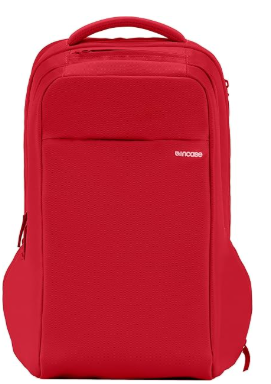
Best for: Commuters carrying expensive laptops and electronics
The Incase Icon Backpack takes a different approach from the JanSport.
Instead of maximizing capacity, it emphasizes protection and padding. Travel + Leisure selected it as its best-padded option after testing its thick laptop protection, padded shoulder straps, sternum strap, and additional cushioning around the shoulders and lower back.
That’s particularly useful for cyclists who carry a laptop every day and want to reduce the chance of bumps and impacts affecting their equipment.
Key Features
- Heavily padded laptop compartment
- Padded shoulder straps
- Sternum strap
- Padded back and lower-back areas
- Multiple electronics compartments
- Deep main compartment
- Hidden back pocket
- Minimalist exterior
Pros
- Excellent laptop protection
- Comfortable with heavier electronics
- Sternum strap improves stability
- Good organization for technology
- Strong padding throughout
- Professional appearance
Cons
- No dedicated water-bottle pocket
- Can be expensive
- Less ideal for very large loads
Why We Recommend It
For a commuter carrying a laptop, tablet, camera, chargers, headphones, and other electronics, the Incase Icon’s protective design is its biggest advantage.
The sternum strap is also helpful for cyclists because it can keep the shoulder straps more stable while riding.
Its lack of a dedicated water-bottle pocket is an annoyance for active commuters, but it remains one of the stronger choices when electronics protection comes first.
5. Herschel Classic Backpack XL
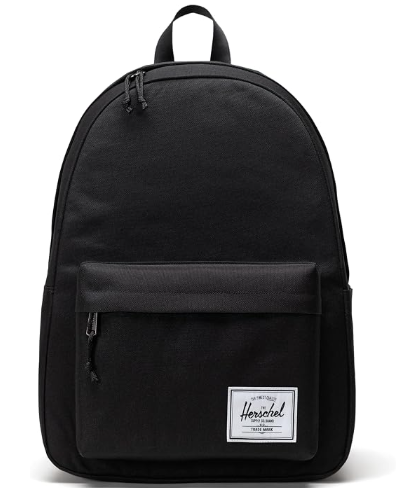
Best for: Lightweight commuting and large everyday loads
The Herschel Classic Backpack XL is our lightweight pick.
At approximately 30 liters, it offers surprisingly substantial capacity while maintaining a relatively simple design. Travel + Leisure found it capable of carrying work essentials plus additional clothing and personal items, while its padded shoulder straps helped keep the larger load comfortable.
It’s a good fit for commuters who want a straightforward backpack rather than a highly technical cycling pack.
Key Features
- Approximately 30L capacity
- Large main compartment
- Padded laptop storage
- Padded shoulder straps
- Lightweight construction
- Recycled polyester construction
- Classic backpack design
Pros
- Large capacity
- Lightweight
- Comfortable straps
- Simple design
- Good value
- Works for commuting and short trips
Cons
- Limited internal organization
- Not designed specifically for cycling
- Weather protection is limited
Why We Recommend It
The Herschel Classic XL is a strong option for people who want a big, lightweight backpack without spending a premium.
It’s particularly useful if your daily commute includes carrying clothing, gym equipment, lunch, or other bulky items.
The biggest limitation is organization. If you carry lots of small electronics and accessories, the Incase Icon or Räven 28 will make it easier to keep everything separated.
Fjällräven Räven 28 vs Weatherman Venture Dry Pack vs JanSport Laptop Backpack
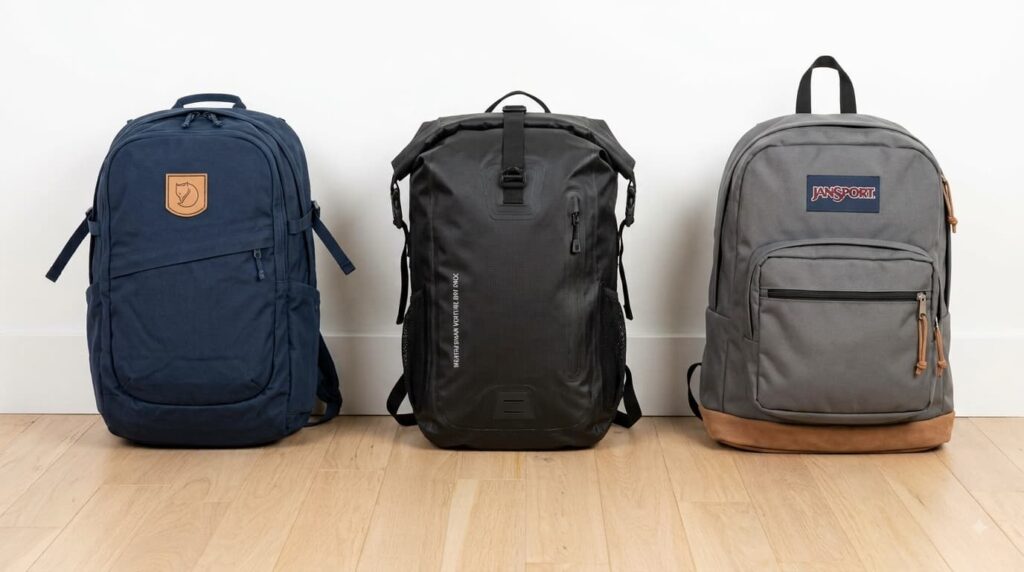
Choosing between these three largely comes down to capacity, weather protection, and price.
Size and Capacity
The JanSport is the largest option at approximately 34 liters, followed by the Herschel Classic XL at around 30 liters and the Räven 28 at 28 liters.
The Weatherman is considerably smaller at 20 liters.
For a cyclist, smaller isn’t necessarily worse.
A 20-liter bag can be more comfortable if you’re carrying only a laptop, lunch, charger, water bottle, and jacket. A 30–34-liter backpack becomes more useful when you’re also carrying gym clothing, shoes, groceries, or other equipment.
Weather Protection
The Weatherman has the clearest advantage here.
Its water-resistant exterior and waterproof lining make it the strongest choice for commuters who regularly face wet conditions.
The Räven and JanSport are better suited to normal daily conditions unless you add a rain cover.
If your cycling commute is exposed to frequent rain, spending more on weather protection may be worthwhile.
Comfort
Comfort depends heavily on how much you’re carrying.
The Räven’s padded shoulder straps make it a strong all-around option. The Incase Icon goes further with substantial padding and a sternum strap. The Herschel also performs well for larger loads thanks to padded shoulder straps.
For cycling, make sure the backpack fits closely enough that it doesn’t shift from side to side.
Organization
The Räven 28 is one of the best balanced choices for organization.
It has multiple compartments and smaller pockets, making it easier to separate electronics, documents, clothing, and personal items.
The JanSport gives you plenty of storage but feels more like a traditional large backpack.
The Weatherman keeps things simpler, prioritizing a compact weather-resistant design.
Price and Value
The JanSport is the clear budget winner.
The Räven offers the best overall combination of features and price, while the Weatherman asks you to spend more in exchange for stronger weather protection.
The Incase Icon is worth the additional cost if protecting expensive electronics is your primary concern.
Buying Guide — How to Choose the Best Commuter Bike Backpack
Capacity
For daily commuting, 20–30 liters is a useful starting point.
Around 15–20L
Best for:
- Laptop
- Charger
- Lunch
- Water bottle
- Small personal items
- Light jacket
Around 20–30L
Best for:
- Laptop
- Lunch
- Work clothes
- Jacket
- Accessories
- Gym clothing
30L+
Best for:
- Laptop
- Clothing
- Shoes
- Gym equipment
- Large lunch
- Travel items
- Grocery runs
Don’t automatically choose the biggest backpack.
A larger bag can become heavier and encourage you to carry unnecessary items. For cycling, a compact load that stays close to your back is often more comfortable.
Laptop Protection
If you commute with a laptop every day, look for:
- Padded laptop sleeve
- Elevated laptop compartment
- Separate electronics section
- Secure zipper
- Water-resistant exterior
- Additional internal padding
The Incase Icon is particularly strong here because protection is one of its primary design priorities.
Weather Resistance
Weather protection becomes especially important for bike commuters.
Look for:
- Water-resistant fabric
- Waterproof lining
- Seam protection
- Weather-resistant zippers
- Roll-top construction
- Rain cover
The Weatherman Venture Dry Pack is our choice if rain protection is a major concern.
For ordinary weather, a water-resistant backpack combined with a separate rain cover can be a more affordable solution.
Shoulder Straps
Good shoulder straps should be:
- Padded
- Adjustable
- Wide enough to distribute weight
- Securely attached
- Comfortable under load
If you routinely carry a heavy laptop, look for a sternum strap as well.
The Incase Icon’s sternum strap is particularly useful for helping stabilize the load.
Back Panel
A breathable back panel can make a noticeable difference during warm-weather cycling.
Look for mesh or ventilated padding that allows some airflow between your back and the bag.
This won’t eliminate sweating during a hard ride, but it can make a loaded backpack feel considerably more comfortable.
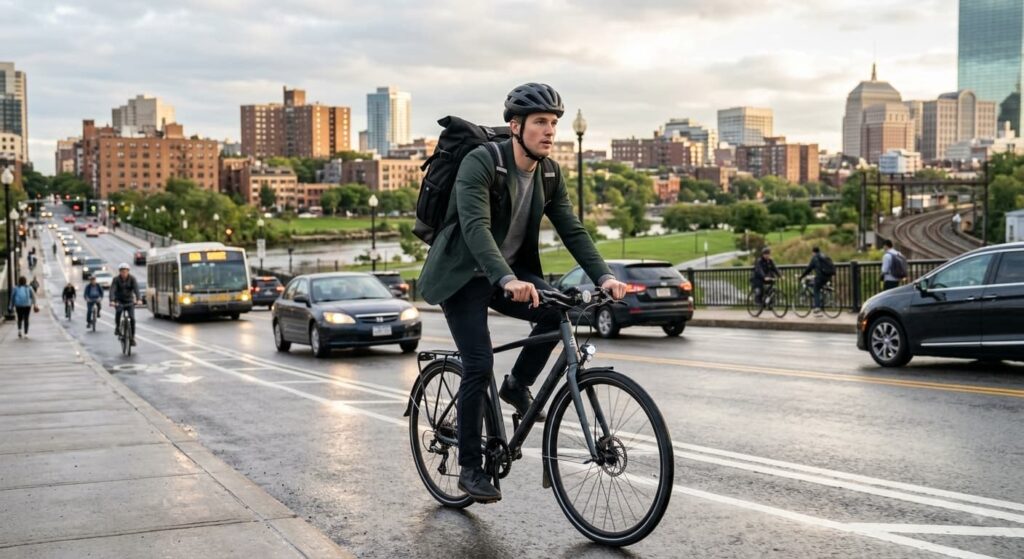
Stability While Cycling
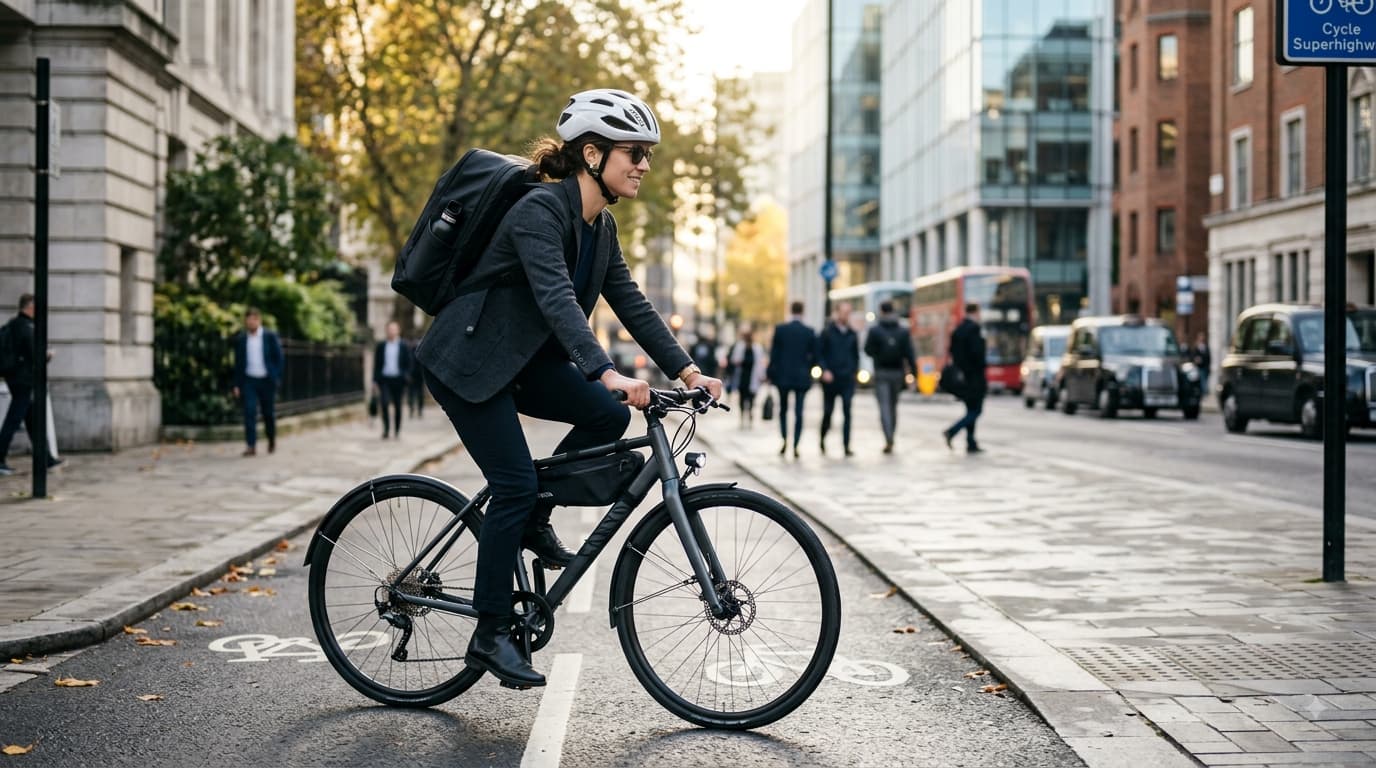
A normal laptop backpack can work perfectly well for commuting by bicycle, but it should fit securely.
Avoid bags that:
- Swing from side to side
- Sit too far away from your back
- Have loose straps
- Become unstable when partially loaded
A sternum strap can help, especially when you’re carrying heavier equipment.
Organization
Consider what you actually carry every day.
If you have a laptop, tablet, chargers, headphones, keys, wallet, lunch, bottle, and work documents, multiple compartments can save time.
The Räven 28 is particularly strong for this style of commuter because it combines multiple compartments with a relatively manageable 28-liter capacity.
If you prefer simplicity, the Herschel Classic XL gives you more open space with fewer organizational dividers.
Weight
Backpack weight matters more when you’re cycling every day.
A heavy empty backpack leaves less of your carrying capacity available for useful gear.
If two backpacks have similar capacity and features, choosing the lighter one can make sense.
However, don’t sacrifice essential padding and durability simply to save a few ounces.
Reflectivity and Visibility
Cyclists commuting before sunrise or after sunset should also consider visibility.
Useful features include:
- Reflective panels
- Reflective logos
- Bright colors
- Light attachment points
A reflective backpack is not a substitute for proper bicycle lights, but it can make you more visible from behind.
Backpack vs Pannier
If you regularly carry heavy loads, a pannier can be more comfortable because the bicycle carries the weight instead of your shoulders.
A backpack makes more sense when:
- You need to carry your bag into meetings
- You use public transportation
- Your bicycle doesn’t have a rack
- You walk frequently during your commute
- Your load is relatively light
For riders who combine cycling with trains or buses, a commuter backpack is often more convenient than a dedicated pannier.
For more cycling gear recommendations, see our Best Pannier Bags and Best Bike Saddle for Long Rides guides.
FAQs
What size backpack is best for daily commuting?
For most commuters, a backpack between 20 and 30 liters is a good starting point. Around 20 liters works well for a laptop and basic essentials, while 28–30 liters gives you more room for clothing, lunch, or gym equipment.
What is the best commuter bike backpack for rain?
The Weatherman Venture Dry Pack is our top choice among these five for wet-weather commuting. It combines a water-resistant nylon exterior with a waterproof lining and a compact 20-liter design.
Is a 30-liter backpack too big for cycling?
Not necessarily. A 30-liter backpack can be useful if you carry clothing, lunch, electronics, and other work equipment. However, if you only carry a laptop and a few essentials, a 20–25-liter pack may feel less bulky while riding.
Should a commuter backpack have a laptop compartment?
Yes, especially if you’re carrying a laptop every day. A dedicated padded compartment helps keep the computer separated from other equipment and reduces the chance of impacts from items inside the main compartment.
Is the JanSport Laptop Backpack good for commuting?
Yes, particularly if you’re looking for an affordable, high-capacity option. Its approximately 34-liter capacity and multiple pockets provide plenty of room, although its larger size and comparatively basic weather protection may not suit cyclists who prefer a compact, weather-focused pack.
What is the best commuter backpack for carrying electronics?
The Incase Icon is our top pick for electronics-heavy commutes. Its thick laptop padding, padded shoulder straps, sternum strap, and additional cushioning make protection one of its strongest advantages.
Final Verdict: What Is the Best Commuter Bike Backpack?
For most people, the Fjällräven Räven 28 is the best all-around commuter bike backpack.
It offers a practical 28-liter capacity, good organization, laptop protection, useful side pockets, and enough versatility to transition from cycling to public transportation, walking, and travel.
But different commuters have different priorities.
Our Final Rankings
| Rank | Backpack | Best For |
| 1 | Fjällräven Räven 28 | Best overall |
| 2 | Weatherman Venture Dry Pack | Best for rainy commutes |
| 3 | JanSport Laptop Backpack | Best budget option |
| 4 | Incase Icon | Best for laptop protection |
| 5 | Herschel Classic Backpack XL | Best lightweight large-capacity option |
Choose the Räven 28 if you want the best balance.
Choose the Weatherman Venture Dry Pack if rain is your biggest concern.
Choose the JanSport if keeping costs down matters most.
Choose the Incase Icon if your laptop and electronics deserve maximum protection.
And choose the Herschel Classic XL if you want a lightweight, spacious backpack with a simple design.
For a daily cyclist, the right backpack should make the commute easier rather than simply give you more storage. Prioritize a comfortable fit, sensible capacity, laptop protection, weather resistance, and stability on the bike. Those factors will matter far more over hundreds of commuting miles than having the most pockets or the largest possible capacity.