
Best Running Shoes for Beginners: 5 Comfortable Picks for 2026
If you’re looking for the best running shoes for beginners, the ASICS Novablast 6 is our top pick for most new runners. It combines high cushioning with a relatively light 8.9-ounce men’s weight, an 8mm drop, and a responsive ride that works for easy runs, longer efforts, and the occasional faster workout. Current 2026 testing also singles it out as a particularly strong beginner option because it balances comfort, support, and versatility.
If you prefer a more traditional, predictable daily trainer, the Brooks Ghost 18 is an excellent alternative. For maximum cushioning, consider the ASICS GEL-NIMBUS 28. The Saucony Ride 19 is another versatile option, while the New Balance Fresh Foam X 880v15 is especially worth considering if you need multiple width choices.
Quick Comparison of the Best Running Shoes for Beginners.
| Product | Best For | Weight* | Drop | Key Feature | Check Price |
| ASICS Novablast 6 | Best overall | 8.9 oz | 8mm | Energetic, versatile cushioning | View on Amazon |
| Brooks Ghost 18 | Predictable daily miles | 10.2 oz | 10mm | Balanced cushioning and support | View on Amazon |
| ASICS GEL-NIMBUS 28 | Maximum comfort | 9.9 oz | 8mm | Plush cushioning | View on Amazon |
| Saucony Ride 19 | Balanced value | 8.9 oz | 8mm | PWRRUN+ cushioning | View on Amazon |
| New Balance 880v15 | Wide feet | 10.7 oz† | 6mm | Multiple width options | View on Amazon |
*Weights are men’s published weights unless otherwise noted. †New Balance lists 10.7 oz for the men’s version; women’s weight is lower. Specifications can vary by size and gender.
1. ASICS Novablast 6

Best for: Beginners who want one shoe that can handle almost everything
Key Features
- Neutral road-running shoe
- High cushioning
- 8mm heel-to-toe drop
- 8.9 oz / 253g men’s published weight
- FF BLAST MAX foam
- FF TURBO SQUARED forefoot element
- ASICSGRIP rubber in the forefoot
- Standard and wide versions available
Pros
- Excellent combination of cushioning and responsiveness
- Light enough to feel agile without sacrificing comfort
- Versatile enough for easy runs, longer runs, and faster training
- Available in wide sizing
- More engaging than many traditional beginner shoes
Cons
- The lively foam may feel less predictable to runners who prefer a firm, traditional shoe
- Tapered toe box may not work for every foot shape
- $155 is more than some entry-level running shoes
Why We Recommend It
The Novablast 6 is the strongest choice if you don’t want your first pair of running shoes to feel boring or overly specialized. Its high cushioning provides protection and comfort, while the energetic midsole gives you enough response to progress beyond basic walk-run sessions.
That versatility is particularly useful for beginners because you don’t necessarily know yet what kind of runner you’re going to become. You might start with three 20-minute jogs per week and eventually move toward longer weekend runs or a first 5K. A versatile daily trainer means you don’t have to replace your shoes simply because your training becomes more ambitious.
Current 2026 testing backs up that positioning. Tom’s Guide specifically identifies the Novablast 6 as a strong beginner shoe, while comparisons with the GEL-NIMBUS 28 show that the Novablast is lighter and more responsive while still providing substantial cushioning.
2. Brooks Ghost 18
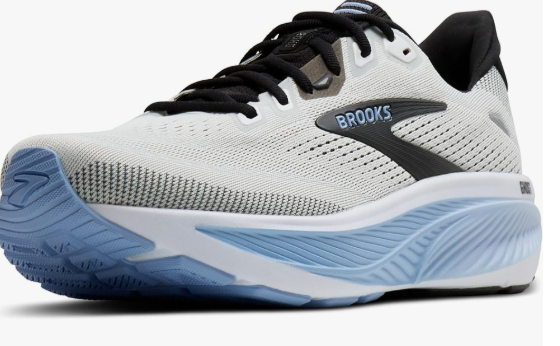
Best for: Beginners who want a comfortable, traditional daily trainer
Key Features
- Neutral road-running shoe
- Balanced cushioning
- Balanced support
- 10mm heel-to-toe drop
- 10.2 oz / 289.2g men’s published weight
- DNA LOFT v3 cushioning
- Breathable two-color air-mesh upper
- RoadTack rubber outsole
- Reflective heel details
- $150 MSRP
Pros
- Familiar, predictable ride
- Comfortable for running and walking
- Good option for easy daily mileage
- Available in medium, wide, and extra-wide widths in some versions
- Durable outsole and practical construction
Cons
- Heavier than the Novablast 6
- Less energetic and exciting at faster paces
- The design is more traditional than newer high-response trainers
Why We Recommend It
The Ghost 18 makes sense for the beginner who doesn’t want to think too much about running-shoe technology. It is a straightforward daily trainer with balanced cushioning and a stable, familiar feel.
The 10mm drop can also be appealing if you’re transitioning from everyday sneakers into running shoes and prefer a noticeable heel-to-forefoot difference. The shoe is equally at home during easy runs and walks, which gives beginners more versatility outside of dedicated training.
Brooks lists the Ghost 18 at $150, with a 10.2-ounce men’s weight and 10mm drop. Its DNA LOFT v3 cushioning is designed around soft landings and responsive toe-offs, while the upper provides breathability and structure.
There is one important caveat: the Ghost 18 isn’t the most exciting shoe in this group. Recent testing notes that its ride remains fairly traditional compared with newer, more energetic models. That’s not necessarily a problem for a beginner, though. Some runners actively prefer a shoe that feels predictable rather than springy.
3. ASICS GEL-NIMBUS 28

Best for: Beginners who prioritize maximum cushioning and comfort
Key Features
- Neutral road-running shoe
- Maximum cushioning
- 8mm heel-to-toe drop
- 9.9 oz / 281g men’s published weight
- FF BLAST PLUS cushioning
- PureGEL technology
- Engineered knit upper
- Designed for longer-distance comfort
- $170 MSRP
Pros
- Very cushioned underfoot
- Comfortable for walking and running
- Good choice for long, easy sessions
- Stable platform despite its high cushioning
- Wide sizing is available
Cons
- Most expensive shoe in this group
- Less responsive than the Novablast 6
- More shoe than some beginners actually need
Why We Recommend It
If your priority is comfort above everything else, the GEL-NIMBUS 28 deserves a close look. ASICS describes it as one of its most comfortable running styles, and the shoe combines FF BLAST PLUS cushioning with PureGEL technology.
The result is a softer, protective ride that works particularly well for runners who are starting cautiously, mixing walking and running, or expecting to spend a lot of time on their feet.
The men’s version weighs 281 grams and has an 8mm drop, according to ASICS.
Independent comparisons also show that the Nimbus 28 has more cushioning and a higher stack than the Novablast 6, while the Novablast is lighter and more responsive.
That distinction is important. Don’t automatically assume that more cushioning means a better beginner shoe. If you want a shoe that feels energetic when you pick up the pace, the Novablast 6 is likely the better fit. If you simply want to make running feel as comfortable and forgiving as possible, the Nimbus 28 is compelling.
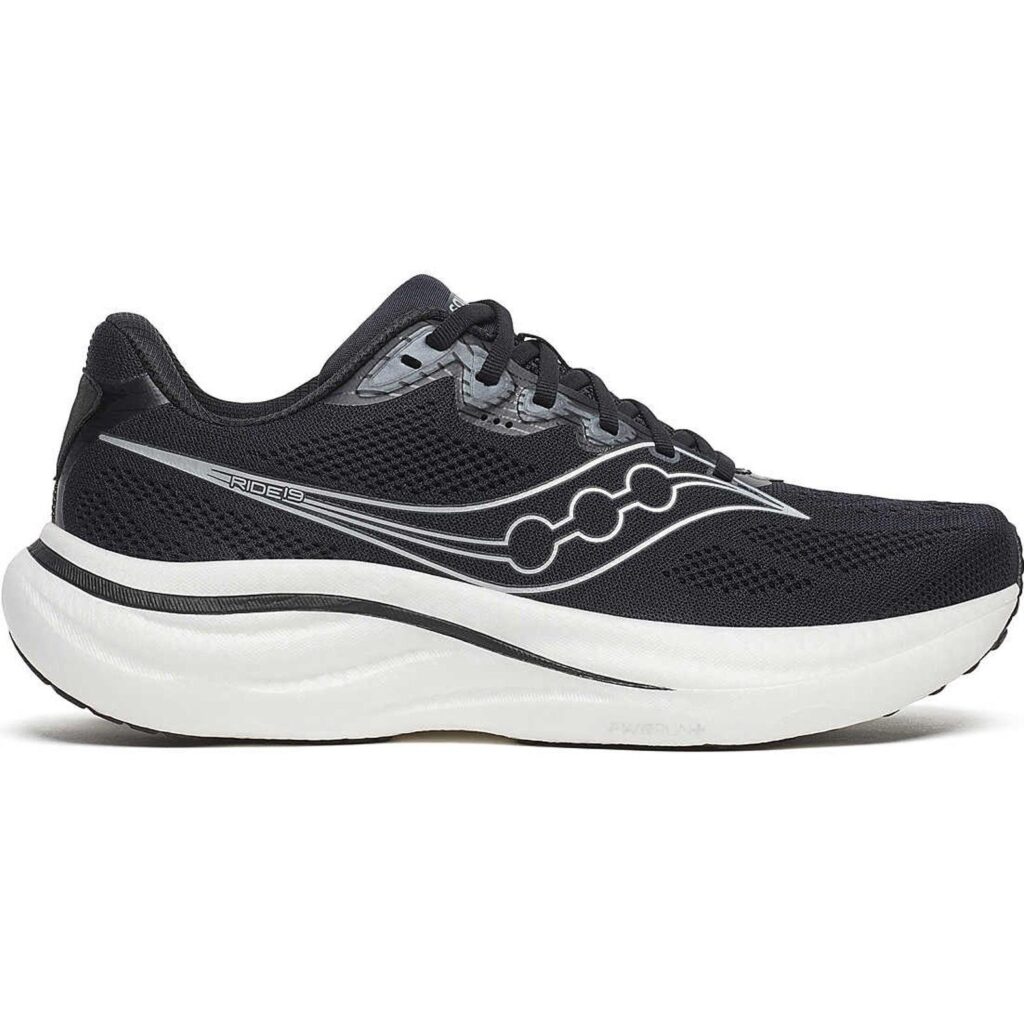
4. Saucony Ride 19

Best for: Beginners who want a balanced, versatile daily trainer
Key Features
- Neutral daily trainer
- PWRRUN+ cushioning
- 8mm offset
- 8.9 oz / 255g men’s published weight
- Engineered mesh upper
- Flex grooves for smoother transitions
- Regular and wide options
Pros
- Lower price than most premium options here
- Light for a daily trainer
- Comfortable without feeling excessively soft
- Works across easy and faster training
- Wide version available
Cons
- Not as plush as the GEL-NIMBUS 28
- Less distinctive than the Novablast 6
- Runners wanting maximum stability may prefer another category
Why We Recommend It
The Ride 19 is a strong middle-ground choice. It doesn’t try to be the softest, bounciest, or most technically ambitious shoe in the lineup. Instead, it focuses on being comfortable and versatile across different kinds of running.
Saucony lists the men’s Ride 19 at 255 grams with an 8mm offset. Its reformulated PWRRUN+ foam is designed to provide cushioning with increased energy return, while the engineered mesh upper is intended to move with the foot.
That makes the Ride 19 particularly appealing if you’re buying your first serious pair of running shoes but don’t know exactly what your training will look like six months from now.
At $145, it also sits below the MSRP of the Novablast 6 and GEL-NIMBUS 28. That doesn’t make it a budget shoe, but it does make it a sensible value proposition for someone who wants a quality daily trainer without pushing toward the highest prices.
5. New Balance Fresh Foam X 880v15

Best for: Beginners who need more width choices
Key Features
- Neutral road-running shoe
- Soft cushioning
- Fresh Foam X midsole
- 6mm heel-to-toe drop
- 10.7 oz / 304g men’s published weight
- Structured engineered mesh upper
- Standard, wide, and extra-wide options
- $139.99 MSRP
Pros
- Excellent range of width options
- Comfortable everyday cushioning
- Straightforward, dependable design
- Reasonable price for a premium daily trainer
- Good choice for runners who find other shoes too narrow
Cons
- Heavier than the Ride 19 and Novablast 6
- Less lively than the Novablast
- 6mm drop may feel different if you’re accustomed to high-drop shoes
Why We Recommend It
Foot shape should be one of the biggest factors in choosing your first running shoe. A shoe with excellent cushioning is still a bad purchase if it squeezes your toes or creates pressure along the sides of your feet.
That’s where the 880v15 stands out. New Balance offers the model in multiple widths, including narrow, standard, wide, and extra-wide options depending on the version. The men’s model is listed at 304 grams with a 6mm drop and soft Fresh Foam X cushioning.
The shoe is deliberately straightforward. There’s no carbon plate or aggressive geometry to learn. It’s simply designed to provide comfortable cushioning for everyday running.
For beginners, that can be exactly what you want. If you’ve tried several running shoes and consistently feel cramped through the forefoot, don’t compromise on fit just because another shoe ranks higher on a generic “best” list.
Brooks Ghost 18 vs. ASICS Novablast 6 vs. GEL-NIMBUS 28
These three shoes cover three different interpretations of what a beginner running shoe should be.
| Category | Brooks Ghost 18 | ASICS Novablast 6 | ASICS GEL-NIMBUS 28 |
| Ride | Traditional and smooth | Bouncy and energetic | Soft and protective |
| Cushioning | Balanced | High | Maximum |
| Drop | 10mm | 8mm | 8mm |
| Men’s weight | 10.2 oz | 8.9 oz | 9.9 oz |
| Best use | Easy daily running | Versatile training | Easy and long runs |
| MSRP | $150 | $155 | $170 |
Size and fit
The Ghost 18 is the most traditional-feeling of the three. Its 10mm drop and balanced cushioning make it an easy recommendation for runners who want a familiar daily trainer.
The Novablast 6 has a more modern feel. It’s lighter and more responsive, which can make the shoe feel more engaging as your running improves.
The GEL-NIMBUS 28 goes in the opposite direction. It’s built around cushioning and comfort rather than speed, making it especially attractive for beginners who want a softer ride.
Adjustment and ease of use
None of these shoes requires a special technique. They’re all conventional lace-up road shoes, so the real adjustment is simply finding the right size and dialing in the lacing.
Don’t buy a running shoe based only on your usual sneaker size. Running shoes need enough room for your toes to spread and for your feet to swell during longer runs.
Durability
All three are designed as daily road-running shoes rather than specialized race shoes. That makes them appropriate for beginners who need one pair to handle regular training.
The Ghost 18 has a substantial rubber outsole and a particularly practical construction. The Novablast 6 uses ASICSGRIP rubber in the forefoot, while the Nimbus 28 focuses more heavily on cushioning and comfort.
Price
At $150, the Ghost 18 is slightly cheaper than the Novablast 6 at $155. The GEL-NIMBUS 28 is the premium option at $170. Those are MSRP figures; sales can make the previous-generation or current models considerably cheaper at different retailers.
Our verdict: choose the Novablast 6 if you want the best all-around balance of comfort and versatility. Choose the Ghost 18 if you prefer a predictable, traditional ride. Choose the GEL-NIMBUS 28 if maximum cushioning is your priority.
How to Choose the Best Running Shoes for Beginners
Buying your first running shoes can feel unnecessarily complicated because brands use different names for similar technologies. You don’t need to understand every foam compound or outsole pattern. Start with these factors instead.
Cushioning
Most beginners should look for enough cushioning to make running comfortable without automatically choosing the softest shoe available.
More cushioning can be useful if you prefer a protected, plush feeling. Less or firmer cushioning can feel more controlled and responsive.
The key question isn’t “Which shoe has the most cushioning?” It’s “Which cushioning feels comfortable and stable when I run?”
If you’re unsure, the Novablast 6 is a useful middle ground between a traditional trainer and a maximum-cushion shoe. The Nimbus 28 is better for runners who specifically want a softer ride.
Fit
Fit matters more than almost any specification.
You generally want:
- Enough room for your toes to spread
- A secure heel that doesn’t slip
- No pressure points across the forefoot
- No painful rubbing around the ankle
- Enough room for normal foot swelling during longer runs
Try shoes later in the day if possible, when your feet have naturally expanded somewhat. Wear the socks you expect to run in.
Don’t assume that a wide shoe is automatically better for everyone. The goal is a secure fit that doesn’t squeeze your foot, not simply the largest possible shoe.
Heel-to-toe drop
Drop refers to the difference in height between the heel and forefoot.
The Ghost 18 has a 10mm drop, while the Novablast 6 and GEL-NIMBUS 28 use 8mm. The 880v15 uses approximately 6mm.
Beginners don’t need to obsess over this number. Comfort and fit should come first. If you’ve always worn shoes with a substantial heel, a very low-drop running shoe may feel unfamiliar.
Width
Width becomes especially important if standard running shoes regularly feel tight.
The New Balance 880v15 is a particularly useful option because it is offered across several width categories. Saucony also offers the Ride 19 in a wide version, while the Novablast 6 has wide versions available.
Road vs. trail
The shoes in this guide are primarily road-running trainers. If your runs will regularly take you onto mud, rocks, loose gravel, or technical trails, you should look specifically for trail shoes.
Road shoes generally prioritize smooth transitions and lightweight cushioning. Trail shoes typically add more aggressive outsole traction and greater protection.
Don’t buy a racing shoe for your first runs
Carbon-plated racing shoes and ultralight super shoes can be impressive, but they’re usually a poor starting point.
A beginner benefits more from a comfortable daily trainer that makes it easy to establish a consistent running habit. Once you’ve built experience and know what you want from a shoe, specialized race footwear becomes much easier to evaluate.

What About Stability Running Shoes?
Not every beginner needs a stability shoe.
Modern neutral shoes can provide plenty of inherent stability through their geometry and broad platforms. The Ghost 18, Novablast 6, GEL-NIMBUS 28, Ride 19, and 880v15 are all neutral shoes.
If you’ve been told by a qualified professional that you need additional support, or if a particular stability shoe consistently feels better during running, that’s a different situation. But don’t assume you need a stability shoe simply because you’re new to running.
If you’re experiencing persistent pain, a running shoe alone shouldn’t be treated as the solution. A qualified healthcare professional can help determine what’s causing it.
Best Running Shoes for Beginners by Type
Best overall: ASICS Novablast 6
Best traditional daily trainer: Brooks Ghost 18
Best maximum cushioning: ASICS GEL-NIMBUS 28
Best balanced value: Saucony Ride 19
Best for wide feet: New Balance Fresh Foam X 880v15
For another perspective, current beginner-focused guides also continue to recommend models such as the Brooks Ghost, Saucony Ride, HOKA Clifton, and New Balance 880 alongside ASICS options. (Fleet Feet)
Frequently Asked Questions
Are running shoes really necessary for beginners?
You don’t need the most expensive running shoes to start running, but a properly fitting pair of running shoes is a worthwhile investment. Running shoes provide cushioning, traction, and a fit designed specifically for repetitive running movement.
How much should beginners spend on running shoes?
You can find capable beginner shoes below the $150 range, especially when older versions go on sale. A reasonable target is to prioritize fit and comfort first rather than spending extra for premium technology you may not need.
Should beginner runners buy cushioned shoes?
Generally, comfortable cushioning is a good starting point, but maximum cushioning isn’t automatically better. Some runners prefer a softer shoe such as the GEL-NIMBUS 28, while others may prefer the lighter, more responsive Novablast 6 or the traditional feel of the Ghost 18.
How should running shoes fit?
Your heel should feel secure without slipping, while your toes should have enough room to move without hitting the front of the shoe. The midfoot should feel comfortably held rather than squeezed. If you feel pressure or pain during a short try-on, don’t assume the shoe will magically become comfortable after several runs.
How often should beginners replace running shoes?
There’s no universal mileage number that applies to every runner. Pay attention to changes in cushioning, unusual wear, loss of comfort, or new discomfort that wasn’t present when the shoes were new. Your body and the condition of the shoe are more useful indicators than a rigid replacement date.
Should I buy two pairs of running shoes as a beginner?
Probably not. One comfortable, versatile daily trainer is enough for most people starting out. Once you’re running consistently and understand what you like, rotating two different shoes can make sense, but it isn’t necessary on day one.
Final Verdict
The ASICS Novablast 6 is our top choice among the best running shoes for beginners because it gives new runners an unusually useful combination of cushioning, responsiveness, low weight, and versatility. It can comfortably grow with you from short walk-run sessions into longer and faster training.
But the “best” shoe is ultimately the one that fits your foot and feels comfortable when you run. If you prefer a more traditional ride, the Brooks Ghost 18 is a dependable alternative. If comfort and maximum cushioning come first, choose the GEL-NIMBUS 28. The Saucony Ride 19 offers an excellent middle ground, while the New Balance 880v15 deserves serious consideration for runners who need wider sizing.
Don’t buy based on the shoe’s reputation alone. Try on several models if you can, pay attention to fit, and choose the pair that makes you want to put them on and go for another run.