
How to Bike to Work Without Showing Up a Sweaty Mess
Ask someone why they don’t bike commute and you’ll usually get the same answer: they don’t want to show up to work drenched in sweat. It’s a completely reasonable concern, and honestly, it’s the main thing standing between a lot of people and one of the easiest forms of daily exercise there is. The good news is that showing up sweaty isn’t actually inevitable. It’s mostly a matter of pacing, planning, and a few small adjustments to your gear and routine.
This guide walks through everything that actually makes a difference, so you can get the benefits of a bike commute without needing a full shower and outfit change waiting for you at the office.
Slow Down More Than You Think You Need To
This is the single biggest factor, and most people get it wrong. Sweating is driven far more by exertion level than by how far you’re riding. A four-mile ride at a relaxed pace can leave you barely warm, while the same distance ridden hard will leave you soaked no matter how breathable your shirt is.
A good rule of thumb is to ride at a pace where you could still hold a conversation without gasping for air. That’s roughly 60 to 70 percent effort, well below the intensity most people unconsciously default to when they’re worried about being late. Speaking of which, give yourself more time than you think you need. A huge amount of commute-sweating happens because people are racing the clock, not because biking itself is inherently sweaty. If you have fifteen extra minutes of buffer, you’ll naturally ride slower without even trying.
If you like tracking numbers, keeping your heart rate in a moderate zone, well below your max effort, is a solid way to confirm you’re pacing appropriately rather than just guessing.
Plan Your Route for Sweat, Not Speed
The fastest route to work and the least sweaty route to work are often two different routes, and it’s worth choosing the second one.
Flat or gently rolling terrain is far kinder to your effort level than a route with steep climbs, even short ones. A hill that takes thirty seconds to climb can spike your heart rate more than ten minutes of flat riding. If you have the option, a slightly longer route that avoids hills is usually the better trade.
Busy roads are another hidden factor. Stop-and-go traffic, aggressive drivers, and frequent stoplights force you into bursts of hard effort as you accelerate repeatedly from a stop. Bike paths, greenways, and quieter residential streets tend to keep your effort more consistent, which keeps your body temperature more consistent too.
It’s worth spending one weekend mapping out two or three route options and actually riding them at a relaxed pace to see which one leaves you the least worked up by the time you’d normally arrive at the office.
Dress for the Ride, Not the Office
What you wear has a bigger effect than most people expect. Cotton holds onto moisture and takes forever to dry, so it’s one of the worst choices for a commute, even a mild one. Moisture-wicking synthetic fabrics or merino wool base layers pull sweat away from your skin and dry much faster, which makes a noticeable difference in how sweaty you feel by the time you arrive.
Lightweight, breathable layers beat heavy ones almost every time. A common mistake is dressing for how cold it feels standing still outside, then overheating five minutes into the ride once your body starts generating heat. A good general rule is to dress as if it’s about ten degrees warmer than it actually is. You’ll feel slightly chilly for the first minute or two and then settle into a comfortable temperature once you’re moving.
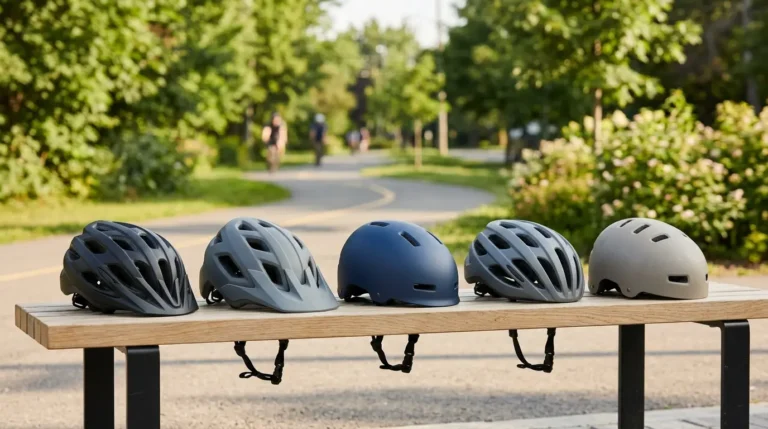
Don’t overlook your helmet and gloves either. A well-ventilated helmet makes a real difference on warmer days, and thin, breathable gloves help more than people expect, since your hands sweat too even if you don’t usually think about it.
For colder months, layering is the way to go rather than one thick coat. A base layer, a light mid layer, and a wind-resistant outer shell let you adjust easily if you warm up faster than expected, which you probably will once you’re a few minutes into the ride.
Change and Freshen Up at the Office
Even with perfect pacing and the right gear, most people will still work up at least a little bit of a glow, and that’s fine. The key is having a quick plan for freshening up once you arrive.
Packing a change of clothes the night before takes the stress out of the morning, and some people find it easier to keep a small rotating stash of work clothes at the office so they’re not carrying a full outfit back and forth every day. A pack of baby wipes or a small quick-dry towel in your bag makes a fast wipe-down possible even without a shower. A tiny grooming kit with travel deodorant and a bit of dry shampoo goes a long way too, and takes up almost no space.
If you’re not sure whether your office has a shower, it’s worth actually checking rather than assuming. A surprising number of buildings have one tucked away that people don’t think to ask about. And even without a shower, giving yourself five minutes to let your body air-dry a bit before putting on office clothes helps more than people expect. Getting dressed immediately while you’re still warm tends to trap moisture against your skin.
Adjust Your Bike Setup
Your bike setup itself can either help or work against you here. Proper seat height matters more than people realize. If your seat is too low, you end up overworking your legs with every pedal stroke, which raises your effort level and your sweat output for the same distance. A quick adjustment, or having a shop check it for you, can make a real difference.
Using a lower gear on inclines instead of muscling through in a high gear keeps your effort more consistent and prevents those sudden spikes in exertion that trigger heavier sweating. If your commute includes real hills or is on the longer side, an e-bike or a pedal-assist bike is a completely legitimate option, not a cop-out. Plenty of committed cyclists use pedal assist specifically to keep their commute effort manageable.
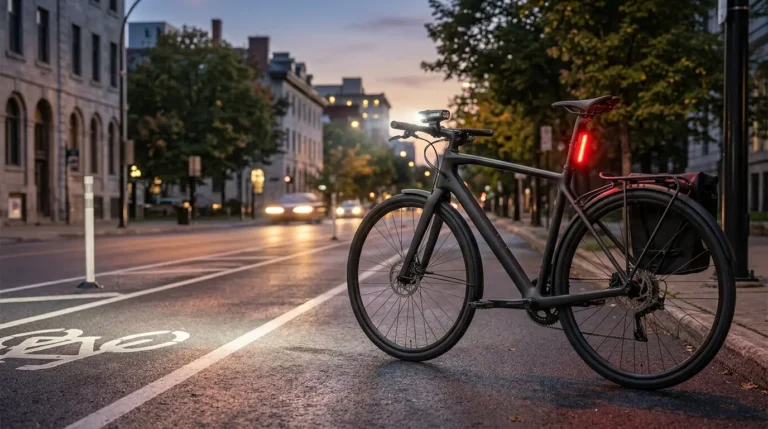
It’s also worth swapping a sweaty backpack for panniers or a rack-mounted bag if you can. A backpack traps heat against your back the entire ride, and that alone can be the difference between arriving comfortable and arriving with a sweat-soaked shirt down your spine.
Time Your Ride Around Weather
Early morning rides are almost always cooler than afternoon ones, so if your schedule allows any flexibility, riding earlier gives you a built-in advantage. It’s also worth paying attention to humidity, not just temperature. A hot, dry day is often more manageable than a cooler day with high humidity, since humidity is what actually slows down how efficiently your sweat evaporates and cools you off.
On days with extreme heat or humidity, it’s fine to have a backup plan. Taking transit or driving on the worst weather days doesn’t undo the benefit of biking the rest of the week, and there’s no reason to push through conditions that make the ride miserable.
Build Up Gradually
One thing that surprises a lot of new commuters is that their sweat output actually decreases over the first few weeks of consistent riding. As your fitness improves, your body becomes more efficient at regulating temperature, and the same route that left you drenched in week one often feels noticeably easier by week four.
If you’re just starting out, there’s no shame in riding a partial route and taking transit for the rest, or starting with just one or two days a week and building from there. Give your body time to adapt, and the sweat problem tends to shrink on its own alongside the effort it takes you to get to work.
Final Thoughts
Showing up sweaty isn’t a fixed cost of bike commuting, it’s usually a sign that one or two things need adjusting. Slow your pace, choose a flatter and quieter route, dress in breathable layers, and give yourself a few minutes to cool down and freshen up once you arrive. Put those pieces together and a bike commute becomes something you can do comfortably most days of the week, not just on days when you don’t mind looking a little rough for your first meeting.
If you’re setting up your bike for regular commuting, check out our guide to the best panniers and racks for getting your gear to work without wrecking your back or your shirt.